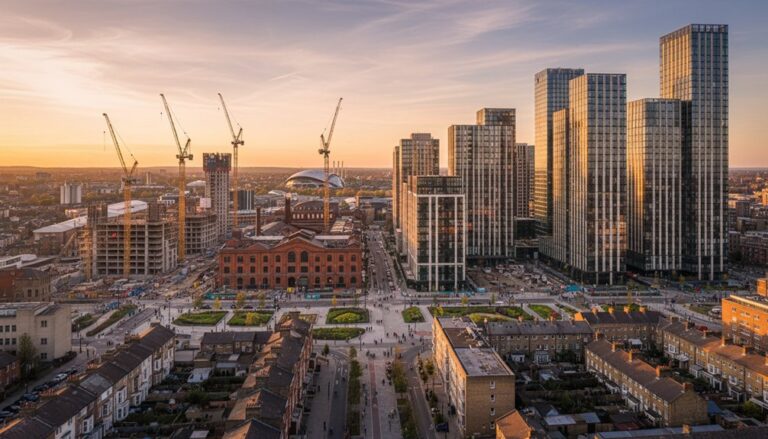

By coincidence, Clapham’s appeal lies in its contrasts: as Victorian terraces line streets near Clapham Common, modern flats continue to appear close to transport links. You can choose period detail, larger rooms and private gardens, or favour energy efficiency, security and easier upkeep. Yet the balance isn’t identical across the area, and prices, service charges and commuting needs can change the equation—especially when you compare Clapham with nearby Balham, Battersea and Brixton.
Key Takeaways
- Clapham offers an unusually broad mix of Victorian terraces, mansion conversions, and modern flats across varied neighbourhoods.
- Victorian homes provide character, generous proportions, gardens, and renovation potential, particularly around Clapham Old Town, Abbeville Village, and Clapham Common.
- Modern developments deliver lifts, secure entry, balconies, energy efficiency, and low-maintenance living near major transport hubs.
- Clapham’s variety may exceed Balham’s, while Battersea and Brixton can offer stronger value or distinctive neighbourhood character.
- The best choice depends on budget, service charges, commute, renovation appetite, storage needs, and preference for character or convenience.
Clapham Property Types: Period or Modern?

Clapham offers a clear choice between period character and modern convenience, with Victorian terraces, converted mansion blocks and purpose-built flats shaping most of the local market.
If you value historic architecture, you’ll find generous proportions, high ceilings, sash windows and original detailing in many older homes. These properties often deliver stronger individuality, but you’ll need to budget carefully for maintenance, insulation upgrades and leasehold complexities in conversions.
Renovation potential can create value, especially where you can improve kitchens, bathrooms or layouts without compromising period features.
Modern flats usually provide better energy efficiency, lifts, balconies and more predictable upkeep, which may suit your lifestyle and finances. However, service charges and smaller rooms can affect affordability.
Your best choice depends on whether character, convenience or long-term flexibility matters most.
Where to Find Period Homes in Clapham
If you’re seeking period character, start around Clapham Old Town, where Georgian and Victorian houses line quieter streets close to the Common. You’ll find generous proportions, original details, and a village-like atmosphere, although asking prices often reflect that scarcity and location.
For Victorian terraces, explore roads around Clapham North, especially near Abbeville Village and the Common’s western edge. These homes typically offer bay windows, fireplaces, and rear gardens, while condition and extension quality can vary markedly.
Streets near Clapham South also provide attractive period stock, with larger terraces and conversions appearing closer to the station.
Look beyond the headline streets: conservation areas can protect Historic architecture, but they may limit alterations. Compare survey results, lease terms, and renovation costs carefully. That due diligence helps you judge whether Neighborhood charm justifies the premium you’ll pay.
Modern Flats in Clapham: Pros and Cons
Period homes aren’t the only option: modern flats around Clapham offer efficient layouts, secure entry systems, and amenities that older conversions often lack. You’ll often find open-plan kitchens, lifts, balconies, bike storage, and better insulation in developments near Clapham North, the High Street, and the Thames.
Some schemes add luxury amenities, including gyms, residents’ lounges, concierge services, and landscaped courtyards, which can simplify busy London life.
However, you shouldn’t assume newer means better value. Affordability considerations include higher service charges, especially where facilities require constant maintenance, while new-build premiums can stretch your budget.
Compact rooms and limited storage may also feel less generous than a well-proportioned Victorian conversion. Check lease terms, sinking-fund arrangements, noise insulation, and the building’s management record before committing.
A modern flat suits you best if convenience, security, and low-maintenance living outweigh period character and private outdoor space.
Clapham vs Balham, Battersea and Brixton
Although Clapham, Balham, Battersea and Brixton share strong transport links and lively high streets, they suit different priorities.
Clapham gives you the broadest spread of Victorian terraces, mansion blocks and newer apartments, with Clapham Common adding a premium to many addresses.
Balham often feels more residential and can offer better value, though its period stock is generally less grand.
Battersea’s appeal rests on riverside regeneration, improved connectivity and substantial modern schemes; you’ll find striking Urban development, but fewer established high-street layers.
Brixton delivers the strongest cultural identity, varied dining and excellent rail links, alongside a more mixed housing market and denser streets.
If Historical architecture matters most, Clapham usually leads.
For newer buildings, Battersea competes strongly, while Balham and Brixton may reward you with sharper pricing and distinct neighbourhood character.
Which Clapham Home Fits Your Lifestyle?
Choosing the right Clapham home starts with matching the property to your daily routine, budget and tolerance for upkeep.
If you value historic architecture, a Victorian terrace around Clapham Common or Abbeville Village gives you generous rooms, period details and often a garden. You’ll also face higher purchase prices, maintenance bills and potentially awkward layouts.
A modern flat near Clapham North, Clapham Junction or the riverside suits you better if you prioritise lifts, security, energy efficiency and a lock-up-and-leave lifestyle.
New-build service charges can, however, erode affordability, while smaller rooms may limit flexibility.
Urban renewal continues to add apartments and amenities, particularly around transport hubs, but development brings construction disruption and variable resale appeal.
Compare total monthly costs, natural light, storage and commuting time before choosing.
Think beyond photographs: visit at rush hour and weekends.
Frequently Asked Questions
What Are the Average Property Prices in Clapham?
You’ll find Clapham’s average property price around £800,000, though flats often cost £550,000–£700,000 and Victorian terraces exceed £1 million. Compare streets carefully: historical architecture attracts buyers, while rental demand strengthens your property investment case, despite higher borrowing costs.
How Competitive Is the Clapham Property Market?
Clapham’s property market remains highly competitive: you’ll face strong demand, quick sales, and limited stock, though negotiating power varies by street and condition. Current market trends reward patience, while investment opportunities remain attractive for well-priced, transport-connected homes.
What Are the Council Tax Bands in Clapham?
Clapham’s council tax classifications run from Band A to H, based on 1991 property valuations. You’ll pay according to your address; check Lambeth or Wandsworth, since borough boundaries change rates and property valuation methods.
Are There Reliable Schools Near Clapham Homes?
Yes, you’ll find reliable schools near Clapham homes, with strong school proximity and generally good education quality. Check Ofsted ratings, admissions distances, and borough boundaries carefully; competition varies, especially around popular primary schools.
How Can Buyers Arrange a Clapham Property Viewing?
You can arrange a Clapham viewing through an agent’s website, phone, or email. Request virtual tours and property brochures first, then schedule in-person appointments to compare light, noise, condition, transport, and competing offers locally.
About the Author