Your chimney may look like a simple gateway for warmth, but in a UK Smoke Control Area it also marks your responsibility to protect local air quality. You’ll need to check your property’s designation, burn only permitted fuels, and use an approved appliance where required. Open fires, fire pits and chimineas may face restrictions, while breaches can bring substantial fines. Before lighting anything, make sure you know which rules apply to your home.
Key Takeaways
- Smoke Control Areas restrict which fuels UK homeowners may burn to reduce harmful smoke and improve local air quality.
- Check your property’s status through your local council’s online map or environmental health team before using a fireplace or installing an appliance.
- In these areas, burn only authorised smokeless fuels unless using a fully approved exempt appliance.
- Open fires, ordinary coal, household waste, plastics, painted wood, and damp timber are generally prohibited or unsafe to burn.
- Councils can investigate complaints, require burning to stop, and issue fines of up to £1,000 for breaches.
What Is a UK Smoke Control Area?
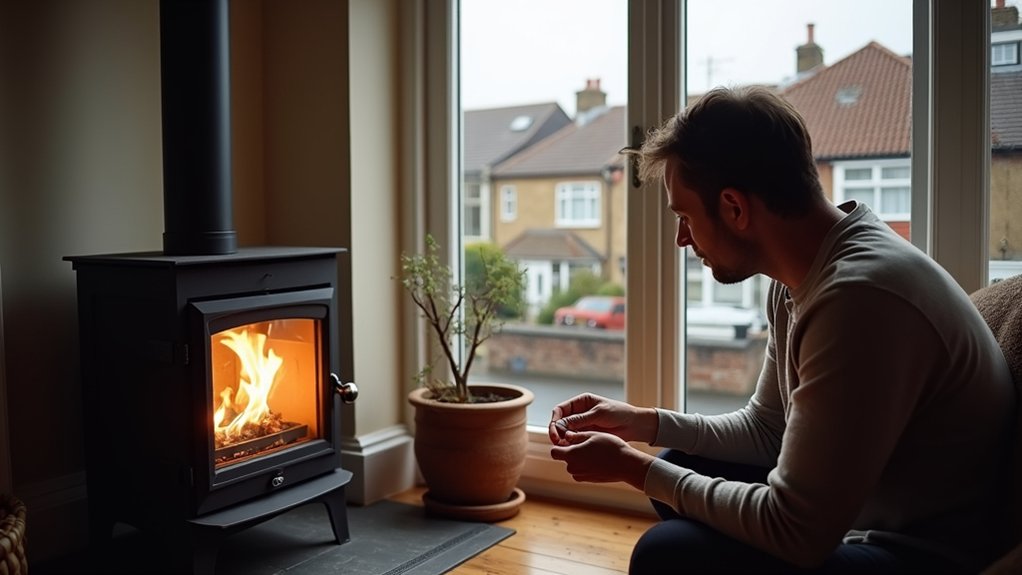
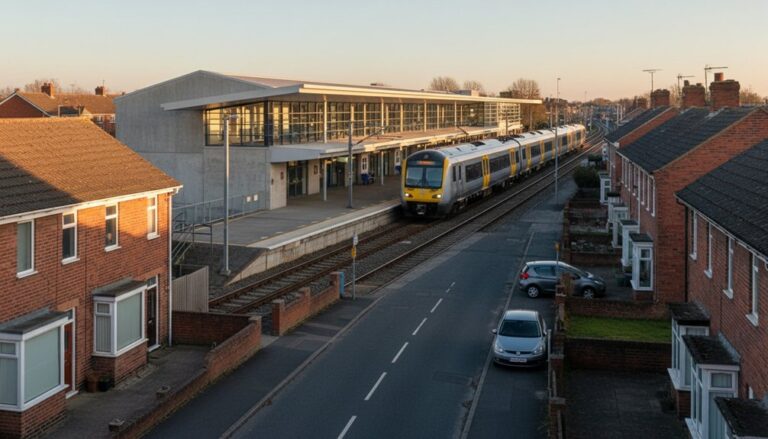
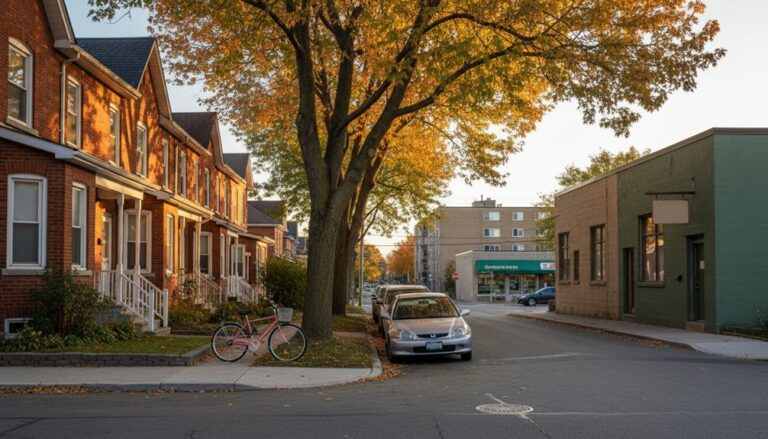
A UK smoke control area is a location where local councils restrict the types of fuel you can burn in domestic fireplaces, stoves and boilers to reduce harmful smoke pollution. These controls primarily apply in towns and cities where poor air quality can affect health and visibility.
You generally must use authorised smokeless fuels, while wood burners must meet applicable clean-air requirements unless you burn permitted fuel in an approved appliance.
Rules can vary because councils designate and enforce their own areas under national legislation.
Understanding the environmental impact helps explain why these restrictions matter: reducing particulate matter protects neighbours, vulnerable people and the wider climate.
Historical regulations began with the Clean Air Act 1956 and have developed through later legislation, including the Environment Act 1995 and current government guidance.
How Do You Check Your Property’s Area?
To check whether your property lies in a smoke control area, enter its postcode or address in your local council’s online clean-air or smoke-control-area map. Councils in England, Wales and Scotland publish these boundaries, although the map and terminology may differ.
If your address isn’t listed, contact the council’s environmental health or pollution-control team and ask for written confirmation. Check the result before installing, replacing or using a stove, particularly during a Home renovation.
Keep a copy of the map, correspondence and any relevant property documents for your records. Remember that boundaries can change, and a neighbouring street may fall under different rules.
Checking first helps you plan responsibly, avoid enforcement problems and reduce your household’s environmental impact. Your council can also explain local requirements and point you towards current official guidance.
Which Fuels Are Legal in Smoke Control Areas?
Fuel rules depend on whether you’re in a smoke control area and what appliance you’re using. In England, you generally can’t burn ordinary house coal or unauthorised manufactured solid fuels in a non-exempt appliance. You may use smokeless fuels, such as authorised briquettes, anthracite, or approved ovoids, but check the packaging for the official authorised-fuel listing.
Some areas in Scotland, Wales and Northern Ireland apply different legislation or local restrictions, so confirm the rules with your council. Don’t assume seasoned logs are automatically legal: burning wood is permitted only in an exempt appliance, and you must follow any fuel limits set for it.
Buying the wrong fuel could lead to a fine of up to £1,000. Choosing approved fuels helps protect Air quality and reduces your environmental impact.
Which Appliances Can You Use?
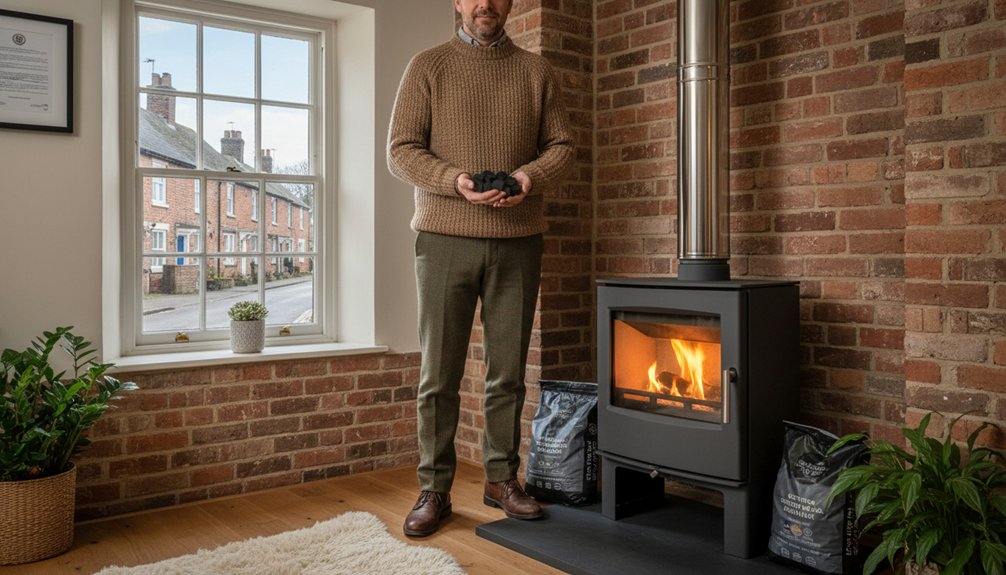
You can use an exempted appliance or an approved solid-fuel stove in a UK smoke control area, provided you follow its conditions.
Check the appliance’s approval and use only permitted fuels.
You mustn’t use prohibited fuels or appliances, as you could face enforcement action.
Exempted Appliances
If you live in a UK smoke control area, you can use an appliance only if it’s approved as exempt by the relevant authority, such as Defra in England. Exempted appliances have been tested to show they can burn authorised fuels while meeting strict smoke-emission limits.
Check the official appliance list before buying, installing, or using one, and confirm that the model and operating conditions match the listing. You’ll still need to follow the manufacturer’s instructions, building regulations, and local council requirements.
Fuel exemptions may apply in specific circumstances, but they don’t give you unlimited permission to burn any material. Never use ordinary household rubbish, damp wood, or unauthorised fuel.
Rules and lists differ across the UK, so check your nation’s government guidance and contact your council if you’re unsure.
Approved Solid-Fuel Stoves
Once you’ve confirmed that an appliance is exempt, check whether the specific solid-fuel stove is approved for use in your UK smoke control area. Look for the manufacturer’s details and confirm the model appears on the government’s official list of authorised appliances.
Approval applies to the complete appliance, so you shouldn’t assume that a similar stove, altered model, or replacement part qualifies. Follow the installation instructions, Building Regulations, and any manufacturer limits on fuel type, loading, and operation.
Your installer should provide the compliance information and commissioning records you may need when selling your home or answering a council enquiry. Using an approved stove correctly helps protect Indoor air quality and improves efficiency.
Although Renewable energy technologies can reduce emissions, a compliant stove remains subject to local smoke-control requirements.
Prohibited Fuels and Appliances
Which fuels and appliances can you use? In a UK smoke control area, you mustn’t burn ordinary coal or unauthorised fuels in a fireplace, stove, boiler or other solid-fuel appliance.
You can use an appliance approved by Defra, but only with the fuels listed for that model. Approved appliances may burn specific smokeless fuels, and some can burn wood where the manufacturer permits it.
Don’t assume seasoned logs are legal: wood generally counts as unauthorised unless you use a certified exempt appliance.
You must also follow local council rules, manufacturer instructions and any restrictions on garden waste or outdoor burners.
Breaking the rules can lead to fines.
Choosing compliant equipment and fuel supports emissions reduction, protects indoor air quality and helps prevent nuisance smoke for your neighbours and community.
Can You Use an Open Fire?
You can’t assume an open fire is lawful, particularly if you live in a UK smoke control area.
Check local rules, use only permitted fuels and authorised appliances, and remember that illegal burning can lead to significant penalties.
Smoke Control Area Rules
If your home is in a UK smoke control area, you generally can’t use an open fire to burn ordinary wood or other unauthorised fuel. These areas, declared by local authorities under the Clean Air Act, aim to reduce harmful smoke in built-up locations.
You may face enforcement action or a fine if you release smoke unlawfully from a chimney, even when the fire is inside your property. Check your council’s online map and local guidance before lighting an open fire, because boundaries and enforcement arrangements vary.
The rules protect Indoor air quality by limiting particulate pollution that can affect breathing and heart health. They also reduce the Environmental impact of domestic burning.
Don’t assume an existing fireplace is exempt: confirm the applicable restrictions and never burn waste, which remains unlawful.
Approved Fuels And Appliances
Smoke control rules don’t prohibit every solid-fuel appliance, but they do restrict what you can burn in an open fire. In a smoke control area, you generally can’t burn ordinary wood or house coal in an open fireplace.
You may use authorised smokeless fuels, such as approved manufactured solid fuels, provided your appliance is suitable. Alternatively, you can install a Defra-approved, or exempt, appliance that’s permitted to burn specified fuels, including wood where the model and local rules allow it.
Check your council’s requirements and the appliance manufacturer’s instructions before lighting it. Never assume a fuel labelled “smokeless” is approved for every appliance.
Choosing compliant fuel improves Air quality, reduces Environmental impact, and helps your fire operate safely and efficiently. Rules can vary, so verify current guidance with your local authority.
Penalties For Illegal Burning
Burning unauthorised fuel in an open fire within a smoke control area can lead to enforcement action and a fine from your local council. You must use an approved fuel or an exempt appliance, and you should check your council’s designated area before lighting a fire.
You could receive a penalty of up to £1,000 for burning prohibited solid fuel, while businesses may face higher fines or prosecution. Don’t assume an open fireplace is automatically legal: an exempt appliance must meet strict emission limits and use permitted fuel.
Councils can also investigate smoke nuisance complaints. Illegal dumping of waste on a fire creates separate offences and serious pollution risks.
Follow Fire safety regulations, keep chimneys swept, and never burn household rubbish, painted wood, plastics, or damp timber. Check GOV.UK for current requirements.
Are Fire Pits and Chimineas Legal?
Fire pits and chimineas are generally legal for homeowners in the UK, but you must use them responsibly and comply with local smoke-control rules.
In a Smoke Control Area, you can’t burn ordinary wood in a non-exempt appliance. Use authorised smokeless fuel in a suitable appliance, and check your council’s guidance before lighting anything.
Even outside these areas, choose dry, seasoned wood, avoid household waste, and position your fire pit or chiminea safely away from buildings, fences, trees, and combustible garden lighting.
Consider prevailing wind and your neighbours, especially near outdoor seating or open windows.
Follow the manufacturer’s instructions, keep water or an extinguisher nearby, and never leave flames unattended.
Your council may also restrict bonfires or outdoor fires during particular conditions, so check locally first.
What Happens If You Break the Rules?
If you breach UK smoke-control rules, your local council can investigate and issue penalties, even if the nuisance affects only one neighbour. Officers may visit, request information, inspect your appliance, or assess complaints from residents.
You could receive an enforcement notice requiring you to stop the smoke-producing activity and prevent further breaches. For burning unauthorised fuel in a smoke control area, you may face a fine of up to £1,000.
Using a non-exempt stove improperly can also trigger enforcement, while nuisance smoke may lead to separate action under environmental legislation.
Community enforcement often begins with a warning, but repeated or serious breaches can escalate. Keep records of council correspondence and comply promptly with instructions.
If you disagree, follow the council’s formal review or appeal process. Legal penalties don’t remove your responsibility for neighbours’ safety.
How Can You Burn Fuel Legally at Home?
To burn fuel legally at home, first check whether your property lies in a smoke control area and use only an authorised fuel or an exempt appliance approved for that area. Your local authority’s website can confirm the boundary, while Defra’s list identifies authorised fuels and approved appliances.
Check your stove’s certification before burning wood, coal or manufactured solid fuels. Fuel restrictions apply differently across England, Scotland, Wales and Northern Ireland, so follow the rules for your nation and council.
Don’t burn household waste, treated timber or unauthorised coal, as these can produce harmful smoke and lead to enforcement action.
For appliance safety, have your stove installed by a competent professional, maintain it properly and arrange annual chimney sweeping.
Keep fuel dry, follow the manufacturer’s instructions and retain purchase records where practical.
Frequently Asked Questions
Can Smoke Control Rules Affect Your Home Insurance or Mortgage?
Yes—smoke-control breaches could ignite insurance headaches and mortgage concerns! You must protect indoor air quality and follow Fire safety regulations. Insurers may question unlawful appliances, while lenders could require compliance, certification, or remedial work before approving lending.
Are Landlords Responsible for Tenants’ Smoke Control Area Breaches?
You’re not usually liable for your tenant’s smoke control breach, but you should support Tenant compliance. Keep appliance guidance, address complaints promptly, and follow lawful eviction procedures only for persistent contractual breaches, never simply to avoid enforcement.
How Can You Report a Neighbour Breaching Smoke Control Regulations?
You can report a neighbour breaching smoke-control rules to your local council; nearly 80% of UK homes lie in urban areas. Follow its reporting procedures, provide evidence, and include dates, addresses, and neighbour complaints.
Do Smoke Control Rules Apply Differently to Listed Buildings?
Listed buildings don’t generally receive exemptions from smoke-control rules. You’ll still need authorised appliances and fuels, while Historic preservation may restrict Building modifications. Check consent requirements with your local council before altering chimneys, fireplaces, or heating systems.
Can Smoke Control Restrictions Affect Your Property’s Resale Value?
Yes, smoke control restrictions can affect resale value. Buyers may scrutinise compliant appliances, chimney use, property aesthetics, and air quality. You’ll protect marketability by retaining certificates, explaining restrictions, and highlighting lawful heating options.
About the Author