Renovating a Georgian property for modern living can give you greater comfort, efficiency, and flexibility without losing its historic character. You’ll need to balance practical upgrades—such as insulation, wiring, heating, and layout changes—with careful protection of features like sash windows, fireplaces, and original proportions. Permissions and specialist advice may also shape your plans, while costs can vary considerably. Before you decide, it’s worth understanding which improvements add value and which could compromise the building’s heritage.
Key Takeaways
- Renovating can improve comfort, insulation, heating, plumbing, wiring, safety, and energy efficiency while preserving the property’s historic character.
- Georgian features such as balanced façades, sash windows, fireplaces, panelled doors, floorboards, and shutters should be repaired rather than replaced.
- Listed buildings and conservation-area properties may require listed building consent, planning permission, and building-regulations approval before work begins.
- Layout changes should protect principal rooms, stair halls, fireplaces, cornices, and original openings while placing utilities in less significant areas.
- Use breathable insulation, discreet draught-proofing, secondary glazing, and compatible materials to improve efficiency without trapping moisture or damaging historic fabric.
Why Modernise a Georgian Home?

Why modernise a Georgian home when its original character is part of its appeal? You’re not erasing its identity; you’re adapting it for comfortable, efficient living.
Modernisation can resolve cold rooms, poor insulation, outdated wiring, inefficient heating, and impractical plumbing while respecting the property’s Historical significance. With careful planning, you can improve daily comfort, reduce energy consumption, and meet current safety standards without creating a pastiche.
Begin with a condition survey and establish which interventions need consent, particularly if your home is listed or lies within a conservation area. Use breathable, compatible materials and reversible solutions wherever possible, then appoint contractors experienced in traditional buildings.
This approach protects Architectural authenticity while making the house work for your lifestyle. You’ll gain convenience, resilience, and long-term value without compromising its heritage.
Which Georgian Features Should You Preserve?
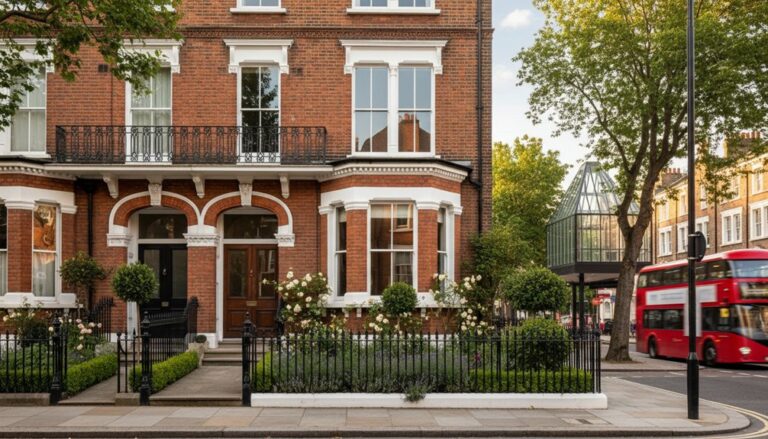
Once you’ve identified the work your Georgian home needs, decide which features must remain intact. Prioritise elements that define its architectural authenticity and historical significance, including the balanced façade, sash windows, panelled doors, elegant staircases, ceiling cornices, and original fireplaces.
Repair these features wherever possible rather than replacing them with modern replicas. Traditional floorboards, shutters, skirting boards, and ironmongery also deserve careful attention, as they contribute texture and proportion throughout the interior.
You can still improve comfort discreetly: draught-proof existing windows, insulate behind breathable finishes, and conceal wiring without damaging historic fabric.
Let the building’s symmetry and restrained detailing guide new work, so contemporary kitchens and bathrooms sit comfortably alongside period rooms.
What Permissions Does a Georgian Renovation Need?
Before you alter your Georgian property, establish which permissions apply, as its age, listing status, and location may impose additional controls.
If the building’s listed, you’ll need listed building consent for work affecting its character, including changes to interiors, windows, doors, or historic finishes. Unauthorised alterations can lead to enforcement action, so contact your local conservation officer early.
Planning permissions may also be necessary for extensions, external changes, new openings, or significant alterations to the roof. Even unlisted homes in conservation areas can face stricter controls, particularly over façades and boundary features.
Ask your architect to research the building’s history and prepare proposals that demonstrate historical accuracy.
Building regulations still apply to safety, insulation, electrics, and structure, while separate consent may cover trees, shared walls, or archaeological conditions.
Keep every approval documented before work begins.
Which Layout Changes Work Best?
Thoughtful layout changes can modernise a Georgian home without erasing its historic proportions. Start by protecting the principal rooms, stair hall, fireplaces, cornices, and original door openings.
You can improve daily living by discreetly connecting the kitchen, dining room, and garden, but an open plan layout shouldn’t flatten every room into one space. Retain generous proportions and use glazed screens, wide cased openings, or joinery to define zones while preserving light and circulation.
Consider relocating utility functions to less significant areas, such as rear service rooms, rather than altering the façade-facing rooms.
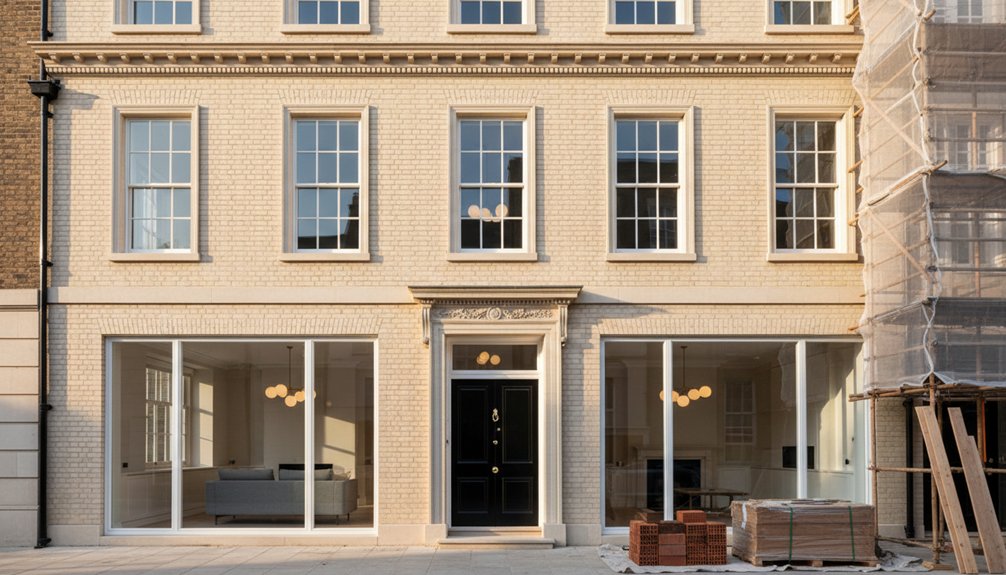
Contemporary extensions can provide a spacious kitchen, family room, or home office without compromising the historic plan. Keep additions visually subordinate, and connect them through a carefully considered threshold.
Before removing walls, ask a conservation professional to assess their significance and structure.
How Can You Insulate a Georgian Home?
Start by evaluating your existing insulation, taking care not to trap moisture in historic walls.
You can then improve comfort and efficiency with sympathetic window upgrades and draught-proofing.
Insulating floors, where appropriate, will reduce heat loss while preserving your Georgian home’s character.
Assess Existing Insulation
Your first step is to assess the Georgian property’s existing insulation without disturbing its historic fabric. Arrange a survey with a professional experienced in traditionally built homes. They’ll inspect roof spaces, suspended ceilings, wall junctions, and accessible service areas, looking for gaps, dampness, previous repairs, and incompatible materials.
Ask for thermal imaging or moisture monitoring where appropriate, rather than relying on assumptions. You’ll then understand where heat escapes and whether existing insulation can remain, improve, or needs careful removal.
Pay particular attention to breathability: impermeable membranes or foams can trap moisture in solid masonry and damage historic fabric. Record the findings before choosing any intervention, and check whether consent applies.
A measured assessment protects your home’s historic charm while identifying realistic opportunities to improve energy efficiency safely.
Upgrade Windows And Floors
Upgrade windows and floors carefully, because both can improve comfort without compromising Georgian character. Begin with a survey of frames, glazing, draughts, and floor construction.
Repair original sash windows wherever possible, then add discreet draught seals, secondary glazing, or slim-profile double glazing approved by your conservation officer. These measures preserve historical authenticity while reducing heat loss and noise.
For floors, identify suspended timber boards before adding insulation. Fit breathable insulation between joists, maintain ventilation beneath the floor, and seal gaps with reversible materials. Avoid impermeable membranes that trap moisture in old masonry.
Where solid floors need replacement, use limecrete or another breathable build-up, finished with timber, stone, or tiles suited to the period. Coordinate skirting, thresholds, ironmongery, and finishes to maintain design consistency.
You’ll gain warmer rooms while protecting fabric, proportions, and future repair options.
How Much Does a Georgian Renovation Cost?
A Georgian renovation can cost anywhere from tens of thousands to several hundred thousand pounds, depending on the property’s size, condition, location, and level of restoration. Before you commit, commission a detailed survey to uncover damp, structural movement, outdated services, and hidden defects.
Listed-building consent, specialist craftsmen, and historically appropriate materials can raise costs, but they protect your home’s character and value. Set aside a contingency of at least 15–20% for unforeseen work, particularly in older properties.
Your budget planning should separate essential repairs, modern comfort upgrades, and decorative improvements, helping you phase the project sensibly. Prioritise structural stability and weatherproofing first, then invest in kitchens, bathrooms, heating, and insulation.
Seek early advice from conservation specialists so historical accuracy guides decisions without preventing practical, efficient living. Get several detailed quotations.
Frequently Asked Questions
How Long Does a Typical Georgian Property Renovation Take?
You’ll typically need six to eighteen months for a Georgian property renovation, depending on scale, permissions, and condition. Allow extra time for Historic preservation approvals, Building regulations compliance, specialist materials, and unexpected structural repairs.
What Common Structural Problems Might Georgian Properties Have?
You might find settlement, damp walls, roof movement, timber decay, and weakened foundations. Commission a structural survey before altering anything; combine Structural reinforcement with Historic preservation, respecting original materials while addressing safety, drainage, and load-bearing concerns carefully.
How Can You Maintain a Georgian Home’s Period Character?
You can preserve period character without turning your home into a museum: retain cornices, sash windows, fireplaces, and proportions; choose sympathetic Interior decor, while landscaping design respects original vistas, materials, and boundaries.
Should You Hire an Architect or Specialist Georgian Renovation Contractor?
Hire both: you’ll need an architect for planning, design, and Historical accuracy, plus a specialist contractor for craftsmanship. Prioritise contractor selection through heritage references, conservation experience, detailed quotations, and clear communication.
How Can You Choose Sympathetic Modern Fixtures and Finishes?
How can you balance historic authenticity with modern comfort? Choose understated fixtures, natural materials, and finishes echoing original colours, proportions, and craftsmanship. You’ll preserve character while discreetly integrating efficient lighting, heating controls, and contemporary bathroom fittings.
About the Author