
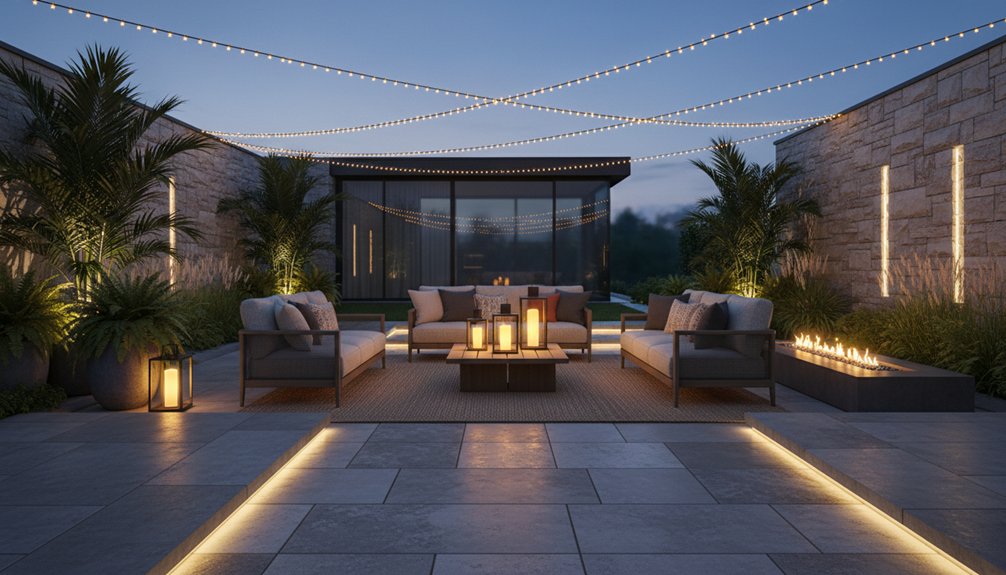
The right patio lighting can turn an ordinary outdoor area into a comfortable retreat for dining, relaxing, or entertaining. Start with layered illumination: combine overhead fixtures, task lighting, and subtle accents to balance safety with atmosphere. Add string lights for warmth, then use lanterns or sconces to define key areas and highlight architectural features. Weatherproof LED or solar fixtures, smart controls, and thoughtful placement make the setup practical. A few strategic choices can completely change how your patio feels after sunset.
Key Takeaways
- Layer ambient, task, and accent lighting to create a warm, functional patio for dining, cooking, entertaining, and relaxing.
- Use warm-white string lights, lanterns, and sconces to add atmosphere while complementing your patio’s style.
- Highlight planters, water features, architectural details, pathways, and trees with discreet, focused accent lighting.
- Choose weather-resistant LED, solar, or smart fixtures with dimming, scheduling, and remote-control capabilities.
- Prioritize safety with GFCI outlets, weatherproof connections, secure mounting, and regular inspections for damage or water intrusion.
Patio Lighting Ideas for a Layered Glow
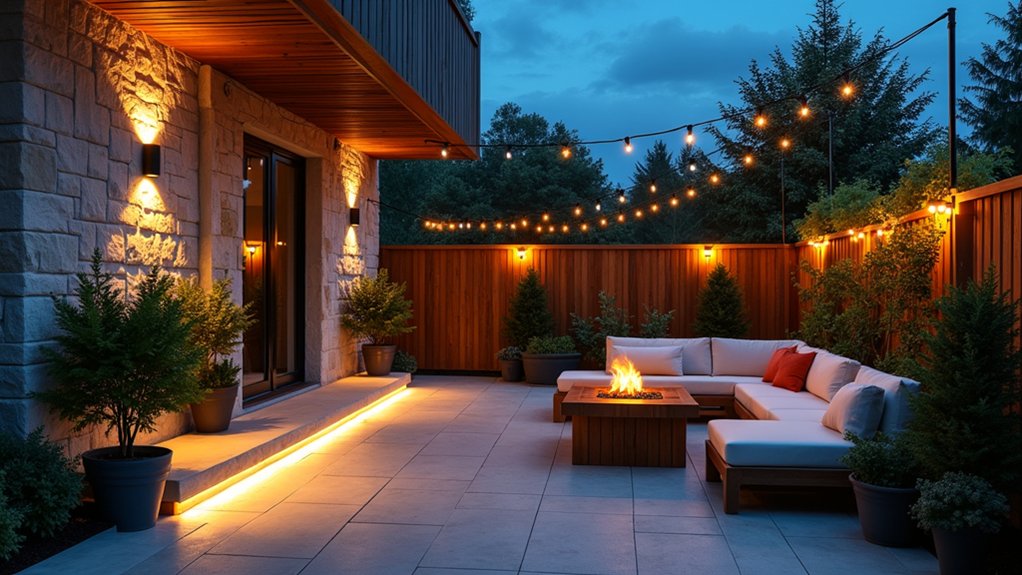
A layered patio lighting plan combines overhead, task, and accent fixtures to create a warm, functional glow. Start with a dimmable ceiling fixture or wall-mounted lantern to establish comfortable ambient color without overwhelming the space.
Add task lighting near dining tables, grills, steps, and seating areas so you can move and work safely after sunset.
Finish with accent fixtures that highlight planters, textured walls, trees, or architectural details. Thoughtful fixture placement keeps each layer distinct while preventing harsh shadows and glare.
Choose warm white LEDs, typically 2700K to 3000K, for an inviting appearance, and install separate controls for flexible adjustment.
You’ll gain better atmosphere by directing light downward or toward surfaces rather than into people’s eyes.
Keep fixtures weather-rated, conceal cords, and position controls near the patio entrance for convenient use.
Patio Lighting Ideas With String Lights
String lights add a soft, festive layer to patios while defining dining and seating areas without overwhelming the space. Drape them in parallel lines above your table, zigzag them across an open roof, or outline a railing for a clean, intentional look.
Choose weather-resistant LED bulbs with warm color temperatures to create festive ambiance while keeping energy use low. Secure every strand with outdoor-rated clips, and leave enough slack to prevent tension on sockets or connections.
For cozy corners, run lights along a privacy screen or pergola edge, then pair them with comfortable seating and textiles. Use a timer or smart plug to automate illumination after sunset.
Before installation, confirm the strand’s length, outlet location, and weather rating so your design stays safe, polished, and easy to maintain.
Lanterns and Sconces That Add Style
Lanterns and sconces give your patio functional light with a refined, cohesive look. Arrange lanterns at varied heights to define seating areas and create inviting warmth.
Choose elegant outdoor sconces to frame doors, walls, or architectural features with focused illumination.
Stylish Lantern Arrangements
Create a polished patio focal point by grouping lanterns at different heights near seating areas, steps, or dining spaces. Choose one finish to keep the display cohesive, then vary shapes and sizes for visual rhythm.
For Vintage charm, combine weathered metal lanterns with warm LED candles and textured planters. If you prefer modern minimalism, select streamlined silhouettes, matte finishes, and soft white bulbs.
Place larger lanterns on the ground, medium designs on tables, and smaller versions on sturdy ledges, keeping walkways clear. Battery-powered or rechargeable models make repositioning easy and eliminate visible cords.
Use timers or smart controls to simplify evening routines, and select weather-resistant materials for reliable performance.
Leave enough space between pieces so each glow remains distinct rather than creating a cluttered cluster.
Elegant Outdoor Sconces
Elegant outdoor sconces add architectural interest while providing focused light along patio walls, doorways, and covered dining areas. Choose fixtures that complement your home’s proportions and finishes, then install them at eye level for comfortable illumination without glare.
For a cohesive modern design, select clean-lined sconces with matte black, bronze, or brushed metal finishes. If you prefer vintage charm, consider lantern-style fixtures with seeded glass and warm brass or weathered finishes.
Match the light’s color temperature to your existing patio fixtures; 2700K to 3000K creates an inviting evening glow. Use dimmable, damp-rated models so you can adjust brightness and withstand moisture.
Place sconces in pairs beside doors or evenly along long walls, and shield bulbs from direct view. You’ll create a polished, welcoming patio that feels intentional after sunset.
Use Patio Lighting to Highlight Features
Use patio lighting to draw attention to the features that give your outdoor space its character. Aim focused beams at sculptures, planters, textured walls, or distinctive architectural details to create inviting visual anchors after sunset.
For Garden art, position a discreet spotlight below or beside each piece, angling the light to reveal its shape without producing harsh glare.
Highlight Water features with gentle illumination aimed across the surface, allowing movement and reflections to add depth.
You can also wash a tree canopy, illuminate a pergola, or trace a stone pathway to strengthen your patio’s design.
Keep fixtures concealed whenever possible, and vary brightness so focal points stand out without making the entire space feel overlit.
Test each beam from seating areas before finalizing placement, adjusting angles to reduce shadows and glare.
Choose Solar, LED, or Smart Patio Lights
Choose solar lighting for easy installation and minimal wiring, especially in sunny areas.
Select energy-efficient LEDs for bright, long-lasting illumination that keeps power use low.
Add smart controls so you can schedule lights, adjust brightness, and manage your patio from your phone.
Compare Solar Lighting
Solar, LED, and smart patio lights each suit different outdoor lighting needs. Compare how each option fits your space before you buy.
Solar fixtures charge during daylight, so you won’t need wiring or rising electricity costs. They work well along pathways, gardens, and remote seating areas, but shade and short winter days can reduce brightness. A careful solar installation, with panels positioned toward direct sun, improves reliability. Choose models with battery backup if you want dependable illumination after cloudy weather.
LED fixtures offer consistent output and flexible placement, while smart lights let you schedule scenes, adjust brightness, and control fixtures from your phone or voice assistant. Consider your patio’s sunlight, outlet access, desired control, and maintenance tolerance.
For simple, independent lighting, choose solar. Select LED for dependable operation, or smart lighting for personalized convenience.
Choose Energy-Efficient LEDs
Energy-efficient LEDs provide steady, bright illumination with lower energy use and longer service life than traditional bulbs. Choose them for pathways, seating areas, stairs, and outdoor dining zones where reliable visibility matters.
These energy efficient bulbs produce less heat, helping fixtures stay safer and reducing replacement costs over time. Select warm-white LEDs, typically between 2,700K and 3,000K, to create a welcoming patio atmosphere without harsh glare.
Check each bulb’s weather rating and confirm that its brightness suits the fixture and space. Dimmable models can help you adjust the mood while using only the light you need.
Add Smart Controls
Smart controls let you adjust patio lighting from your phone, set schedules, and turn fixtures on or off without walking outside. Choose fixtures compatible with your preferred platform, then use app integration to group lights by zones, such as the dining area, steps, and seating area.
You can dim LEDs for dinner, brighten pathways for safety, or program solar lights to complement sunset without constant adjustments. Look for weather-resistant smart fixtures or outdoor-rated plugs, and install them where Wi-Fi or Bluetooth remains reliable.
Voice control adds convenience when your hands are full; simple commands can activate scenes or switch off every light at bedtime. Set automatic schedules that match your routine, but retain manual controls for parties, seasonal changes, and unexpected guests.
Smart automation improves comfort, security, and energy efficiency.
Keep Patio Lighting Safe in Any Weather
Because patio fixtures face wind, rain, and temperature changes, choose products rated for outdoor use and install them with weatherproof connections. Look for Weather resistant fixtures with sealed housings, corrosion-resistant finishes, and cables designed for exterior conditions.
Before installation, check every cord for cracks, keep connections above standing water, and use ground-fault circuit interrupter (GFCI) outlets. Secure lights and extension cords so wind can’t move or damage them.
Don’t overload circuits, cover vents, or place fixtures near flammable materials. After storms, inspect your setup for loose mounts, exposed wires, or water inside housings, and switch off power before making repairs.
These safety tips help you enjoy reliable illumination year-round. If a fixture trips the breaker repeatedly, stop using it and ask a qualified electrician to investigate.
Frequently Asked Questions
How Much Does Professional Patio Lighting Installation Typically Cost?
You’ll typically invest $1,500–$5,000 for professional patio lighting installation. Your final price depends on fixture quantity, wiring, labor, and Lighting design. Choose LED fixtures to improve Energy efficiency, reduce maintenance, and keep long-term costs manageable.
What Permits Are Required for Installing Permanent Patio Lighting?
You’ll typically need an electrical permit for hardwired patio lighting; requirements vary locally. Check Electrical codes, submit plans through your municipality’s permit process, and schedule inspections. You won’t usually need permits for plug-in fixtures.
How Can Patio Lighting Minimize Disruption to Neighbors and Local Wildlife?
Minimize Wildlife disturbance by using warm, shielded, motion-activated fixtures, timers, and low brightness. Address Neighbor considerations by aiming lights downward, avoiding windows, limiting operating hours, and discussing installation plans beforehand.
Where Should Outdoor Lighting Controls Be Positioned for Convenient Access?
Place controls beside your main entry, where you can reach them without crossing dark paths. Prioritize lighting control placement and outdoor switch accessibility; you’ll adjust brightness safely, quickly, and effortlessly from indoors or outside.
Can Patio Lighting Increase My Home’s Resale Value?
Yes, patio lighting can increase your home’s resale value by improving curb appeal, Garden aesthetics, safety, and usability. Choose durable, attractive fixtures and energy-efficient LEDs to strengthen buyer appeal without creating excessive maintenance or operating costs.
About the Author


