
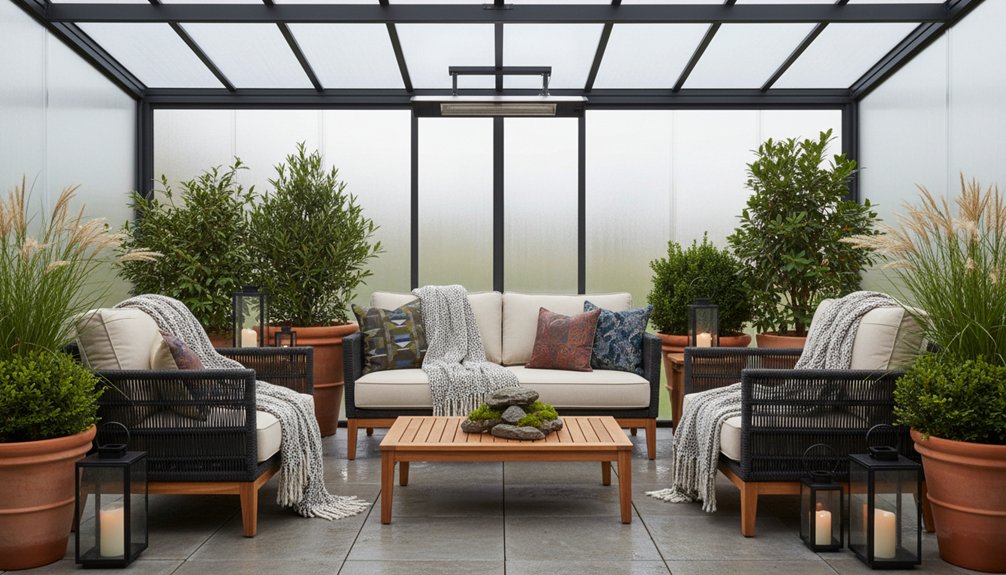
A teak bench with quick-drying cushions can stay comfortable through a rainy spring and a frosty winter when you pair it with smart shelter and routine care. Start by considering your local weather, sun exposure, and how you use the space. Then layer in flexible shade, durable seating, cozy textiles, and adaptable lighting. With the right layout and storage plan, your patio can feel welcoming in every season—but a few overlooked details may undermine it.
Key Takeaways
- Assess your patio’s sun, wind, rain, drainage, and seasonal temperature patterns before selecting furniture and arranging the space.
- Add flexible shelter with retractable awnings, umbrellas, pergolas, curtains, or windbreaks to improve comfort in changing weather.
- Choose weather-resistant furniture, quick-drying cushions, breathable covers, and ventilated storage to prevent fading, rust, and mildew.
- Create adaptable seating with lightweight or modular furniture, movable ottomans, functional tables, cushions, throws, and outdoor rugs.
- Enhance ambiance and safety with outdoor-rated lighting, cohesive seasonal décor, secure connections, timers, and regular maintenance checks.
Evaluate Climate, Exposure, and Patio Use

Start by noting how your patio handles sun, wind, rain, and seasonal temperature changes. These climate considerations should guide every seating decision, from frame materials to cushion fabrics. Track which areas stay damp, collect leaves, or heat up quickly, then choose pieces that suit those conditions.
Your patio exposure also affects comfort and maintenance: intense afternoon sunlight can fade upholstery, while prevailing winds may move lightweight chairs or scatter accessories. Observe how you use the space throughout the year. Do you dine, read, entertain, or work outside?
Measure clearances for walking and serving, and leave enough room to rearrange seating easily. Select durable, proportionate furniture that supports those routines without crowding the patio. A cohesive palette and weather-resistant finishes will keep the area polished through changing conditions and frequent use.
Plan Shade and Shelter for Every Season
Plan flexible shade with a retractable awning, umbrella, or pergola so you can adjust coverage as the sun shifts.
Add weather-resistant curtains or a covered section to keep rain from disrupting your seating area.
Position screens, planters, or windbreak panels to block seasonal gusts without sacrificing style.
Add Flexible Shade
Flexible shade keeps your patio comfortable through bright summer afternoons, sudden showers, and cooler shoulder seasons. Start with adjustable sunshades that let you fine-tune coverage as the sun moves, protecting your eyes and upholstery without blocking every view. Choose a clean-lined fabric in a UV-resistant, fade-resistant finish to complement your seating and outdoor palette.
For broader coverage, install retractable awnings above the main conversation area. Extend them during intense heat, then retract them to enjoy winter sunshine or a clear evening sky. Motorized controls make adjustments effortless, while manual models offer dependable simplicity.
Anchor posts and hardware securely, and check manufacturer guidelines for wind limits before leaving shade extended. Layering a portable cantilever umbrella near lounge chairs adds flexibility, so you can rearrange your seating as your patio needs change throughout the year.
Prepare for Rain
When rain clouds gather, give your patio seating dependable cover without sacrificing style. Install a retractable awning, louvered pergola, or compact canopy sized to protect the seating area without overwhelming it. Choose a design with a gentle slope so water drains away from cushions and walkways.
For flexible rainproof solutions, keep a freestanding umbrella nearby, but close it during heavy downpours and secure it properly afterward.
Dress your furniture in waterproof textiles, such as solution-dyed acrylic cushions and quick-drying covers, to resist moisture while maintaining a polished look. Store removable pillows in a ventilated deck box, and use furniture covers that breathe rather than trapping condensation.
Check seams, drains, and mounting points each season, replacing worn materials before a small leak becomes a larger comfort problem.
Block Seasonal Winds
Position wind protection where seasonal gusts typically enter, using a slatted screen, trellis, or weather-resistant curtain to slow airflow without closing off the patio. Choose Wind barriers that complement your furniture and home’s exterior, such as powder-coated metal panels, cedar lattice, or woven outdoor fabric.
For flexible windbreak solutions, mount curtains on a sturdy track so you can open them during calm weather and secure them before a storm.
Arrange seating perpendicular to prevailing winds, then place a console, planter, or storage bench along exposed edges to add weight and shelter.
Keep screens elevated slightly above the floor to prevent debris buildup and preserve drainage.
In colder months, pair the barrier with weatherproof cushions, throws, and a safely rated patio heater.
Check anchors seasonally, and tighten hardware after strong gusts.
Choose Weather-Resistant Patio Furniture
Choose patio furniture made from powder-coated metal, teak, or all-weather wicker so it can handle sun, rain, and shifting temperatures without quickly fading or warping. This thoughtful Material selection gives you dependable Outdoor durability while keeping your patio polished.
Look for rust-resistant hardware, UV-stable finishes, and cushions covered in solution-dyed acrylic or olefin. These fabrics resist moisture, stains, and color loss better than standard textiles.
Check that frames include drainage points, especially if rain collects on your patio. Teak develops a silver-gray patina naturally, though you can oil it to preserve its warm tone.
For metal, inspect welds and protective coatings for consistent coverage. Choose furniture with removable, washable covers, and store small accessories indoors during severe weather to extend their useful life.
Create Flexible Seating for Year-Round Comfort
Create flexible seating with lightweight chairs, modular pieces, and movable ottomans you can rearrange for guests or everyday lounging. Layer cushions, throws, and outdoor rugs for seasonal comfort, then store them when rain, frost, or harsh sun arrives.
You’ll keep your patio stylish, adaptable, and ready for year-round use.
Choose Versatile Seating
When your patio seating works for lounging, dining, and changing weather, the space stays comfortable and useful throughout the year. Choose lightweight pieces you can reposition easily, such as stackable dining chairs, a compact bench, and deep, supportive lounge chairs.
Look for powder-coated metal, teak, or all-weather resin that can handle sun and moisture without constant upkeep. A bench can seat guests during meals, then tuck against a wall to open floor space.
Keep tables practical: a lift-top coffee table or nesting tables can support snacks, drinks, and casual work. Plan your furniture arrangement around clear walkways and a strong focal point, such as a fire table or view.
Add personality with durable outdoor accessories, including a patterned umbrella, sculptural planters, and weather-resistant serving trays. Choose neutral frames, then refresh the look with removable accents.
Layer Seasonal Comfort
Layer seasonal comfort with removable cushions, outdoor pillows, and throws that make the seating inviting without adding permanent bulk. Choose solution-dyed fabrics that resist fading, mildew, and light rain, then select colors that complement your seasonal plantings.
Keep a lidded, waterproof deck box nearby so you can store textiles quickly when storms approach.
In cool weather, arrange a washable wool throw over each chair and use weather-resistant pillows for back support.
During warmer months, remove heavier layers and leave breathable cushions in place.
Add outdoor heating, such as a compact infrared heater or a safely positioned fire table, to extend evening use. Check manufacturer clearances, protect fabrics from sparks, and never leave flames unattended.
Rotate accessories throughout the year to keep your patio feeling fresh, comfortable, and intentional.
Add All-Season Cushions and Cozy Textiles
Choose cushions upholstered in solution-dyed acrylic or other quick-drying, UV-resistant fabrics so they’ll withstand sun, spills, and changing weather. Select firm, supportive inserts with zippered covers, making cleaning and seasonal storage simple.
For all season cushions, choose neutral tones or subtle patterns that complement your patio furniture and won’t look dated. Add outdoor textiles such as performance throws, washable pillows, and a weather-resistant rug to create warmth without sacrificing durability.
Layer textures thoughtfully: pair woven fabrics with smooth canvas, then keep a sealed storage bench nearby for items during heavy rain or snow. Look for mildew-resistant materials, reinforced seams, and breathable construction to prevent lingering dampness.
You’ll stay comfortable by choosing pieces that dry quickly, resist fading, and feel inviting in every season. Rotate removable covers occasionally to even out sun exposure and wear.
Install Flexible Patio Lighting
Set up flexible patio lighting to keep the seating area welcoming after sunset and adaptable to changing weather. Choose outdoor-rated fixtures with sealed connections, rust-resistant hardware, and weatherproof cords.
Drape string lights beneath a covered roof or along sturdy posts, leaving enough slack for gentle movement without creating trip hazards. Add dimmable LED strips beneath benches, railings, or an umbrella edge to provide discreet task lighting without glare.
Use warm-white bulbs for a comfortable glow, and connect everything to a timer or smart plug so you won’t need to adjust controls outdoors in rain or cold.
Keep transformers and outlets elevated, protected, and accessible. Before storms, unplug portable fixtures and secure loose cables.
Check bulbs, mounts, and seals each season, replacing damaged components promptly to keep your lighting safe, efficient, and polished.
Add Seasonal Patio Decor Without Clutter
Seasonal decor can refresh your patio without crowding the seating area when you limit accents to a few purposeful pieces. Choose one focal point, such as a weather-resistant outdoor rug, patterned cushions, or a compact planter, then repeat its color in one or two smaller accents.
For easy seasonal changes, use removable pillow covers, lanterns, or a tabletop centerpiece made from UV-resistant materials. Anchor lightweight items so wind won’t scatter them, and select finishes that tolerate moisture and temperature swings.
Keep pathways, chair legs, and table surfaces clear to support comfortable movement. Practice clutter reduction by editing accessories whenever you add something new; remove tired or duplicate pieces immediately.
Group small accents on a tray, which creates visual order and lets you clear the table quickly when you need more space.
Protect and Store Your Patio Furniture
Before rain, wind, or temperature swings arrive, protect your patio furniture with breathable covers designed for outdoor use. Choose Furniture covers that fit snugly without trapping moisture, and secure them against gusty weather.
Clean and dry cushions before storing them in a sealed, ventilated deck box or indoor closet. For dependable Outdoor storage, select a raised, waterproof container with room for pillows, throws, and small accessories.
Don’t stack items while they’re damp, since mildew can develop quickly. Move lightweight chairs beneath a covered area, and keep metal pieces away from standing water to prevent rust.
For a polished look, coordinate cover colors with your patio palette, then label stored cushions for easy seasonal swaps.
Check everything after storms, brush away debris, and air out covers on clear, dry days.
Frequently Asked Questions
What Flooring Options Work Best for a Year-Round Patio Seating Area?
Choose porcelain tile, sealed concrete, or composite decking for durable, weather-resistant flooring. Pair your Outdoor furniture with smart Lighting options, then add outdoor rugs for warmth, traction, and year-round style beneath every seat.
How Can I Improve Patio Drainage and Prevent Standing Water?
Improve patio drainage by correcting slopes, clearing gutters, and installing channel drains or permeable pavers. These drainage solutions support standing water prevention, while weatherproof edging and decorative gravel keep your seating area stylish year-round.
Which Plants Are Suitable for Containers on a Year-Round Patio?
Container plants like evergreen shrubs, dwarf conifers, and ornamental grasses can transform your patio into an unstoppable year-round oasis. Choose frost-hardy varieties, guarantee drainage, and group pots for insulation. Add pansies, herbs, or cyclamen seasonally.
How Do I Control Insects Around My Outdoor Seating Area?
Use Pest repellents strategically: choose cedar, citronella, or rosemary, and remove standing water. Install Insect barriers like screens, mesh curtains, and sealed cushions. Keep surfaces clean, lighting warm-toned, and furniture protected through changing weather.
What Permits Might I Need for Patio Renovations or Structural Additions?
Check with your city before renovating: Building codes and zoning regulations may require permits for roofs, decks, electrical work, plumbing, or structural additions. You’ll want approvals before construction, protecting your investment through every season.
About the Author