

If you’re a first-time buyer comparing a £220,000 terrace in Tile Hill with a higher-priced home in Earlsdon, Coventry could offer more space without stretching your deposit as far. You’ll also need to weigh mortgage costs, commuting times, property condition, and planned regeneration. With rail links to Birmingham and London improving the city’s appeal, your decision may depend on which neighbourhood—and hidden monthly costs—best fits your budget.
Key Takeaways
- Coventry’s average house price, around £240,000 in early 2025, can offer better value than many UK cities.
- Lower-cost areas include Tile Hill, Willenhall, and parts of Foleshill, while Earlsdon and Finham generally command higher prices.
- Strong rail links to Birmingham and London, plus employment in technology, healthcare, education, and manufacturing, support Coventry’s appeal.
- First-time buyers should budget beyond the mortgage for deposits, legal fees, surveys, council tax, utilities, maintenance, and service charges.
- Compare sold prices, mortgage affordability, transport, regeneration plans, and schemes such as First Homes or Shared Ownership before committing.
Is Coventry Affordable for First-Time Buyers?
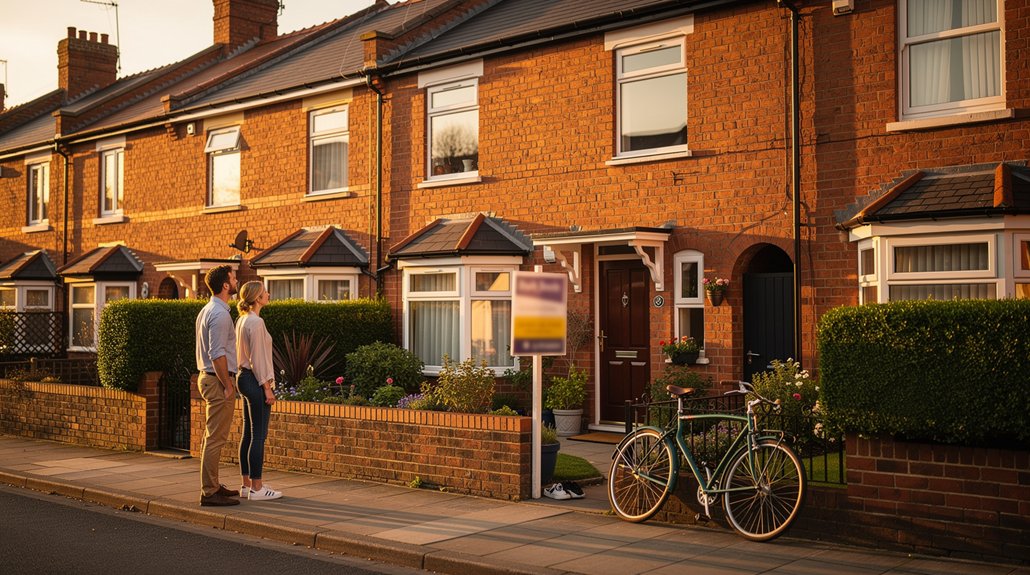
Coventry remains relatively affordable for first-time buyers, with average property prices generally below the UK average, although costs vary sharply between neighbourhoods such as Earlsdon, Stoke, and the city centre.
You’ll usually find stronger value in areas including Tile Hill, Willenhall, and Foleshill, while Earlsdon and sought-after Historic neighborhoods command higher prices because of their character, amenities, and transport links.
City-centre Luxury apartments can also carry premiums, particularly in newer developments with parking, gyms, or concierge services.
Compare sold-price data from the Land Registry with current listings, rather than relying on asking prices alone.
Check service charges, lease terms, council tax bands, and commuting costs before judging affordability.
Coventry’s rail connections, universities, and expanding employment base support demand, but local prices still depend heavily on property type, condition, and precise location.
What Can You Afford in Coventry?
How much you can afford in Coventry depends on your deposit, income, existing debts, and mortgage rate, not just the property’s asking price. Most lenders assess affordability at roughly 4–4.5 times your annual income, although your credit profile and monthly commitments can change that figure.
A 5% deposit may widen your options, but you’ll usually pay more interest and potentially need mortgage insurance. Check council tax, energy bills, service charges, and commuting costs alongside repayments.
Coventry prices vary by area, so compare sold-price data and current listings before setting your ceiling. City-centre Luxury apartments may carry higher service charges, while homes in Historic neighborhoods can involve maintenance considerations.
Get an agreement in principle, then keep a cash buffer for surveys, legal fees, moving costs, and unexpected repairs before you offer.
What Can First-Time Buyers Buy in Coventry?
Once you’ve set a realistic budget, you can focus on the types of homes available to first-time buyers in Coventry. The city’s Housing market includes compact flats, modern apartments, terraces and smaller semi-detached houses.
Flats often offer the lowest entry price, although you’ll need to check service charges, lease length and planned maintenance.
Terraced homes can provide more space and outdoor access, while newer developments may offer better energy efficiency but higher purchase prices.
Compare sold prices, not just asking prices, using Land Registry data and current listings.
If you’re considering property investment later, assess rental demand, running costs and potential resale appeal rather than assuming prices will rise.
Check each property’s condition, council tax band, energy rating and likely renovation costs before making an offer.
These details can *considerably* affect affordability and monthly outgoings.
Which Coventry Areas Suit First-Time Buyers?
Choosing the right Coventry area depends on your budget, commute and priorities. For lower entry prices, compare Tile Hill, Willenhall and parts of Foleshill, where smaller terraces and flats can offer better value.
You’ll generally find more period housing and established streets in Earlsdon, Stoke and Coundon, although prices may be higher.
South Coventry areas, including Finham and Green Lane, often appeal if you prioritise schools, parks and a quieter setting.
Check recent sold prices, council tax bands and lease charges before making an offer.
Local amenities matter too: assess supermarkets, GP surgeries, schools, green space and evening facilities within walking distance.
For neighborhood safety, review police data, visit at different times and ask residents about noise, parking and street conditions.
That evidence will help you match affordability with daily comfort.
Can You Commute Easily From Coventry?
Your commute can make a major difference to Coventry’s affordability, so check journey times before prioritising a particular neighbourhood.
Coventry railway station offers regular services to Birmingham, with fastest journeys taking around 20 minutes, and London Euston, often reachable in roughly an hour.
You’ll find frequent local bus routes, although peak-time traffic can slow trips across the city, particularly along the A45, A46 and ring road.
If you work nearby, cycling or walking could reduce your monthly travel costs; dedicated routes connect several residential areas with the city centre and university.
Compare fares, parking charges and season-ticket prices before you buy.
Good transportation accessibility can support resale appeal, while practical commuting options may let you consider more affordable homes farther from central Coventry.
Test your likely journey at rush hour before committing.
Which Jobs and Regeneration Plans Matter?
When you assess Coventry homes, check whether nearby employment is growing across advanced manufacturing, technology, healthcare and education.
Track major regeneration schemes, including City Centre South and wider redevelopment, as they can affect demand and local amenities.
You’ll also want to review planned transport and infrastructure improvements, since better connections can support prices and commute times.
Growing Employment Opportunities
Coventry’s growing employment base can support first-time buyers, particularly around advanced manufacturing, engineering, healthcare, education and technology, where major employers and university links are creating skilled jobs. You’ll find opportunities with organisations including Jaguar Land Rover, the University of Warwick, Coventry University and University Hospitals Coventry and Warwickshire.
Before choosing a mortgage, compare your likely salary progression with commuting costs and deposit targets. Check vacancies across CV1, Walsgrave, Tile Hill and nearby Warwickshire, then test journey times by bus, rail, bicycle and car.
A stronger jobs market can improve purchasing confidence, but you shouldn’t assume every sector offers the same security. Review employer growth, contract terms and local wage data.
Living near local amenities and community events may also help you judge whether a neighbourhood suits your budget and routine.
Major Regeneration Projects
Major regeneration projects can change which Coventry neighbourhoods offer the best balance of affordability, employment access and future demand. As a first-time buyer, track planning approvals, delivery dates and funding rather than relying on optimistic headlines.
Projects around the city centre, the former precinct sites and employment areas may create new homes, retail space and offices, supporting local spending and rental demand. However, compare today’s prices with completed schemes, not proposed benefits.
Check whether developers will deliver affordable housing, public spaces and community facilities, and search council reports for delays or revised costs.
Historical landmarks and cultural events can strengthen an area’s identity, attracting visitors and businesses, but they don’t guarantee house-price growth.
Use sold-price data and local-agent evidence to test whether regeneration already influences demand before you commit.
Transport And Infrastructure Improvements
Regeneration matters more when transport improvements make jobs and services easier to reach.
As a first-time buyer, you should map your commute before choosing a Coventry neighbourhood. Track bus frequency, rail connections and journey times to employment areas such as the city centre, University Hospital Coventry and Warwickshire, and major business parks.
Public transport upgrades can strengthen demand for homes near reliable routes, but check evening and weekend services rather than relying on daytime timetables.
Road improvements may shorten car journeys, yet they can also increase noise, congestion or parking pressure. Review council plans, construction dates and traffic forecasts before making an offer.
Projects around the railway station, city centre and major corridors could support local jobs and regeneration.
Compare today’s prices with likely service improvements, while allowing for delays, disruption and higher service charges.
This approach links infrastructure spending to your budget and lifestyle.
What Will Coventry Cost Each Month?
Your monthly Coventry housing cost will depend on more than the mortgage payment: in early 2025, the average house price was about £240,000, while average private rent was roughly £900–£1,200 a month depending on property size and location.
If you buy, budget for mortgage interest, buildings insurance, council tax, utilities and maintenance. Your council-tax bill will vary by property band and area; check the latest Coventry City Council rates before committing.
Renters should add contents insurance, energy, water, broadband and any parking charges. Luxury apartments may carry higher service charges, sometimes several hundred pounds monthly, so read the lease and ask for recent accounts.
In Historic neighborhoods, older homes can require more heating and repairs.
Compare total monthly costs, not just advertised prices, and leave room for rate or bill increases.
Which Schemes and Checks Can Help You Buy?
You’ll need to check which government buying schemes currently apply to your Coventry purchase, as eligibility and thresholds can change.
Lenders will assess your income, outgoings and deposit through mortgage affordability checks.
Compare Coventry prices, sold data, transport links and local property risks before making an offer.
Government Buying Schemes
Could a government scheme make buying in Coventry more affordable?
You can explore England’s First Homes scheme, which offers eligible first-time buyers discounts of at least 30% on selected properties. Local councils may prioritise Coventry residents, key workers, or people with local connections, so check each listing’s criteria and income limits.
Shared Ownership could also reduce your initial purchase requirement: you buy a 10%–75% share and pay rent on the remainder, with housing associations setting eligibility and service charges.
For new-build Luxury apartments, ask whether the developer participates in an approved scheme; don’t assume every development qualifies.
Historic landmarks and regeneration areas may attract new construction, but availability changes quickly.
You can use GOV.UK and Coventry City Council resources to verify current rules, required deposits, resale restrictions, and application deadlines before reserving a property.
Mortgage Affordability Checks
Once you’ve identified a scheme, check whether the mortgage fits Coventry prices and your budget. Lenders assess your income, regular spending, debts, deposit and credit score before setting an affordability limit. Gather payslips, bank statements and proof of benefits or overtime, then test repayments against interest-rate rises.
Compare monthly costs with council tax, insurance, utilities and commuting expenses across Coventry, not just the advertised mortgage payment.
Sound Financial planning can strengthen your application. Reduce unsecured borrowing, avoid missed payments and keep your credit use manageable before applying.
A mortgage agreement in principle can indicate your likely borrowing range, but it isn’t a guarantee. Use calculators from several lenders or a whole-of-market broker, and ask how schemes affect eligibility, fees and deposit requirements.
Leave room for repairs and emergencies, rather than borrowing the maximum available.
Coventry Property Research
Research Coventry’s property market by comparing sale prices, typical rents and listing times across areas such as the city centre, Earlsdon, Stoke, Canley and Tile Hill. Use Land Registry sold-price data, current portals and local agent reports rather than relying on asking prices alone.
Track several months of listings to identify realistic values, buyer demand and seasonal changes.
Check whether service charges, ground rent and lease length affect Luxury apartments, particularly in the city centre.
For older homes in historic neighborhoods, arrange a survey and investigate damp, subsidence, roof condition and conservation restrictions.
Confirm council tax bands, parking rights, broadband availability and planned developments.
Search Coventry City Council’s planning portal for nearby proposals.
Before offering, compare recent sold properties and ask your mortgage adviser to stress-test the purchase against higher rates and repair costs.
Frequently Asked Questions
How Competitive Is Coventry’s Property Market for First-Time Buyers?
Coventry’s property market is competitive: you’ll face rising demand and limited affordable stock, because apparently everyone loves bidding wars. Track market trends, target neighborhood hotspots, and compare sold prices before making your offer.
What Should Buyers Know About Coventry’s Conveyancing Process?
You’ll instruct a Coventry conveyancer to check title, searches, drainage, and local planning history. Budget for property tax, legal fees, surveys, and neighborhood safety checks; compare quotes, timelines, lender requirements, and transaction risks carefully.
Are There Specific Property Surveys Recommended for Coventry Homes?
You’ll typically want a RICS Level 2 survey for Coventry’s modern homes, while older terraces benefit from Level 3. Add a Property valuation and Building inspection to uncover defects, damp, subsidence, and repair costs.
How Long Does Completing a Coventry Home Purchase Typically Take?
You’ll typically complete a Coventry home purchase within 8–12 weeks after accepting an offer. Mortgage approval, surveys, searches, and conveyancing affect timing, especially around Affordable neighborhoods and Local amenities with complex title histories.
What Insurance Should Coventry First-Time Buyers Arrange Before Moving In?
Arrange buildings and contents Home insurance before exchange, meeting your lender’s requirements. Consider Mortgage protection, life, and income-cover policies. Check Coventry flood-risk mapping, rebuild costs, and policy exclusions, then confirm coverage starts on completion day.
About the Author