
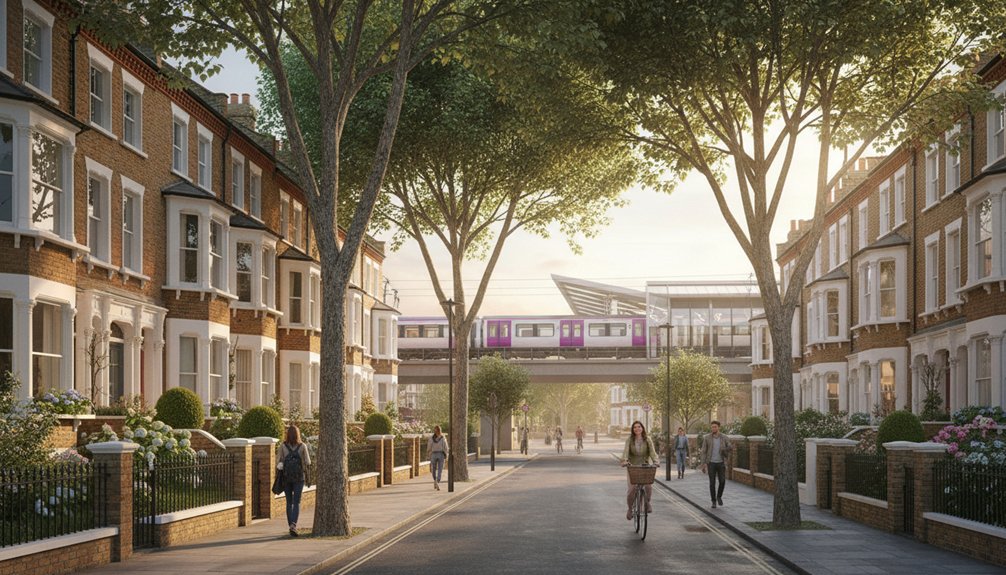
You can enjoy leafy suburban streets in Ealing while reaching central London in around 10–20 minutes on the Elizabeth line. That balance makes it attractive to families, professionals and long-term renters, though homes near stations often command a premium. You’ll find Victorian terraces, newer apartments and quieter pockets farther from town centres, each with different costs and commuting trade-offs. The key question is whether Ealing’s mix of convenience, space and price fits your priorities.
Key Takeaways
- Ealing offers spacious Victorian and Edwardian homes, modern flats, converted properties, and quieter suburban streets.
- The Elizabeth line provides fast connections to Paddington, Bond Street, Tottenham Court Road, Heathrow, and east London destinations.
- Families benefit from larger homes, reputable schools, Walpole Park, and green spaces, though school catchments can be competitive.
- Professionals can choose modern apartments near Ealing Broadway, while Northfields, Hanwell, and West Ealing may offer better value.
- Costs are relatively high, so buyers and renters should budget for property prices, council tax, service charges, and maintenance.
Is Living in Ealing Right for You?
Is Ealing right for you? You’ll suit this west London district if you want suburban breathing space without losing access to central London. The Elizabeth line makes journeys to Paddington, Bond Street, and Heathrow particularly easier, while several Underground and rail options strengthen everyday connectivity.
You can choose between lively town-centre energy and quieter residential pockets, depending on your priorities.
Local amenities are a major advantage. You’ll find independent cafés, established restaurants, supermarkets, gyms, libraries, and green spaces close to daily routes.
Ealing Broadway offers the broadest retail and transport choice; South Ealing, West Ealing, and Acton provide distinct alternatives.
The Community atmosphere appeals to families, professionals, and long-term residents, though peak-time commuting and popular school catchments can increase pressure.
Visit at different times before committing.
What Homes Can You Buy or Rent in Ealing?
Ealing’s housing market gives you a broad choice, from Victorian and Edwardian terraces around Ealing Common and South Ealing to purpose-built flats, converted period homes, and newer apartments near Ealing Broadway and West Ealing stations.
If you’re buying, compare freehold houses with leasehold flats carefully, checking service charges, lease length, building maintenance, and planned works.
Families often favour larger terraces near schools and Green spaces, while professionals may prefer modern apartments with easier access to the Elizabeth line.
You’ll also find maisonettes, bungalows, and shared-ownership opportunities, although Affordable housing remains limited and eligibility varies.
Renters can choose furnished or unfurnished homes, from studios to four-bedroom houses.
Explore each neighbourhood at different times, inspect transport routes, and use a local agent to identify suitable properties before competition intensifies.
How Much Does Living in Ealing Cost?
Living in Ealing costs more than in many parts of west London, but your budget will vary considerably by neighbourhood, property type, and proximity to the Elizabeth line.
Expect to pay a premium for homes near transport hubs, while quieter streets in Northfields, Hanwell, and West Ealing may offer better value.
Rents and purchase prices rise for larger period houses, private gardens, parking, and recently refurbished interiors.
For more affordable housing, consider flats, maisonettes, or properties farther from central Ealing and station areas.
You’ll also need to budget for council tax, energy, insurance, maintenance, and, if you’re buying, service charges or ground rent.
Local amenities can reduce daily travel costs, although restaurants, independent shops, gyms, and childcare may stretch your monthly spending.
Compare total household costs, not just headline prices.
How Well Does Ealing Connect to Central London?
With the Elizabeth line, Ealing gives you a fast, straightforward route into central London, with trains from Ealing Broadway reaching Paddington in around 10 minutes and Tottenham Court Road in roughly 20 minutes. You’ll also benefit from frequent services towards Bond Street, Liverpool Street and Canary Wharf, making key business and cultural districts easy to reach.
Central and District line trains from Ealing Common and Ealing Broadway provide useful alternatives, while National Rail services add flexibility for journeys beyond the capital. Check TfL updates before travelling, particularly during engineering works, and compare peak-time fares if you commute regularly.
Ealing Broadway’s interchange, local bus network and cycle routes extend your options. With reliable Public transport and Local amenities close to major stations, you can enjoy connectivity without sacrificing suburban convenience.
Is Ealing Best for Commuters, Families or Renters?
Whether you’re commuting into central London, raising a family or renting while you explore west London, Ealing offers a practical mix of transport, housing and amenities.
For commuters, the Elizabeth line’s fast Paddington and central London services create clear commuting advantages, while Central and District line options add flexibility.
Families benefit from spacious Victorian homes, reputable schools, green spaces such as Walpole Park, and strong neighborhood amenities, including shops, cafés and leisure facilities.
Renters can choose between modern flats near Ealing Broadway and larger properties in quieter residential streets.
However, demand keeps rents and purchase prices competitive, especially close to stations. You’ll need to balance journey times against space and budget.
Frequently Asked Questions
What Are Ealing’s Best Parks and Green Spaces for Outdoor Activities?
You’ll find leafy calm beside active recreation in Walpole Park, Gunnersbury Park, and Blondin Park. Enjoy urban biodiversity, while community sports facilities support football, tennis, cycling, and family days outdoors; choose Gunnersbury for expansive grounds and museums.
Which Schools and Nurseries Are Located in Ealing?
You’ll find primary schools such as Montpelier, Grange, and Little Ealing, alongside secondary options including Twyford, Drayton Manor, and Ellen Wilkinson. Check Ofsted School ratings and nursery availability by neighbourhood before choosing your home.
What Cultural Attractions and Entertainment Venues Can You Visit in Ealing?
You can explore local art galleries, catch live music venues, enjoy Ealing Studios’ film heritage, and unwind at Walpole Park events. You’ll also find independent cinemas, comedy nights, theatres, and seasonal festivals across the borough.
Are There Local Markets, Supermarkets, and Independent Shops in Ealing?
Yes, you’ll find Local farmers markets, supermarkets including Waitrose and Sainsbury’s, plus independent boutique shops around Ealing Broadway, Pitshanger Village, and Dickens Yard. Compare prices, visit early, and explore smaller retailers for distinctive finds.
What Healthcare Facilities and GP Services Are Available in Ealing?
You’ll find several GP surgeries, pharmacies, dentists, and Ealing Hospital nearby, with larger hospitals accessible across west London. Healthcare accessibility is generally strong, but GP appointment availability varies, so register early and compare practices’ online booking systems.
About the Author