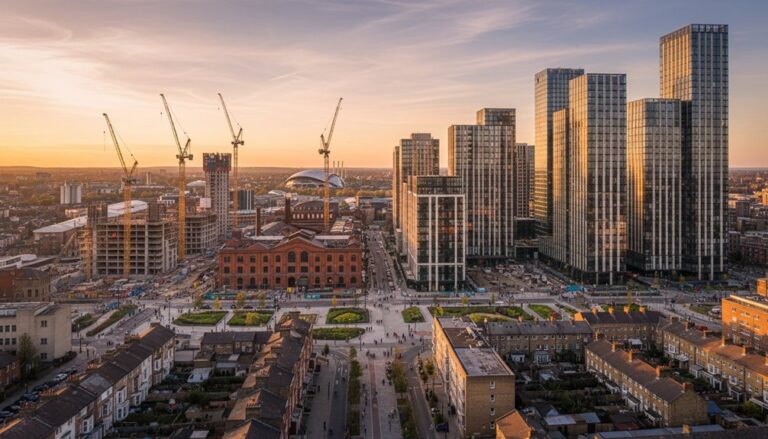
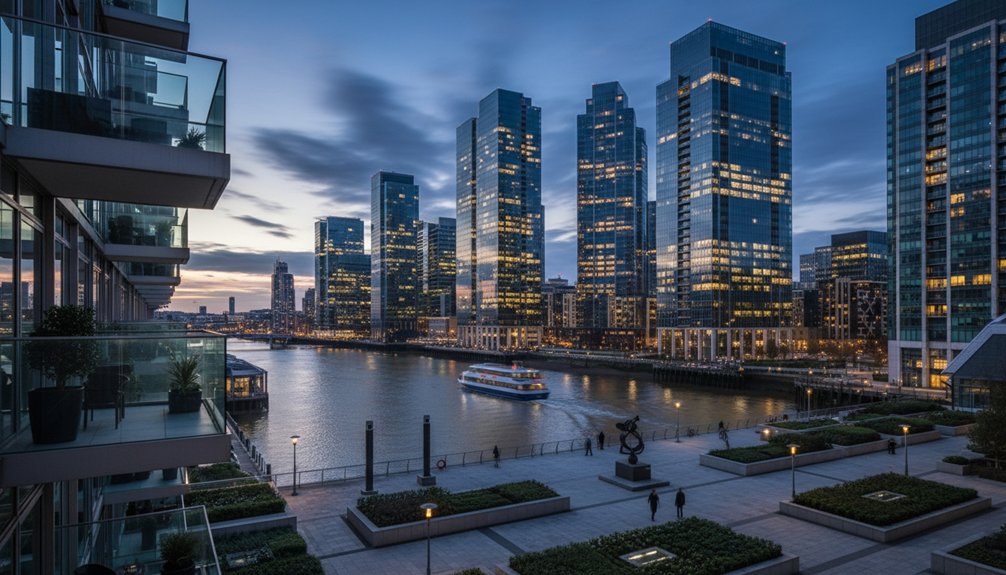
If you value sleek apartments, strong transport links, and hotel-style amenities, Canary Wharf deserves a place on your shortlist for modern high-rise living. You’ll benefit from the Jubilee and Elizabeth lines, extensive retail, gyms, concierge services, and impressive riverside towers, but you’ll also face premium rents, service charges, and a business-led atmosphere. The key question is whether convenience and connectivity outweigh the cost and limited traditional community feel.
Key Takeaways
- Canary Wharf suits professionals wanting modern high-rise apartments with concierge services, gyms, co-working spaces, and rooftop amenities.
- Excellent Jubilee, Elizabeth line, DLR, and river connections provide fast access to central London, east London, and City Airport.
- Property and rental prices are high, while service charges, council tax, utilities, and furnishing costs can substantially increase expenses.
- Jubilee Park, waterfront promenades, cultural events, and public art provide recreation, though green spaces remain limited and highly designed.
- It is less suitable for those seeking traditional community character, spacious homes, quiet streets, or extensive family-oriented facilities.
Is Canary Wharf Right for High-Rise Living?
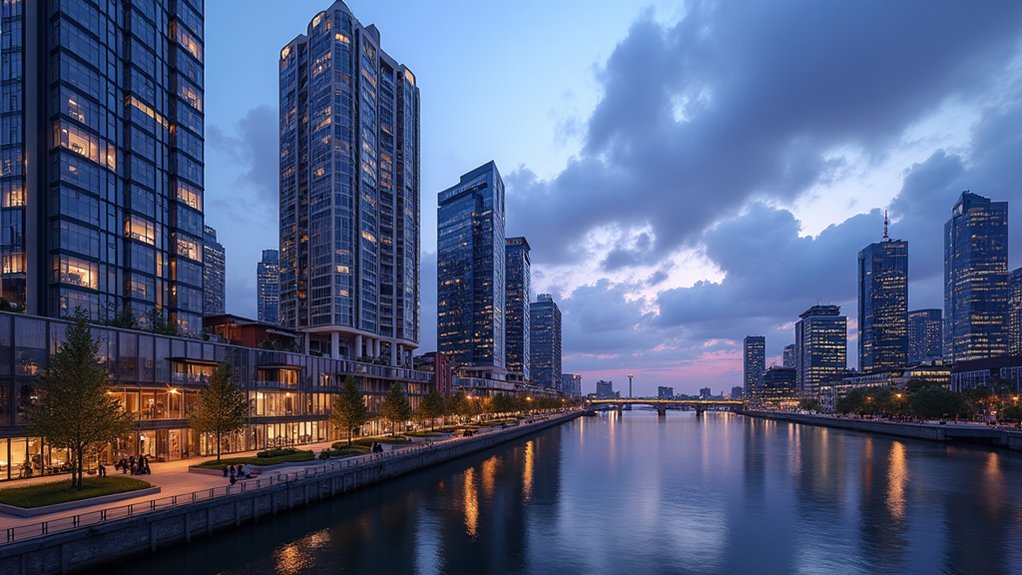
Canary Wharf is well suited to high-rise living if you value modern apartments, strong transport links, and a concentration of offices, shops, restaurants, and leisure facilities within a compact area. You’ll find developments designed around convenience, often combining concierge services, residents’ lounges, gyms, co-working areas, and roof terraces. These luxury amenities can support a time-efficient lifestyle, although service quality and building management vary by scheme.
Transport connectivity is a major advantage: the Jubilee line, Elizabeth line, DLR, and river services link you with central London, Heathrow, and east London. You should still assess commute frequency, station walking times, and weekend travel needs.
The area suits professionals who prefer an urban, amenity-rich setting. If you want greenery, community intimacy, or low-density streets, nearby neighbourhoods may feel more comfortable.
How Much Does High-Rise Living in Canary Wharf Cost?
High-rise living in Canary Wharf commands a premium, with costs shaped by building age, floor level, views, amenities, and proximity to transport. You’ll typically find one-bedroom apartments from roughly £500,000, while larger or newer homes can exceed £1 million. Prime penthouses and branded developments may command several million pounds.
Renting generally starts around £2,000 monthly for a one-bedroom flat, rising substantially for larger residences with river views. Service charges deserve close attention: Luxury amenities such as gyms, pools, concierge desks, and residents’ lounges can add materially to annual costs.
You should also budget for council tax, utilities, insurance, and possible furnishing expenses. Compare price per square foot, recent completed sales, and lease terms rather than relying on asking prices.
Investment potential remains attractive, but yields, financing costs, and market cycles require careful scrutiny.
How Easy Is Daily Life in Canary Wharf?
How easy is daily life in Canary Wharf? For you, the answer largely depends on how much you value connectivity and convenience.
Jubilee line trains reach London Bridge in about six minutes and Bond Street in roughly 13, while the Elizabeth line cuts journeys to central London further. DLR services add practical links across east London, and City Airport is typically around 20 minutes away by public transport. That commuting convenience can support demanding work schedules, although peak-time crowds and occasional disruption still affect reliability.
You’ll find substantial local amenities within easy reach, including supermarkets, pharmacies, gyms, restaurants, cafés, and everyday services in the estate’s retail centres. Prices often sit above the London average, particularly for dining and convenience shopping.
What Are Community Life and Green Space Like?
What does community life feel like in a neighbourhood shaped by offices, apartments, and public space? You’ll find a more programmed social scene than a traditional high street, with Community events, seasonal markets, fitness sessions, and cultural programming helping residents connect.
Local art appears in galleries, installations, and public-realm displays, adding character beyond the commercial core.
Green space is a meaningful advantage, although it’s designed rather than expansive. Jubilee Park provides lawns, gardens, fountains, and seating, while waterfront promenades give you routes for walking and relaxing.
Recent public-realm investment supports both residential appeal and office demand, but weekend activity can feel quieter outside event periods.
Tower density also limits privacy and uninterrupted views. Overall, you get well-maintained, accessible outdoor space and consistent programming, balanced against a deliberately curated atmosphere.
Who Will Enjoy Canary Wharf Most: and Who Won’t?
If you value convenience, modern amenities, and a well-connected urban setting, Canary Wharf will likely suit you. You’ll benefit from fast Jubilee line, Elizabeth line, DLR, and river connections, plus concentrated offices, restaurants, shops, gyms, and cultural venues.
Professionals, frequent commuters, international residents, and buyers prioritising rental demand may appreciate this connectivity and the area’s strong corporate ecosystem. Luxury amenities, concierge services, security, and efficient building management also appeal if you prefer a managed, high-rise lifestyle.
However, you may feel less comfortable if you want a traditional neighbourhood, larger homes, quieter streets, or immediate access to extensive family-oriented facilities. Premium service charges, higher purchase prices, and busy weekday footfall can reduce value, while evenings and weekends may feel less active in some zones.
Consider your commute, budget, and space requirements before committing.
Frequently Asked Questions
How Secure Are Residential Buildings in Canary Wharf?
You’ll find strong Building security in Canary Wharf, with concierge teams, controlled access, CCTV, and monitored lifts. Still, standards vary by development, so inspect procedures, review incident data, and assess Resident privacy before committing.
What Are the Parking Options for Canary Wharf Residents?
You’ll find parking amenities limited, like gold dust: some towers offer allocated spaces, while nearby commercial garages provide hourly or monthly rates. Visitor parking varies, so check building policies, availability, permits, and costs before signing your lease.
Are Pets Permitted in Canary Wharf Apartment Buildings?
You’ll find pets permitted in many Canary Wharf apartment buildings, but Pet policies vary by landlord and development. Check Animal restrictions, size limits, deposits, and approval requirements before signing, since rules can affect your rental options.
How Energy-Efficient Are Canary Wharf’s Modern High-Rise Developments?
Glass towers rise; energy demand falls. You’ll find Canary Wharf developments using sustainable design, efficient insulation, smart controls, and some renewable energy. Performance varies by building, so compare EPC ratings, service charges, and verified consumption data.
What Resale Prospects Do Canary Wharf Apartments Typically Offer?
You’ll typically find solid resale prospects, supported by strong rental demand, transport links, and Luxury amenities. Yet Market trends, service charges, interest rates, and new-build competition can affect appreciation, so compare buildings, pricing, and tenure carefully.
About the Author