
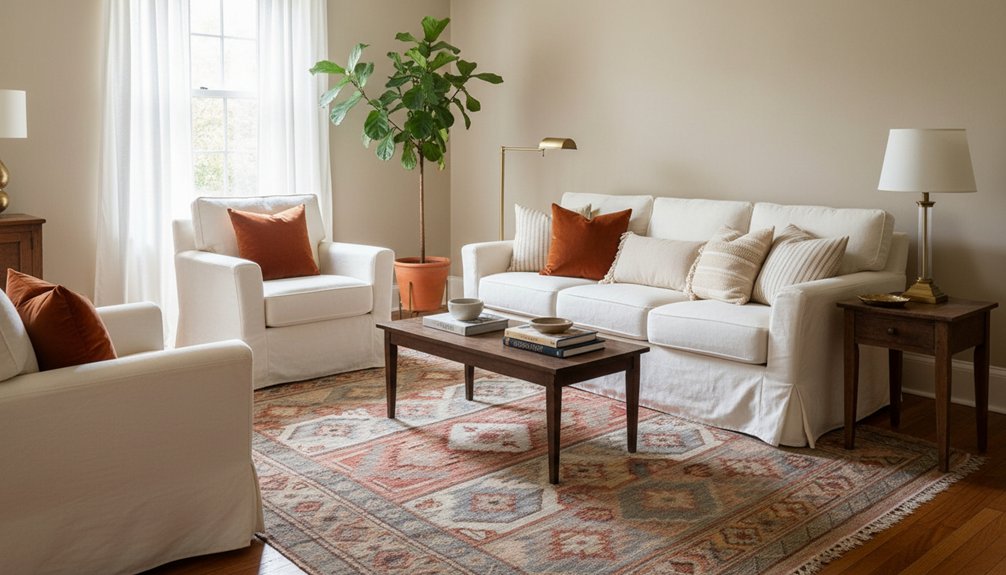
You can refresh a tired room without taking on a costly renovation. Start by clearing clutter, checking for small repairs, and setting a realistic budget so you focus on changes that matter most. Rearranging furniture, updating textiles, improving lighting, and adding affordable wall decor can shift the room’s mood quickly. A few plants and personal details will help finish the space—but the right order of changes makes all the difference.
Key Takeaways
- Declutter, deep-clean, and repair visible damage before making decorative changes.
- Rearrange furniture to improve traffic flow, maximize natural light, and keep pathways approximately 30–36 inches wide.
- Layer floor, table, and accent lamps while using mirrors, clean windows, and lighter curtains to brighten the room.
- Refresh textiles with new pillow covers, throws, curtains, and complementary patterns or textures.
- Personalize the space with meaningful artwork, plants, accessories, and carefully edited displays that maintain visual balance.
Declutter and Assess the Room First
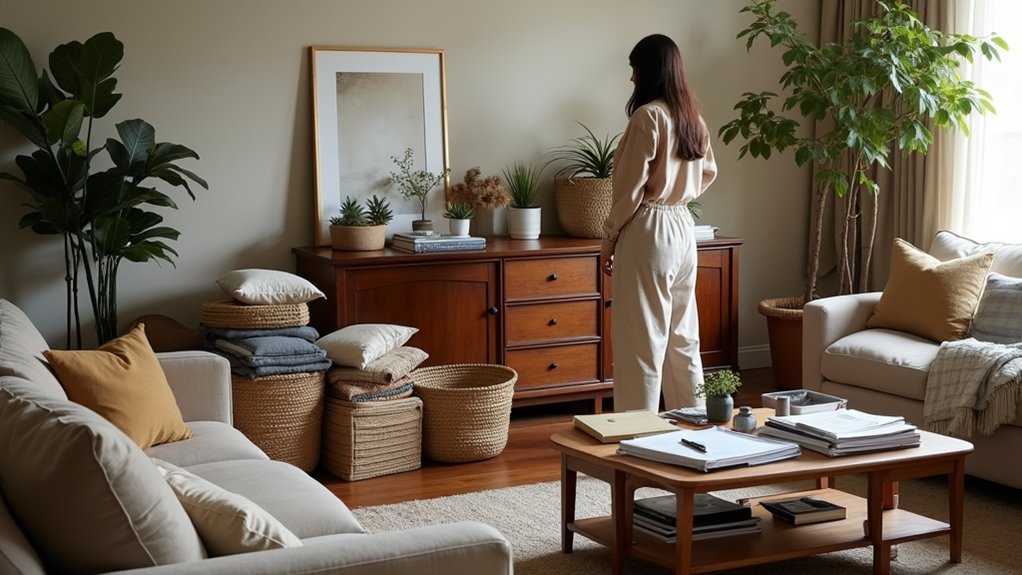
Before buying anything, clear the room and assess what’s already working. Remove clutter, then sort every item into three groups: keep, relocate, or donate. Be honest about what you use and what merely occupies space.
Clean surfaces, floors, windows, and light fixtures so you can judge the room fairly. Notice where natural light falls, which areas feel cramped, and whether furniture placement supports how you move through the space.
Check for worn hardware, loose legs, damaged lamps, or stains you can repair instead of replace. Look at your existing colors, textures, and patterns together; simple color coordination may reveal that a few rearrangements can create a calmer, fresher look.
Photograph the room from several angles, and measure key pieces before shifting them. This assessment gives you a clear starting point and prevents unnecessary purchases.
Set a Budget and Choose Priorities
Set a realistic budget before you make changes, then rank projects by impact and urgency. Start your Budget planning by reviewing available cash, setting a firm spending limit, and reserving 10 to 15 percent for unexpected costs.
List every possible update, from paint and lighting to hardware and textiles, then estimate each item before you shop.
Use Priority setting to separate essential repairs from cosmetic improvements. Address safety issues, damaged surfaces, and poor lighting first.
Next, choose changes that will transform the room without requiring major construction. If funds run short, complete one area well rather than buying several unfinished upgrades.
Compare prices, look for sales, and reuse anything that remains useful. Track purchases as you go, and pause before adding extras.
A clear plan helps you refresh confidently while protecting your finances.
Rearrange Furniture for Better Flow
Rearrange furniture to improve movement before buying anything new. Start by identifying the room’s main paths, such as the route between the door, sofa, and kitchen. Aim for clear walkways about 30 to 36 inches wide, and remove pieces that force you to turn sideways or squeeze past corners.
Evaluate furniture placement from every entrance, not just your favorite seat. Shift the sofa away from blocking windows or doorways, and position chairs to support conversation without interrupting traffic flow.
If the room feels crowded, move one less-used piece to another space before considering disposal. Use painter’s tape to mark proposed footprints, then live with the layout for a day. You’ll find awkward spots quickly, and you won’t spend money solving a problem that better arrangement can fix.
Refresh the Room With Textiles
Textiles can change a room’s color, texture, and comfort without the cost or disruption of new furniture. Start with affordable updates, such as swapping pillow covers, adding a throw, or replacing tired curtains. Choose colors that connect with pieces you already own, so your purchases feel intentional rather than excessive.
Layering Textile textures gives the room depth. Combine smooth cotton, nubby linen, soft velvet, or woven wool, but repeat at least one material to keep the look cohesive. For interest, try Pattern mixing with one large print, one smaller pattern, and a solid color. Keep the palette related, and vary scale instead of combining several bold designs.
Before buying, measure windows and furniture, then check care labels. Washable, durable fabrics offer better value, especially in busy homes. Rotate seasonal textiles to refresh the space economically without creating clutter.
Brighten the Room Without Rewiring
You can brighten the room without rewiring by layering portable lamps, such as a table lamp, floor lamp, or rechargeable light.
Make the most of natural light by opening curtains, cleaning windows, and using light-colored, reflective surfaces.
Start with what you already own, then add affordable fixtures only where you need more illumination.
Layer Portable Lighting
When a room feels flat or dim, layer portable lighting instead of rewiring. Start with a floor lamp beside a sofa or reading chair, then add a table lamp to balance the opposite side.
Use a small accent lamp on a shelf, console, or cabinet to create layered illumination and draw attention to useful areas. Choose warm-white LED bulbs, which use less energy and make the space feel comfortable.
You don’t need matching fixtures; coordinate finishes or shades for a collected look. Plug lamps into timers or smart plugs so you can control them easily and avoid leaving lights on unnecessarily.
Shop thrift stores, discount retailers, or your own home before buying new pieces. Finally, move each lamp at night until the room feels evenly lit without glare or harsh shadows.
Maximize Natural Light
Once your portable lamps are in place, make the most of the daylight you already have. Start by washing windows inside and out; clean glass can noticeably brighten a room.
Move bulky furniture away from the window, and choose low-profile pieces that won’t block the view. Hang mirrors opposite or beside windows to bounce light deeper into the space, but avoid placing them where glare becomes distracting.
Review your window treatments, too. Replace heavy curtains with sheer panels, or mount existing rods several inches wider and higher so fabric clears more glass. Keep blinds open during the day, and use light-colored walls and rugs to reflect sunshine.
If your room still feels dim, compare the cost of a solar tube with skylight installation. A smaller daylight upgrade may deliver brightness without rewiring or remodeling.
Add Color Without Repainting
Add color without repainting by layering affordable, removable accents throughout the room. Start with one dominant hue, then choose two supporting shades for balance. Use color psychology to guide your choices: blues and greens can feel calming, while yellow or coral may add energy.
Test your color pairing with inexpensive items before buying several pieces. Try a washable runner, patterned throw, cushion covers, or a small vase to introduce controlled bursts of color. Coordinate accents with existing furniture so your room feels refreshed, not chaotic.
Shop secondhand, compare prices, and look for sales on seasonal textiles. Keep bold colors limited to a few focal points, and repeat each shade at least twice for cohesion.
When your taste changes, you can swap these pieces without construction, mess, or a costly commitment.
Refresh Walls With Affordable Decor
Refresh your walls with affordable decor that changes the room’s character without construction or a large budget. Start with Wall decals when you want a quick update that’s easy to remove. Choose a simple pattern, botanical shapes, or geometric lines, and apply them to a clean, smooth surface. Measure first so the design looks intentional rather than crowded.
Decorative tapestries can cover a broad area while adding texture and warmth. Use removable hooks or a lightweight hanging rod to protect the wall and make future changes simple. Before buying, measure your space and check the fabric’s care instructions.
You can also frame a small textile for a polished look without paying for custom artwork. Shop secondhand, compare prices, and select pieces that complement your existing colors, so your refresh feels cohesive and affordable.
Build a Focal Point From What You Own
You don’t need new purchases to create a focal point—start by giving existing artwork a prominent, well-lit spot.
Rearrange statement furniture to direct attention and improve the room’s flow.
Then layer meaningful accessories nearby to add personality without overspending.
Highlight Existing Artwork
When your room feels flat, let an existing painting, print, or photograph become the focal point instead of buying new décor. Give it breathing room by clearing nearby clutter and choosing a wall where natural light won’t create glare.
Test your artwork arrangement on the floor first, especially if you’re grouping several smaller pieces. Keep spacing consistent, and align edges or centers to create a deliberate look.
You can refresh a tired frame with gentle cleaning, touch-up paint, or affordable matting; this simple frame enhancement may make the piece feel current.
Hang art at eye level, using the correct hardware for its weight and your wall type.
If the colors feel disconnected, echo one shade with a cushion, throw, or small accessory you already own.
Don’t overcrowd the display.
Rearrange Statement Furniture
Let a statement sofa, bed, dining table, or cabinet anchor the room by repositioning it where it naturally draws attention and improves movement. Test furniture placement before committing: pull pieces away from walls, center a sofa toward the room’s strongest feature, or angle a cabinet to define an underused corner.
Keep pathways clear, allowing comfortable space around doors, windows, and seating. Use spatial organization to separate functions, especially in open-plan rooms; position a sofa to distinguish conversation space from a work or dining area.
Don’t buy replacements when a new orientation can create impact. Slide heavy items on furniture glides, or ask for help to prevent floor damage. Step back after each change and check the view from the entrance.
A thoughtful arrangement can make familiar pieces feel intentional, balanced, and refreshed.
Layer Meaningful Accessories
Start with objects you already own—a favorite print, travel find, inherited dish, or stack of books—and group them to create a clear focal point. Choose a shelf, console, or coffee table, then arrange pieces at different heights for visual balance.
Lean artwork against the wall instead of buying a frame, and use books as low-cost risers. Limit the display to a few items so each one has room to stand out.
Meaningful accessories work best when they reflect your interests, memories, or everyday life. Combine texture, such as ceramic, wood, glass, or woven fabric, to keep the arrangement from looking flat.
Step back and remove anything that feels random. This approach creates personal storytelling without a shopping spree, while rotating pieces seasonally keeps your room feeling fresh.
Finish With Plants and Small Details
Plants and small finishing details can make a refreshed room feel intentional without adding much to your budget. Start with indoor greenery that suits your light, schedule, and space. A pothos, snake plant, or ZZ plant can add life with minimal care, while a small herb pot can brighten a kitchen windowsill. Use existing baskets, jars, or thrifted planters to keep costs down.
Next, add decorative accents with purpose. Try one textured throw, a pair of coordinated cushions, or a small tray to organize everyday items. Repeat a color already found in your rug, artwork, or curtains so the room feels connected. Leave some surfaces open; too many objects can make the space feel cluttered.
Finally, step back and remove anything that doesn’t serve the room’s comfort, function, or overall balance.
Frequently Asked Questions
How Can I Refresh a Rented Room Without Violating My Lease?
You can refresh your rented room safely: 80% of decor impact comes from surfaces and lighting. Choose temporary decor, try removable DIY projects, avoid drilling, and confirm adhesive limits with your landlord first.
Which Updates Provide the Best Return When Preparing a Room for Sale?
Prioritize fresh paint, deep cleaning, updated lighting, and strategic decluttering. Improve furniture arrangement to make rooms feel spacious, add tasteful wall art, and repair visible flaws. You’ll attract buyers without overspending or over-renovating unnecessarily.
How Do I Make a Small Room Feel Larger Without Removing Walls?
You can make a small room feel larger with light Color schemes, mirrors, and smart furniture placement. Choose multifunctional pieces, clear walkways, and consistent flooring; even a little borrowed light works wonders.
What Safety Considerations Should I Address When Updating an Older Room?
Check for fire risk, lead paint, asbestos, and faulty wiring before updating. Don’t disturb suspect materials; test surfaces, install smoke detectors, and hire licensed professionals for electrical, structural, or hazardous-material work.
How Can I Reduce Waste While Refreshing My Room Sustainably?
You can reduce waste by questioning whether replacement improves anything: repair first, reuse furniture, choose DIY projects, donate extras, and buy eco friendly materials locally, durable, secondhand, or with recycled content to stretch your budget.
About the Author


