

If you want a manageable cost of living without giving up everyday convenience, Derby deserves a closer look. You’ll find a range of housing options, useful local amenities, green spaces, and strong links to nearby cities. The right neighbourhood can make a significant difference to your budget and commute, so it’s worth comparing more than property prices alone. From living costs to family life, several factors will determine whether Derby suits you.
Key Takeaways
- Derby offers generally lower housing costs than Nottingham, Birmingham, and Manchester, although popular neighbourhoods can still be expensive.
- Areas such as Chaddesden, Alvaston, Normanton, and Pear Tree provide competitive rents, amenities, and convenient transport links.
- Strong road, rail, bus, cycling, and park-and-ride connections make commuting around Derby and to nearby cities relatively practical.
- Families benefit from varied housing, schools, parks, healthcare, shops, and leisure facilities, though school quality differs between areas.
- Derby can provide an excellent value-convenience balance when residents compare total costs, commute times, amenities, and neighbourhood suitability.
How Much Does It Cost to Live in Derby?
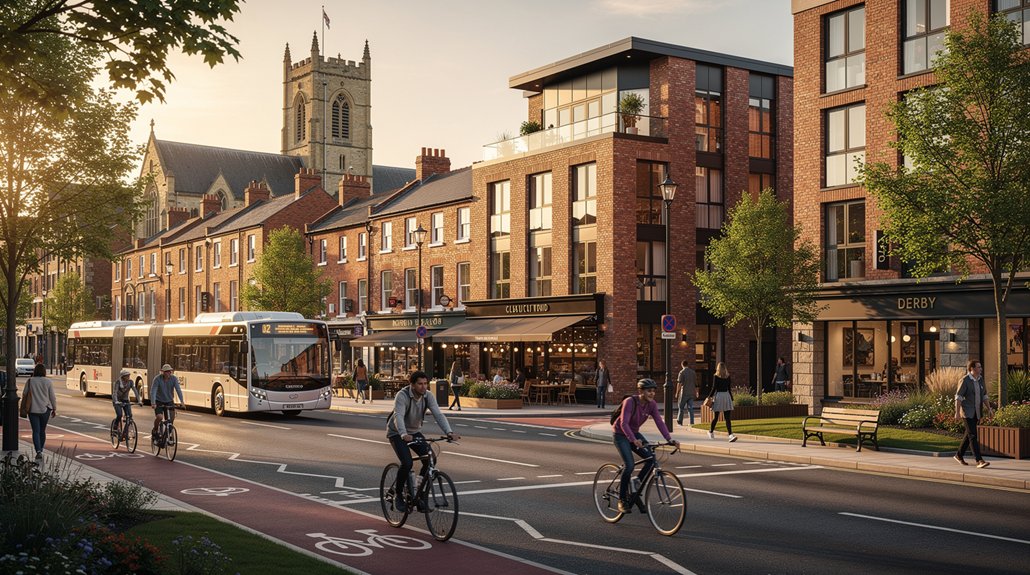
Living in Derby can be more affordable than in many larger UK cities, but your biggest expense will usually be rent or a mortgage.
For a useful cost comparison, check current listings alongside council tax, energy, broadband, and transport costs. A typical one-bedroom rental often costs less than in Nottingham, Birmingham, or Manchester, although prices vary with size and condition.
Groceries, eating out, and leisure can also remain manageable if you shop locally and use city-centre offers.
Your commute matters: living near work or a frequent bus route can reduce fuel, parking, and maintenance bills.
Calculate your monthly essentials before choosing a property, then leave room for savings and unexpected repairs.
Derby’s lifestyle affordability improves when you balance housing costs with convenience, rather than focusing only on the advertised rent.
Which Derby Areas Offer the Best Value?
If you’re comparing Derby neighbourhoods, look beyond the headline rent and assess what you’ll save on commuting, parking, and everyday shopping.
Chaddesden often offers competitive rents, useful Local shopping, and straightforward bus links into the centre.
Alvaston can work well if you want access to the A50, nearby supermarkets, and reasonably priced homes, though you should check parking carefully.
Littleover usually costs more, but excellent schools, independent shops, and reliable transport may justify the premium for families.
Normanton and Pear Tree can provide lower rents and excellent city-centre access, helping you reduce travel costs; compare streets individually for noise, condition, and parking.
Mickleover gives you quieter surroundings and leisure activities nearby, but commuting savings depend on your workplace.
Before choosing, total rent, bills, transport, parking, and weekly shopping costs.
What Is Everyday Life Like in Derby?
Once you’ve compared total costs across Derby’s neighbourhoods, consider how each area fits your daily routine. You’ll find a practical city with a strong sense of local culture, from independent cafés and markets to the Museum and Theatre.
Central districts suit you if you value walkable errands, evening choices, and quick access to shops.
Residential areas such as Mickleover, Allestree, and Littleover offer quieter streets, schools, parks, and more space, though you’ll trade some convenience for calm.
Families and active residents can make good use of riverside paths, Markeaton Park, and nearby countryside for affordable outdoor activities.
Check grocery options, healthcare, schools, parking, and noise at different times before choosing.
Derby rewards routines that balance everyday convenience with access to green space and community life.
How Good Are Derby’s Commuter Links?
You’ll find Derby well placed for commuting, with regular rail connections and quick access to major roads.
Local buses and other transport options can help you reach work, stations, and nearby towns without relying on a car.
Check journey times and ticket costs for your route to see where Derby offers the best value.
Rail Connections
Derby’s rail links give commuters a practical, good-value alternative to driving, with direct services to Nottingham, Birmingham, Leicester, and Sheffield from the city’s central station. You can reach key employment centres without changing trains, making daily journeys simpler and often cheaper than parking and fuel.
Frequent services support flexible working, while the station’s central location puts shops, offices, and bus connections within easy reach. Check peak and off-peak fares before committing, as travelling slightly earlier or later can reduce your weekly costs.
Season tickets may offer better value if you commute regularly, but compare them with flexible bundles if you work from home some days.
For reliable public transport, Derby performs well. Car accessibility matters less when your workplace sits near a destination station, though you should check walking distances and first-train times before choosing where to live.
Road Accessibility
With the A38, A50, and A52 close by, you can reach Birmingham, Nottingham, Leicester, and Stoke-on-Trent by road without relying on city-centre routes. That gives you useful flexibility for commuting, visiting clients, or reaching regional airports and business parks.
The A50 provides a practical east-west link, while the A38 helps you travel north or south around Derby’s busier central streets. You’ll still need to allow extra time during peak periods, particularly near Markeaton, Littleover, and major junctions.
Check live traffic before leaving and compare routes when roadworks affect your usual journey. Good road access also makes weekend trips to local attractions and community events easier, helping you enjoy Derby’s surroundings without paying the premium often attached to living in larger cities.
For many households, that convenience supports lower travel costs and broader job choices.
Local Transport Options
How well do Derby’s local transport options support daily commuting? Public transit gives you practical access to the city centre, major employment areas, and surrounding suburbs. Regular buses cover most everyday journeys, although peak-time traffic can slow trips and make reliability variable.
You’ll find rail particularly useful for Nottingham, Birmingham, Leicester, and other regional destinations, with Derby station offering frequent services and straightforward connections.
If you work or study locally, cycling can reduce costs and avoid congestion. Derby’s bike infrastructure is improving, with several routes and quieter streets, but gaps remain at busy junctions, so plan your journey carefully.
For best value, compare weekly bus tickets with rail season fares, and check park-and-ride options. Living near a frequent bus route or station can also cut commuting time and car expenses.
Is Derby a Good Place for Families?
Is Derby a good place for families? You’ll find a practical mix of schools, parks, and everyday amenities without needing to cross the city for essentials.
School quality varies by catchment, so check Ofsted reports, admissions criteria, and recent inspection results before choosing a home. Areas near Littleover, Mickleover, and Oakwood often attract families, but you should compare specific streets rather than relying on broad reputations.
For outdoor activities, Derby offers plenty of affordable options. You can walk or cycle along the River Derwent, explore Markeaton Park, or spend weekends at Darley Park and Elvaston Castle.
Local leisure centres provide swimming and sports facilities, while libraries and community groups add useful activities for younger children.
Before moving, check school-run traffic, childcare availability, and commuting times. These details can make family life considerably easier.
Is Derby Good Value for Your Lifestyle?
You’ll find Derby offers relatively manageable housing costs, with options to suit different budgets and lifestyles.
Daily convenience also helps you keep spending and travel time under control, thanks to accessible shops, services, and transport links.
Compare neighbourhoods carefully to see where the best overall value fits your routine.
Housing Costs
Derby offers a practical housing balance: you’ll generally pay less than in nearby Nottingham or Birmingham while still having access to good transport links, shops, schools, and employment areas.
For buyers, that difference can translate into a larger home, a better location, or a smaller mortgage. You’ll find period terraces, modern estates, apartments, and family houses across areas such as Mickleover, Littleover, Chaddesden, and Oakwood, with prices varying considerably between streets.
Renters can also compare furnished flats, house shares, and longer-term family rentals without automatically stretching their budget. Look beyond the headline price: check council tax bands, service charges, energy ratings, and likely maintenance costs.
Affordable housing options may be limited in popular neighbourhoods, but community amenities and varied property types make Derby worth careful comparison.
Daily Convenience
Housing value matters most when it also makes everyday life easier. In Derby, you can often keep daily costs manageable by choosing a location near shops, schools, parks, and reliable transport links.
Local shopping supports quick errands without requiring a long drive, while independent businesses add character and useful alternatives to larger retailers.
You’ll also find practical ways to stay connected and entertained. Community events, from seasonal markets to local festivals, give you affordable opportunities to meet neighbours and enjoy the town.
Before choosing a property, test your likely routine: walk to essential services, check bus routes, and estimate commuting time and fuel costs.
A slightly cheaper home may offer poorer convenience, reducing its real value. Prioritise access and everyday efficiency, and Derby can provide a balanced lifestyle without stretching your budget.
Frequently Asked Questions
Can Students Find Affordable Accommodation in Derby?
Yes, you can find affordable housing in Derby, especially when term-time listings appear alongside student accommodations. Compare rents, bills, transport links, and deposit requirements early; shared houses usually deliver the best value for students.
What Cultural Attractions and Entertainment Options Does Derby Offer?
You’ll find Art galleries, museums, and historic sites across Derby, plus lively Music venues, theatres, cinemas, and festivals. Explore the Cathedral Quarter, check student discounts, and book early for popular events or performances.
Are There Reliable Healthcare Facilities in Derby?
You’ll find reliable healthcare facilities in Derby, including Royal Derby Hospital and accessible GP practices. Healthcare quality is generally strong, while Medical accessibility varies by neighbourhood, so register early and compare waiting times, transport links, and local services.
How Does Derby’s Climate Compare With Other UK Cities?
Derby’s climate combines changeable conditions with moderate rainfall, much like Nottingham and Leicester. You’ll notice manageable seasonal weather: cooler winters than southern cities, milder summers than northern ones, and climate variability, so pack layers year-round.
What Local Taxes and Council Services Should Derby Residents Expect?
You’ll pay council tax based on your property band, with local tax rates funding rubbish collection, roads, libraries, social care, and parks. Check council service quality, discounts, and support schemes before budgeting for Derby living costs.
About the Author