

You don’t need to move plumbing or replace every suite to modernise your bathroom; changing visible fixtures often creates the greatest impact. Start by choosing a consistent style and setting a realistic budget, then measure existing fittings before you buy. Updated taps, showerheads, lighting and cabinet handles can improve both appearance and function with limited disruption. Match metal finishes carefully and check installation requirements, as the right details can make the difference between a polished update and a costly mistake.
Key Takeaways
- Replace outdated taps and showerheads with water-saving models in a coordinated finish, such as brushed brass, chrome, or matt black.
- Upgrade cabinet handles and accessories to create a modern look without replacing the entire vanity or storage unit.
- Improve usability with layered, bathroom-rated lighting, including brighter ceiling lights and wall lights beside the mirror.
- Add smart features such as motion-sensor lighting, heated-mirror controls, or leak alerts where compatible and UK safety-compliant.
- Renew worn silicone seals around baths, basins, and showers using sanitary-grade, mould-resistant silicone for a cleaner, watertight finish.
Prioritize High-Impact Bathroom Upgrades
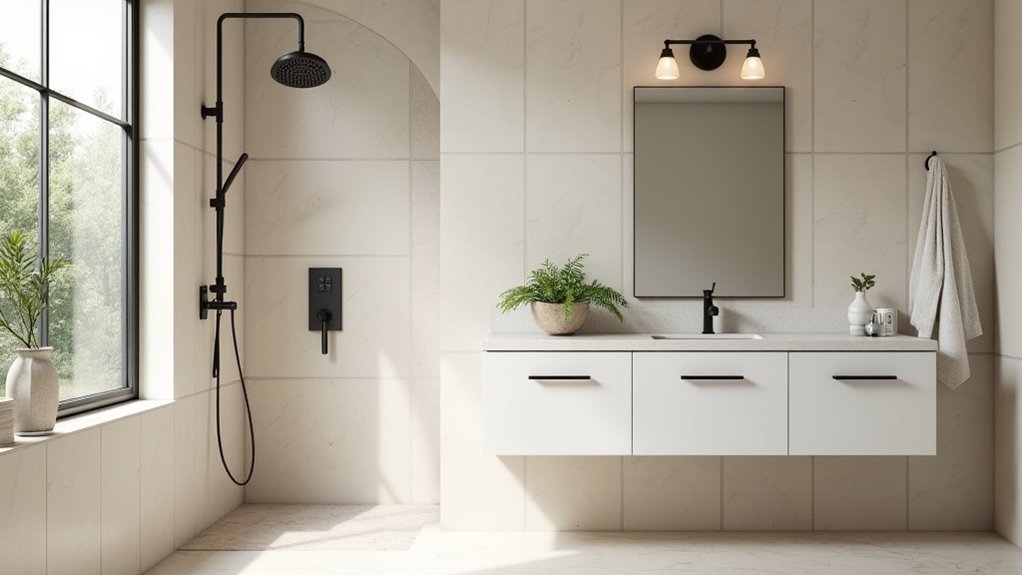
Start with high-impact bathroom upgrades that improve both appearance and everyday use, such as replacing outdated taps, shower fittings, cabinet handles or lighting. Choose fittings that suit your existing plumbing where possible, so installation stays straightforward and disruption remains limited.
A thermostatic shower valve can improve temperature control, while a water-saving aerator may reduce consumption without weakening the flow. Replace harsh or dim bulbs with suitable LED lighting, and use layered illumination around the mirror for clearer grooming.
Consider Eco friendly materials, including recycled glass accessories, responsibly sourced timber handles or durable fittings designed for long service. You can also add smart technology, such as motion-sensor lighting, heated mirror controls or leak alerts, provided the products meet UK safety requirements.
Prioritise changes you’ll notice every day and maintain easily.
Set Your Style and Fixture Budget
Choose a clear bathroom style before you buy, such as contemporary, traditional or minimalist. Then set a realistic budget for taps, shower fittings, lighting, handles and installation.
Decide which changes will make the greatest difference, and reserve money for professional plumbing or electrical work where required.
Use Color schemes to create a consistent look: soft neutrals can make a small bathroom feel calm, while darker tones add drama.
Consider Material choices carefully, balancing appearance, durability and maintenance. Brushed brass, chrome and matt black each create a distinct finish, so check that your selections work together rather than matching every item rigidly.
Compare prices from reputable UK suppliers, and include delivery costs, waste removal and a contingency of around ten per cent.
Don’t let temporary trends dictate expensive choices you’ll soon regret.
Measure Before You Buy Fixtures
Before ordering new fixtures, measure the bathroom carefully, including wall lengths, ceiling height, door clearance and the positions of existing pipes, waste outlets and electrical points. Record each dimension in millimetres, and measure twice to protect measurement accuracy.
Check whether doors, drawers and shower screens can open fully without striking walls, radiators or sanitaryware.
Note the location of wall studs, joists and access panels, as these may affect installation and future maintenance.
Compare your measurements with manufacturers’ technical drawings, not just product photographs.
Allow space for movement, cleaning and ventilation, particularly in a compact bathroom.
Check floor levels and wall condition before choosing fixings.
Finally, confirm material compatibility with existing surfaces, plumbing components and sealants.
If anything seems uncertain, ask a qualified plumber or installer to verify your plan.
Replace Outdated Taps and Showerheads
Replacing worn taps and showerheads can modernise a bathroom quickly without altering its layout. Choose fittings that match your basin, bath and existing pipework to simplify installation. Check the tap-hole configuration and connection sizes before ordering, and measure the shower hose or riser carefully.
You can create a coordinated look with brushed brass, matt black or chrome finishes. Vintage styles suit traditional properties, while streamlined designs complement contemporary rooms.
Consider Eco friendly options, such as water-saving aerated taps and showerheads with flow restrictors, to reduce consumption without sacrificing comfort. Always check the product’s flow rate and approvals, particularly if you live in a hard-water area.
Turn off the water supply before replacing fittings, use suitable washers, and test every joint for leaks. Call a qualified plumber if pipework needs alteration.
Brighten the Room With Better Lighting
Updated fittings will look their best with lighting that makes the bathroom feel brighter and more inviting. Start by maximising Natural light: keep windows clear, use a light privacy blind, and avoid blocking the glass with bulky accessories.
For darker rooms, choose a layered scheme. Fit bright, even ceiling lighting for general use, then add wall lights beside the mirror to reduce shadows when shaving or applying make-up.
Select bathroom-rated fixtures with suitable IP ratings, particularly near the shower or bath, and ask a qualified electrician to install them.
Warm-white LEDs can create a comfortable atmosphere, while neutral-white bulbs provide clearer task lighting.
Use dimmable controls where compatible, and choose efficient LED lamps to reduce energy use.
Decorative bulbs can add character, but make certain they provide enough useful light for everyday routines.
Refresh Cabinets With Modern Handles
Refresh tired bathroom cabinets by swapping dated knobs and pulls for modern handles in finishes such as brushed brass, matt black or chrome. Choose a size that suits each door and drawer, and measure existing hole centres before buying replacements. You’ll save time and avoid filling and redrilling panels unnecessarily.
For a cohesive update, select shapes that complement your cabinet style, from slim bar handles for contemporary units to ceramic or aged designs that introduce Vintage accents. Check the fixing screws match your cabinet thickness, replacing rusty hardware where necessary.
Look for durable, easy-clean options made with eco-friendly materials, such as recycled metal or responsibly sourced timber. Fit handles securely, but don’t overtighten, as this can damage the door surface or finish.
This small change can make your whole bathroom feel fresher.
Match Metal Finishes Across Fixtures
Coordinating metal finishes across taps, handles, shower fittings and accessories creates a more considered bathroom design. Start by choosing one dominant finish, then repeat it across the room for clear metal finish coordination.
Chrome remains a practical UK choice, offering a bright appearance and straightforward cleaning. Brushed brass adds warmth, while matt black gives contemporary schemes stronger contrast. Consider how each finish works with your tiles, worktops, sanitaryware and lighting before committing.
Review fixture material options carefully, as quality and maintenance requirements vary. Stainless steel and solid brass generally provide durable choices, while plated products may need gentler cleaning to protect their surface.
You don’t need every item to match perfectly, but keep finishes within a consistent style and sheen. If you’re mixing metals, use one as the main finish and introduce the second sparingly for deliberate contrast.
Install Bathroom Fixtures Safely and Affordably
Choose quality fixtures that offer reliable performance without stretching your budget.
Before starting, prepare the right tools and switch off the water supply.
Check every seal carefully to prevent leaks and guarantee a safe, lasting installation.
Choose Quality Fixtures
Quality bathroom fixtures don’t have to be expensive, but they should be durable, water-efficient and suited to your existing plumbing. Check your pipe sizes, connection types and available space before choosing taps, a shower, toilet or basin.
Look for WRAS-approved products and clear guarantees, particularly when buying online. Brass or stainless-steel components usually withstand daily use better than cheaper plated alternatives, while ceramic finishes resist staining and remain easy to clean.
Compare flow rates and dual-flush performance to reduce water bills without sacrificing comfort. Current fixture trends favour slimline designs, brushed finishes and wall-mounted fittings, but choose styles that complement your bathroom and remain practical.
You’ll also find eco friendly options made with recycled materials or low-flow technology. Confirm compatibility, return policies and installer requirements before purchasing.
Prepare Tools First
Before you begin, gather the right tools so you can install bathroom fixtures safely and avoid unnecessary costs. You’ll usually need an adjustable spanner, basin wrench, screwdrivers, drill, spirit level, tape measure, bucket, cloths and a sharp utility knife.
Choose tools suited to the fixture and follow the manufacturer’s instructions. Keep a torch nearby if your bathroom has poor lighting, and wear safety glasses when drilling.
Turn off the water supply before removing existing fittings, then place a bucket beneath connections to catch residual water.
Don’t force corroded nuts; use penetrating oil or seek a qualified plumber. Organise small parts in a tray so nothing disappears down the plughole.
After installation, record Cleaning tips and maintenance schedules with the product paperwork, keeping future upkeep straightforward and affordable.
Check Seals Carefully
Check every seal carefully before tightening connections, as a poorly seated washer can cause leaks and damage surrounding units. During your seal inspection, look for cracks, flattening, brittleness, or dirt on rubber washers, O-rings, and braided-hose seals. Replace any damaged parts rather than relying on excess force or additional tape.
Confirm each washer sits squarely in its fitting, then hand-tighten connections before using a suitable spanner gently. Don’t overtighten, as this can distort seals and split plastic threads.
Examine the bath, basin, and shower edges for gaps in existing silicone. Remove mouldy or peeling material completely, clean and dry the surface, and complete caulk replacement with sanitary-grade, mould-resistant silicone.
Allow the manufacturer’s recommended curing time before running water. Finally, open the supply slowly and check every joint for drips.
Frequently Asked Questions
How Can I Improve Bathroom Ventilation and Prevent Mould Growth?
Improve airflow by installing effective Ventilation systems, such as an extractor fan vented outdoors. Run it during showers and afterwards, open windows, wipe condensation, and use Moisture control. Repair leaks promptly, clean mould safely, and heat consistently.
What Bathroom Upgrades Are Most Suitable for Renters?
Choose reversible upgrades: add Decorative accessories, swap bulbs for lighting enhancements, install adhesive hooks, replace the showerhead, and use removable vinyl flooring. You’ll modernise your bathroom without drilling, damaging surfaces, or risking your deposit unnecessarily.
How Do I Choose Water-Saving Fixtures Without Sacrificing Performance?
Choose fixtures that promise practically miraculous performance: look for the Water Efficiency Label, dual-flush toilets, aerated taps, and thermostatic showers. Prioritise Eco friendly options, compare flow rates, and read reviews before buying.
When Should I Hire a Licensed Plumber for Bathroom Fixture Changes?
Hire a licensed plumber when changes involve pipework, drainage, gas, or hidden leaks. You’ll guarantee compliance with UK Plumbing regulations, protect fixture warranties, and avoid costly damage, especially in older or unfamiliar bathrooms.
How Can I Make a Small Bathroom Appear Larger?
Let light stretch across pale walls and reflective tiles. Choose layered bathroom lighting, wall-mounted storage solutions, and a frameless shower screen. Keep fittings compact, surfaces uncluttered, and colours consistent to create a brighter, roomier bathroom.
About the Author


