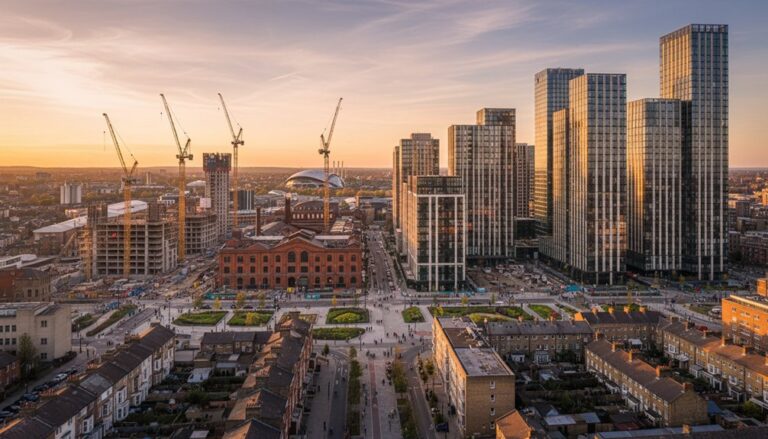
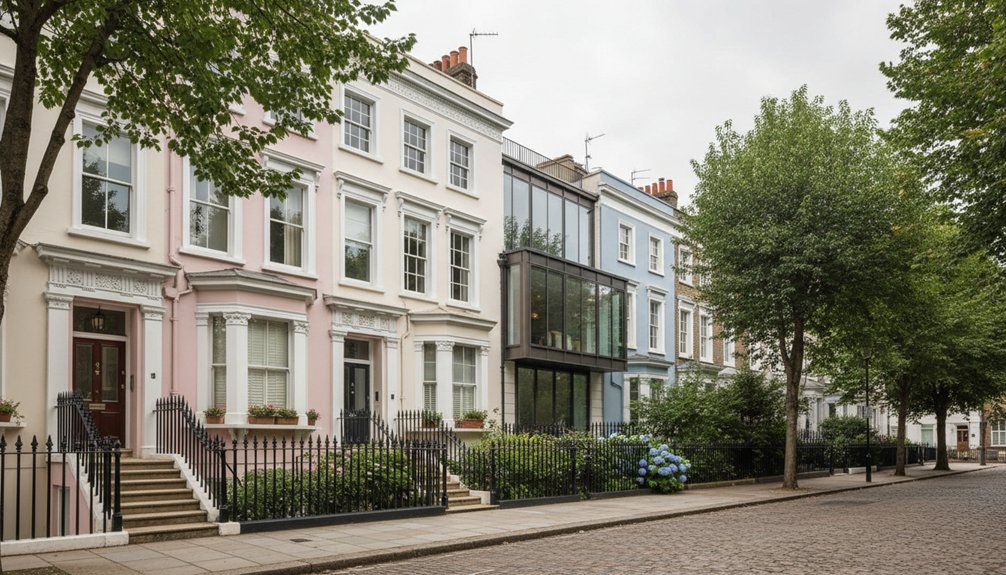
You might not realise that many of Notting Hill’s most desirable period homes sit behind conservation controls that can shape every renovation decision. You’ll find Victorian terraces, stucco-fronted villas and carefully converted flats, but character and cost often go together. Before you choose a street or property, you’ll need to weigh original features, layout, maintenance and planning limits—because the most stylish conversion may also hide the greatest practical compromise.
Key Takeaways
- Notting Hill offers exceptional Victorian and Georgian homes with sash windows, fireplaces, cornicing, high ceilings, and distinctive architectural character.
- Stylish conversions can blend modern amenities with original features, creating unique layouts while preserving the area’s historic identity.
- Prime garden-square locations command high prices, while quieter streets near Ladbroke Grove and Westbourne Park may offer better renovation value.
- Conservation controls protect period architecture but can restrict alterations and increase renovation costs, approval requirements, and maintenance responsibilities.
- The area suits buyers seeking lively community, excellent amenities, and characterful homes, but limited parking, noise, and compact spaces may deter others.
Why Notting Hill Has So Many Period Homes
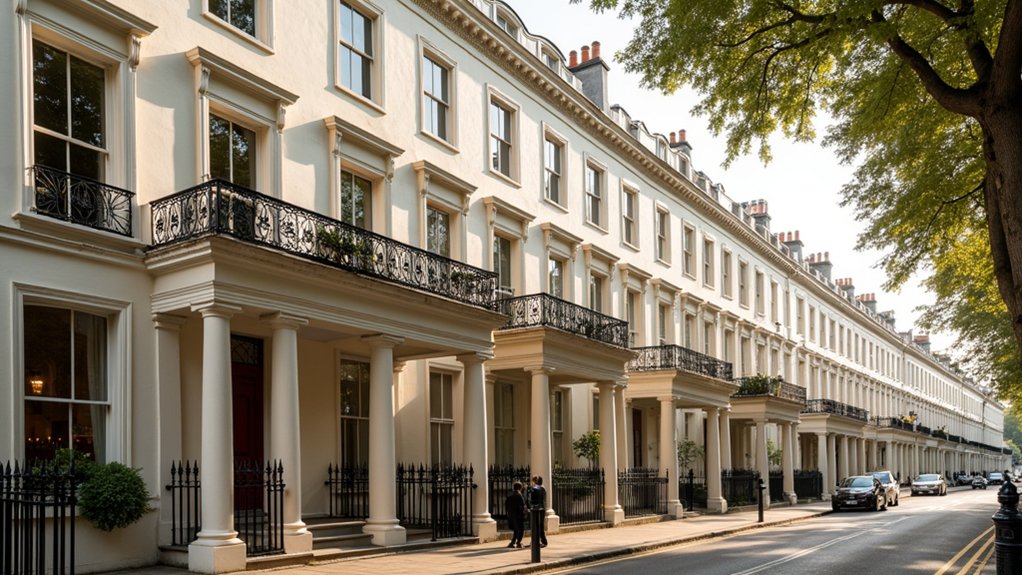
Notting Hill has so many period homes because much of the area was developed during the Victorian and Georgian eras, when terraces, stucco-fronted villas and mansion blocks shaped its residential streets.
As you walk around, you’ll see how planned expansion transformed former market gardens and rural lanes into desirable west London neighbourhoods.
Strong transport links, attractive squares and proximity to Hyde Park encouraged sustained investment, while redevelopment after wartime damage remained relatively limited.
Historical preservation has also protected the area’s historic character, particularly where conservation controls restrict unsuitable alterations.
For you as a buyer, that legacy means original proportions, mature streetscapes and renovation potential can support long-term value.
However, you should check listing status, planning constraints and lease obligations before budgeting for modernisation, because Architectural styles demand sensitive, specialist work.
Which Period Properties Define Notting Hill?
Which period properties define Notting Hill most clearly? You’ll find colourful Victorian terraces and stucco-fronted villas shaping the neighbourhood’s unmistakable character.
Many retain original sash windows, ceiling roses, fireplaces, cornicing, and elegant proportions, although careful renovation has introduced Modern amenities without erasing their identity.
You’ll also encounter compact mews houses, former workers’ cottages, and grander Italianate homes near the area’s garden squares. Each offers a different balance of privacy, volume, and restoration potential.
When you view one, inspect the roof, basement, damp protection, and listed-building constraints before judging its decorative appeal.
Historical architecture adds value here, but buyers increasingly expect efficient heating, practical kitchens, and discreet wiring.
Look beyond freshly painted interiors: the best period properties combine authentic details, sound construction, and thoughtful upgrades that support comfortable contemporary living for you.
Which Notting Hill Streets Suit Your Budget?
Your budget will usually stretch further on the quieter residential streets behind Ladbroke Grove and Westbourne Park, while prime addresses around garden squares, Holland Park, and Notting Hill Gate command higher prices.
You’ll often find better value on streets with less polished frontage, where thoughtful renovation can reveal impressive period proportions without paying solely for a famous postcode.
Around Portobello Road, you’ll balance character with strong Local amenities, though weekend activity and visitor footfall may affect your preference.
Garden-square addresses offer leafy outlooks, Historical architecture, and prestige, but conservation controls can limit alterations.
If you’re seeking a stylish conversion, look beyond headline streets towards North Kensington and the edges of Bayswater.
Walk each contender at different times, check transport noise, and compare natural light, layout, and renovation potential before choosing.
What Do Period Homes Cost in Notting Hill?
Period homes in Notting Hill typically command a premium, with prices varying sharply by street, condition, size, and architectural detail. You’ll generally pay more for a wide, stucco-fronted townhouse near Westbourne Grove, Holland Park, or Portobello Road than for a smaller terrace farther from the centre.
Refurbished homes with original cornicing, generous ceiling heights, gardens, parking, and luxury amenities can reach several million pounds, while properties needing substantial work may offer a lower entry price but demand a significant renovation budget.
Track recent comparable sales rather than relying on asking prices, and allow for stamp duty, surveys, professional fees, and building works.
Market trends can shift quickly, especially for turnkey houses, so you’ll benefit from a local agent’s valuation and a clear ceiling before making an offer.
How to Judge a Well-Designed Conversion
A well-designed conversion should make the most of its original character while delivering the light, flow, and services expected in a modern Notting Hill home. Start by evaluating architectural harmony: new openings, staircases, glazing, and extensions should feel considered rather than imposed.
Walk through the property at different times to judge daylight, privacy, sightlines, and noise from nearby streets. Then test the interior layout practically. Can you move naturally between the kitchen, dining, and living areas? Do bedrooms feel private, and do bathrooms have sensible access without compromising period proportions?
Look closely at storage, heating, electrics, insulation, and ventilation, as these details affect daily comfort and resale appeal. Finally, check whether the work has secured appropriate planning and conservation approvals before you commit.
Which Period Features Add Value in Notting Hill?
Once a conversion’s layout and workmanship pass scrutiny, look at which surviving details strengthen its value. In Notting Hill, original proportions often matter most: high ceilings, tall sash windows, generous room widths, and well-positioned fireplaces create the period character buyers recognise.
Architectural details such as ceiling roses, cornices, panelled doors, encaustic tiles, shutters, and ornate ironwork can distinguish a home from a polished but generic refurbishment. Look for interior features that feel authentic rather than newly manufactured, particularly marble fireplaces, timber floors, and restored joinery.
These elements work best alongside discreet modern upgrades, allowing you to enjoy comfort without losing identity. A coherent palette and carefully retained detailing can support stronger buyer interest, especially in sought-after streets near the village, where character remains a significant part of the premium.
What Should You Check Before Buying?
Before committing to a Notting Hill period home or conversion, check the lease, planning history, listed-building status, and any restrictions affecting alterations. Ask your solicitor to confirm remaining lease length, service charges, major works, and responsibility for roofs, windows, and shared spaces.
Review the survey carefully for damp, subsidence, roof movement, outdated wiring, plumbing, and poorly executed past work.
In mansion blocks, investigate reserve funds, cladding reports, lift maintenance, and planned expenditure.
Check flood risk, transport noise, parking controls, and the property’s energy performance, particularly where original construction affects running costs.
Walk the streets at different times to judge traffic, nightlife, deliveries, and security.
Finally, assess nearby Local amenities and access to Historical landmarks, while comparing recent sales of genuinely comparable period homes. A specialist local agent can help you test the asking price.
Can You Renovate a Notting Hill Period Home?
With the legal, structural, and ownership checks in place, you can start planning improvements to your Notting Hill period home. Begin by confirming whether your property sits within a conservation area or has listed status. These controls may affect windows, façades, rooflines, extensions, and interior features, so speak with a conservation architect and the Royal Borough of Kensington and Chelsea before finalising designs.
You can still create a comfortable, efficient home. Carefully planned layouts, discreet insulation, underfloor heating, upgraded wiring, and contemporary kitchens can introduce Modern amenities without erasing original character.
Retain cornices, fireplaces, sash windows, and timber floors where possible, combining Historical preservation with practical upgrades.
Expect detailed surveys, neighbour considerations, and potentially lengthy approvals. A contractor experienced in west London period properties will help you budget accurately and avoid costly surprises.
Is Notting Hill Right for Your Lifestyle?
Notting Hill could suit you if you value period character, independent shops, strong transport links, and a lively community, but it isn’t ideal for everyone. Its Community vibe ranges from peaceful garden squares to busy streets around Portobello Road, so visit at different times before you commit.
You’ll find excellent Local amenities, including cafés, restaurants, boutiques, schools, parks, and convenient Tube connections at Notting Hill Gate, Holland Park, and Ladbroke Grove. However, weekend crowds, event noise, and limited parking may frustrate you.
Period conversions often provide attractive layouts, yet older buildings can mean higher maintenance costs, conservation restrictions, and less storage. If you want a polished, central lifestyle and appreciate architectural detail, Notting Hill offers strong appeal.
If you need quiet streets, generous space, or easy driving, consider nearby alternatives.
Frequently Asked Questions
How Accessible Is Notting Hill by Public Transport?
You’ll find Notting Hill highly accessible: Central, District, and Circle lines connect you quickly across London, while buses cover local streets. You’ll also enjoy excellent Local amenities and Cultural attractions within easy walking distance.
Are There Reputable Architects Specialising in Notting Hill Period Homes?
Yes, you’ll find reputable Notting Hill architects experienced in historic preservation and architectural craftsmanship. Shortlist practices with local portfolios, verify planning expertise, and request references before choosing a designer for your period-home renovation or conversion.
What Council Permissions Are Needed for Exterior Alterations?
You’ll need planning permission for many exterior changes, especially in conservation areas. Check Historic preservation requirements and Planning regulations with Kensington and Chelsea Council; listed buildings need listed-building consent, while minor repairs may qualify as permitted development.
How Energy-Efficient Are Typical Notting Hill Period Properties?
You’ll find typical Notting Hill period properties charming but often draughty, with modest Energy ratings. Improve insulation, glazing, heating controls, and ventilation, while respecting Historic preservation rules; commission an EPC and whole-house assessment before purchasing or renovating.
Are There Service Charges for Converted Flats in Notting Hill?
Yes, you’ll often pay service charges for converted flats in Notting Hill. They fund communal repairs, insurance, cleaning, and Property maintenance. Check lease terms carefully, especially where Historic preservation increases costs for period-building upkeep.
About the Author