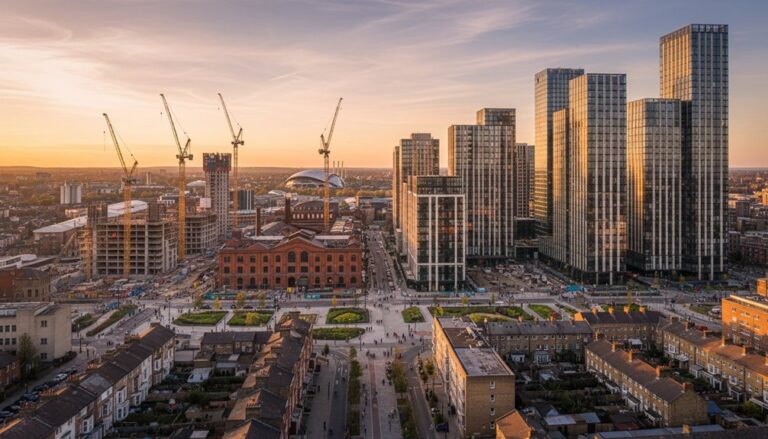
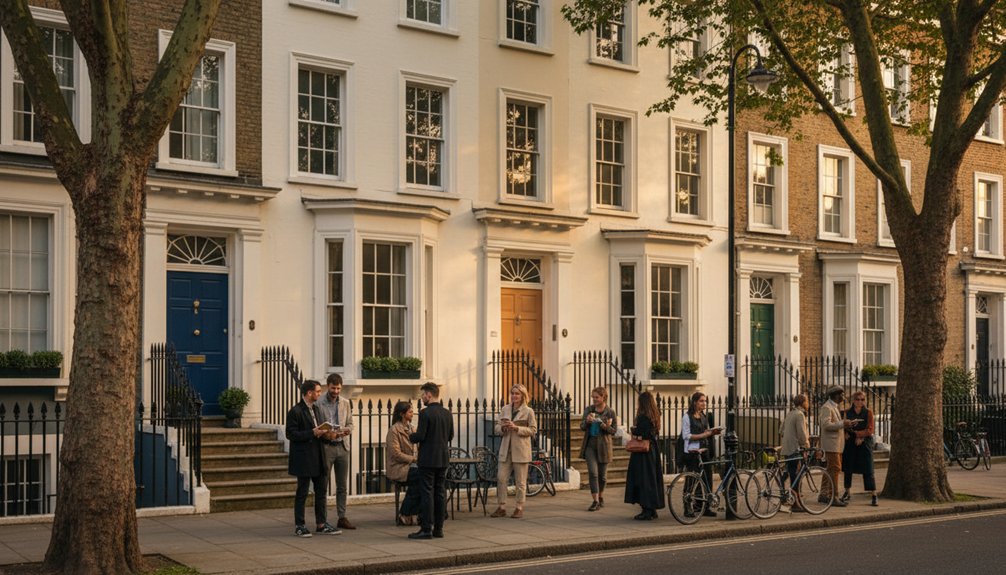
If you’re a creative professional seeking period character and an active urban setting, Islington’s Georgian terraces could suit you well. You’ll find generous proportions, original details, and easy access to Upper Street, cafés, studios, and cultural venues. However, these homes often bring higher prices, ongoing maintenance, and conservation constraints. Before you decide whether the atmosphere outweighs the practical compromises, it’s worth looking closely at the streets, layouts, costs, and workspace potential.
Key Takeaways
- Islington’s Canonbury, Barnsbury, and Upper Street areas feature elegant Georgian terraces with sash windows, stucco façades, fireplaces, and high ceilings.
- Flexible layouts, abundant daylight, and lower-ground spaces suit creative professionals seeking distinctive homes, studios, or adaptable work areas.
- Excellent cafés, independent shops, cultural venues, and transport links support a vibrant lifestyle around Angel, Highbury, and Upper Street.
- Conservation-area and listed-building controls may restrict extensions, window replacements, and other renovations, increasing planning complexity and costs.
- Buyers should carefully assess maintenance, damp, roofing, lease terms, parking, noise, rental yields, and resale demand before investing.
Is Islington a Good Fit for Creative Buyers?
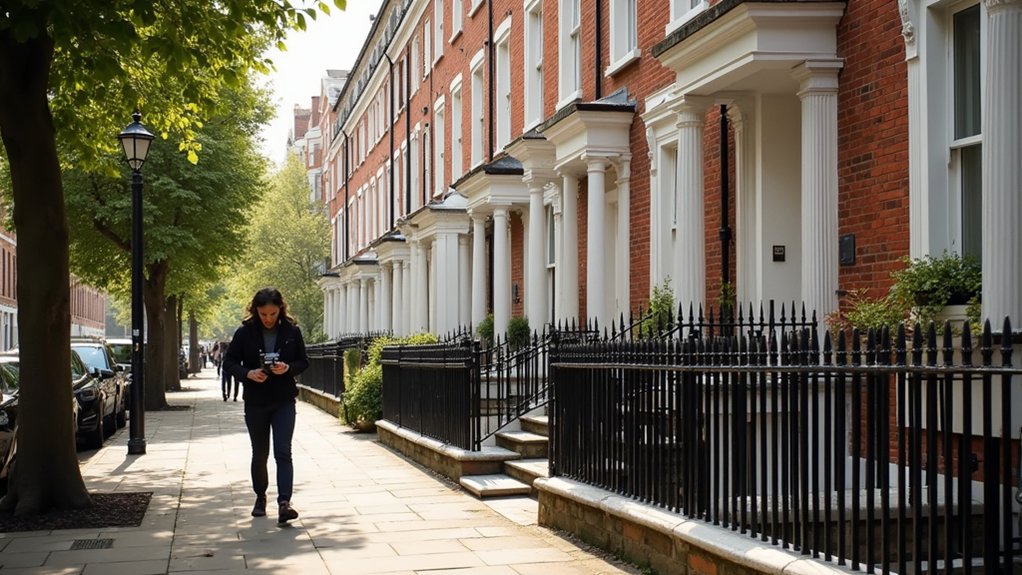
Islington suits creative buyers who want period character, a strong cultural scene, and fast access to central London. You’ll find Art galleries, independent theatres, music venues, and design studios concentrated around Upper Street, Angel, and Coal Drops Yard’s nearby creative orbit.
Boutique cafes and well-regarded restaurants also make daily life sociable without requiring a journey into Soho or Shoreditch.
Transport strengthens the area’s appeal: Angel, Highbury & Islington, and Farringdon provide practical links for work, clients, and exhibitions.
You should compare streets carefully, since noise, footfall, and pricing vary sharply between busy commercial routes and quieter residential pockets.
If you work from home, check broadband, natural light, and usable floor space before committing.
Local agents can also clarify service charges, lease terms, and likely resale demand.
What Makes Islington’s Georgian Terraces Special?
Islington’s Georgian terraces give you elegant period architecture, from sash windows to stucco façades, with strong kerb appeal.
Their distinctive proportions create balanced rooms, high ceilings, and layouts that buyers still value locally.
You’ll also find adaptable spaces suited to studios, offices, and creative living.
Elegant Period Architecture
With their elegant proportions, tall sash windows, stuccoed façades and restrained detailing, Georgian terraces give Islington its distinctive architectural character. You’ll notice how original door surrounds, fanlights, iron railings and cornices create period charm without feeling overly ornate.
These architectural details also influence value: well-preserved exteriors attract buyers who appreciate authenticity, while sympathetic restoration can strengthen long-term appeal.
Around Barnsbury, Canonbury and Angel, terraces often sit on leafy streets close to independent shops, galleries and restaurants, making the setting as compelling as the homes themselves.
When viewing a property, check listed-building status, façade condition and conservation-area rules before planning alterations. You’ll need specialist advice for sash-window repairs, stucco maintenance or external painting.
Inside, look for surviving fireplaces, shutters and floorboards, which can add character while supporting a flexible creative lifestyle.
Distinctive Georgian Proportions
Because Georgian terraces were designed around disciplined symmetry, their proportions still feel remarkably balanced today. As you view Islington homes, notice the consistent window spacing, tall sash windows, and orderly brick façades. These elements create elegant vertical emphasis without looking showy.
Shallow rooflines and repeated door surrounds give entire streets a calm, unified rhythm.
You’ll also see how scale supports value. Well-preserved terraces often attract buyers who appreciate period character, and authentic proportions can strengthen long-term appeal. Check whether alterations respect the original façade, particularly around windows, cornices, fanlights, and railings.
Strong Historical preservation protects the streetscape, while careful Architectural detailing reveals the craftsmanship behind it.
Local conservation guidance may limit external changes, so investigate permissions before you commit. When comparing properties, judge the whole elevation, not just individual decorative features.
Adaptable Creative Spaces
Beyond their disciplined façades, Georgian terraces can offer surprisingly flexible interiors for creative work. You’ll often find generous ceiling heights, front-to-back room sequences, and rear extensions that support studios, editing suites, or shared offices without sacrificing character.
That adaptability matters in Islington, where buyers increasingly want homes that accommodate both living and production.
Look closely at how previous owners handled circulation, daylight, acoustics, and storage. Historic preservation requirements may protect staircases, windows, fireplaces, and cornices, while still allowing thoughtful changes behind the frontage.
Modern renovations can add insulation, discreet lighting, glazed garden rooms, or robust flooring, but listed-building consent may apply. Before you commit, ask your surveyor and architect to test your layout, services, and planning prospects.
Flexible space adds value only when it works practically—and respects the terrace’s architectural identity.
Which Islington Areas Have Georgian Terraces?
Georgian terraces are concentrated around Islington’s historic core, particularly Canonbury, Barnsbury, and the streets near Upper Street and Islington Green. You’ll also find notable examples around Duncan Street, Colebrooke Row, and Amwell Street, where elegant façades, sash windows, and compact garden squares reflect the area’s eighteenth-century growth.
Canonbury often feels quieter and greener, while Barnsbury offers longer terraces and broad, tree-lined streets. Near Upper Street, period homes sit closer to cafés, studios, and independent shops, making the location practical for creative professionals.
Look beyond the frontage: conservation controls can shape extensions, window replacements, and roof alterations. Historical preservation matters here, but many houses support Modern renovations behind original elevations.
When viewing, check each property’s listed status, conservation-area rules, rear aspect, daylight, and access before planning changes.
How Much Do Georgian Homes in Islington Cost?
Prices vary sharply by street, condition, and outside space, but Georgian homes in Islington typically command a considerable premium over comparable modern properties. You’ll usually pay more for well-preserved period features, a quiet garden square, or proximity to Upper Street, Angel, and Highbury Corner.
Pricing also reflects lease length, service charges, conservation restrictions, and the quality of any refurbishment. Don’t judge value from the listing price alone: commission a survey, check roof and timber condition, and investigate damp before making an offer.
Historical renovation can uncover beautiful original details, but specialist joinery, listed-building consent, and modern services may substantially increase your budget.
For Property investment, calculate realistic rental yields and resale demand rather than assuming character guarantees growth. A local agent can benchmark recent, genuinely comparable sales for you.
How Much Space Do Georgian Terraces Offer?
Although Georgian terraces often look narrow from the street, they can provide surprisingly generous, well-organised accommodation. In Islington, many offer three or four storeys, with reception rooms on the ground floor, bedrooms above, and useful lower-ground space.
Typical widths range from 14 to 20 feet, while floor plans commonly deliver 1,500 to 2,500 square feet, depending on extensions and refurbishment.
You’ll often find tall ceilings, long sash windows, and carefully proportioned rooms that make the footprint feel larger than expected. Architectural details, including cornices, fireplaces, panelled doors, and shutters, add character but can limit modern alterations.
Historical preservation requirements may affect listed properties, especially when you’re considering changes to façades, staircases, or original layouts.
Before offering, measure every floor, check storage provision, and review planning history so you understand the usable space.
Can You Create a Workspace in a Georgian Terrace?
With their separate floors and generous natural light, Islington’s Georgian terraces can accommodate a comfortable home office without sacrificing living space. You could convert a rear reception room, understairs area, or spare bedroom into a focused workspace, keeping client-facing rooms presentable. Tall sash windows provide excellent daylight, while fitted shelving can use high ceilings without overwhelming period details.
During a home renovation, ask your architect to plan discreet wiring, sound insulation, and efficient heating before plastering begins. Listed-building controls may restrict window changes, built-in joinery, or external alterations, so check with Islington Council early.
Good interior design balances original cornicing and fireplaces with ergonomic furniture, task lighting, and concealed storage. If you work creatively, prioritise broad desk space, reliable connectivity, and flexible layouts. A well-planned office can also strengthen resale appeal among professional buyers.
What Are Islington’s Main Lifestyle Trade-Offs?
Islington offers a strong mix of period architecture, independent shops, restaurants, green spaces, and quick City links, but that convenience comes with trade-offs.
You’ll pay a premium for centrality, especially around Angel, Highbury, and Canonbury, while Georgian terraces can bring costly maintenance, limited parking, and awkward layouts.
Busy streets and nightlife create energy, yet they may also mean noise, deliveries, and less privacy than the façade suggests.
Transportation access is excellent, but frequent services don’t eliminate rush-hour crowding or station disruption.
Urban amenities sit close by, though convenience can encourage higher everyday spending, from cafés to local services.
Check glazing, roof condition, basement damp, and rear access carefully during viewings.
Compare weekday and weekend conditions, then weigh ongoing costs alongside the home’s character and location before committing.
Who Should Choose an Islington Georgian Home?
Those trade-offs make an Islington Georgian home best suited to buyers who value architectural character and walkable city living enough to accept higher costs and ongoing upkeep.
You’ll suit these terraces if you want period proportions, sash windows, garden access, and quick links to Angel, Upper Street, and central London. They’re particularly rewarding for professionals in design, media, and the arts who’ll use generous reception rooms as work or entertaining spaces.
Before you commit, check the listing’s conservation-area status, permitted alterations, and service-charge arrangements. Historic preservation can restrict everything from window replacements to external insulation, while modern renovations may require careful planning and specialist contractors.
Choose a Georgian home if you can budget for roof, brickwork, and heating upgrades without compromising your cash reserves or renovation timeline.
Frequently Asked Questions
How Energy-Efficient Are Georgian Terraces in Islington?
Like leaky boats, Georgian terraces often lose heat through sash windows, solid walls, and roofs. You’ll improve efficiency with secondary glazing, insulation, and draught-proofing, while respecting Historic preservation and architectural authenticity requirements.
What Are the Council Tax Rates for Islington Georgian Homes?
You’ll pay council tax based on your Georgian home’s Valuation Band, not architectural character: Islington’s 2024/25 charges range from roughly £1,472 (Band A) to £4,416 (Band H). Historic preservation can influence property valuation, but not rates.
Are Georgian Terraces in Islington Leasehold or Freehold?
Like a patchwork, Islington’s Georgian terraces can be leasehold or freehold. You’ll often find converted flats leasehold, while entire houses remain freehold. Check title documents, service charges, restrictions, and Historical preservation obligations protecting Architectural authenticity carefully.
How Difficult Is Parking Near Islington’s Georgian Terraces?
Parking challenges around Islington’s Georgian terraces are significant: you’ll face controlled zones, scarce spaces, and expensive permits. Check your property’s Residential accessibility, confirm eligibility, and consider nearby car parks, cycling, or public transport for daily journeys.
What Planning Restrictions Apply to Renovating Georgian Properties?
You’ll face Historic preservation rules: check whether your Georgian terrace is listed or within a conservation area. Secure listed-building consent, planning permission for significant Architectural modifications, and approval before altering façades, windows, roofs, layouts, or interiors.
About the Author