
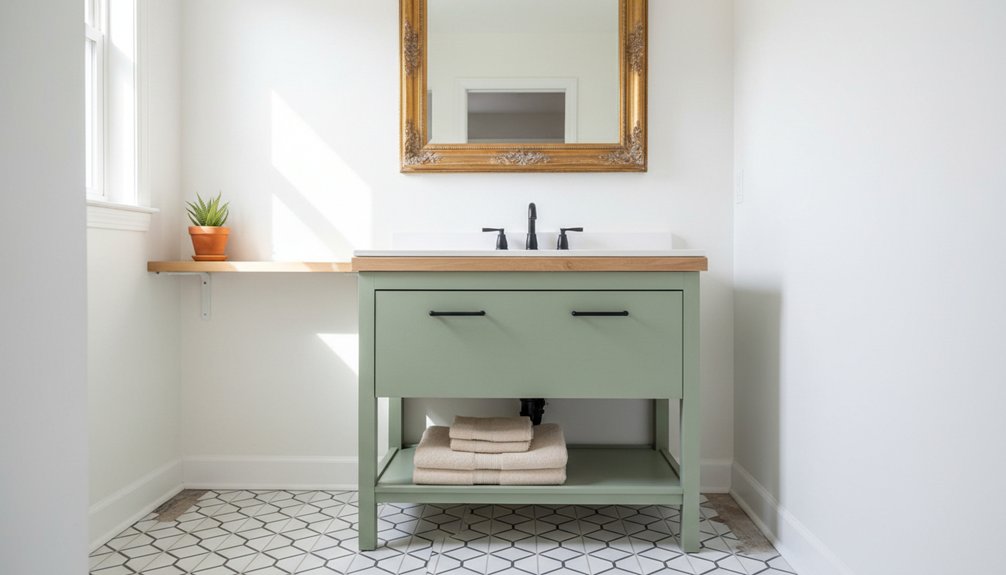
Your bathroom doesn’t need a full makeover to feel renewed; a fresh coat of paint can serve as its clean slate. Start by setting a firm budget and choosing improvements that deliver the most impact, such as moisture-resistant walls, updated hardware, better lighting, and practical storage. You’ll save more by keeping the existing layout and handling cosmetic work yourself. Before buying supplies, identify which repairs matter most—because one overlooked problem can change your entire plan.
Key Takeaways
- Set a realistic budget, reserve 10% for surprises, and prioritize essential repairs over cosmetic improvements.
- Refresh walls with mildew-resistant paint after cleaning, patching, sanding, and priming damaged areas.
- Replace outdated hardware, faucets, shower fixtures, cabinet pulls, and mirrors without relocating plumbing.
- Maximize storage with vertical shelves, narrow towers, mirrored cabinets, and adhesive hooks.
- Improve lighting and style affordably with damp-rated LEDs, practical accessories, moisture-resistant artwork, and refreshed textiles.
Set Your Budget and Choose High-Impact Updates
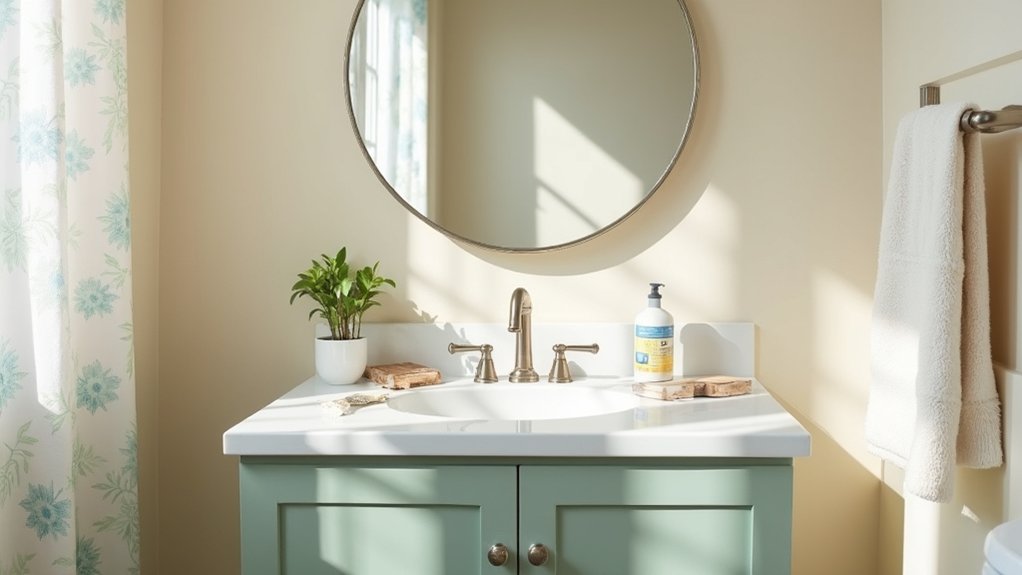
Start by setting a firm budget and reserving 10% for unexpected costs. With clear Budget planning, you can separate essentials from cosmetic upgrades and avoid draining funds halfway through the project.
List every task, price supplies, and add labor costs if you’ll hire help. Then rank updates by visible impact and daily value. A new vanity, efficient lighting, updated hardware, or a modern mirror can change the room without requiring a full renovation.
Prioritize repairs and function before decorative details. During material selection, compare durability, maintenance needs, and installation requirements rather than choosing solely by appearance.
Shop clearance sections, outlet stores, and reputable online retailers, but verify measurements and return policies. Keep existing plumbing locations whenever possible; moving pipes can quickly consume your contingency fund and limit affordable improvements.
Refresh Bathroom Walls With Moisture-Resistant Paint
A fresh coat of moisture-resistant bathroom paint can give the room a noticeable update for relatively little money, especially when the walls are sound and the existing layout works.
Choose a mildew-resistant, washable formula labeled for bathrooms; moisture resistant paint holds up better against steam and splashes than standard wall paint.
Before you buy, measure the bathroom walls and check the coverage rate so you don’t overspend.
Clean away soap residue, repair small holes, and lightly sand glossy areas.
Remove loose caulk and let damp surfaces dry completely.
Use painter’s tape around trim, then apply primer to stains or patched spots.
Two thin coats usually provide a smoother, longer-lasting finish than one heavy coat.
Soft whites, pale gray, or muted green can brighten the room without costly structural changes.
Ventilate well while the paint cures.
Replace Fixtures and Hardware Without Major Plumbing
You can refresh your bathroom quickly by swapping the faucet without changing existing plumbing.
Upgrade cabinet hardware for an affordable style boost, then replace compatible shower fixtures to modernize the space.
Check measurements and connections first to avoid costly surprises.
Swap Faucets Easily
When your bathroom faucet looks dated or drips constantly, swapping it can deliver a noticeable upgrade without opening walls or changing major plumbing. Start with smart faucet selection: Match the existing sink’s hole configuration, measure the countertop space, and choose a finish that complements your current fixtures.
A widespread, centerset, or single-hole model must fit your basin, or you’ll need an adapter plate. Before removal, shut off both supply valves, open the faucet, and place a towel beneath the connections. Disconnect the supply lines, loosen the mounting nuts, and lift out the old fixture.
Follow the new faucet’s instructions, using fresh plumber’s tape only where specified. A DIY faucet swap usually takes an hour. Check for leaks, tighten gently, and keep the old supply lines as emergency spares.
Upgrade Cabinet Hardware
Fresh cabinet hardware can make a bathroom vanity look updated without touching the plumbing or replacing the cabinet box. Measure existing pulls before shopping, then choose replacements with matching hole spacing to avoid drilling and patching. If you prefer knobs, fill old holes with stainable wood filler, let it dry, and sand lightly before installing.
Look for solid metal, rust-resistant finishes, and clearance deals at hardware stores or salvage shops. Clean the doors and drawers first; better hardware won’t disguise grime. Simple hardware cleaning with mild soap and a soft cloth can also revive pieces you already own.
While you work, improve cabinet organization by adjusting shelves, adding bins, or using adhesive hooks inside doors. Tighten loose hinges and align fronts for a polished result. Save the old pieces in case you change your mind.
Replace Shower Fixtures
Replacing a showerhead, tub spout, or visible trim can update the bathroom without opening walls or changing major plumbing. For a budget-friendly showerhead upgrade, choose a model that matches your existing connection and includes a flow restrictor.
Before shopping, measure exposed fittings and photograph the current setup so you can confirm compatibility. Remove mineral buildup with vinegar, then use plumber’s tape on threaded connections to prevent leaks.
You can also replace worn escutcheons, handles, and drain covers for a coordinated finish. Don’t confuse cosmetic updates with a shower enclosure replacement, which may involve waterproofing, glass, and substantial labor.
If the enclosure leaks or feels unstable, get estimates before spending on accessories. Test every new fixture immediately, and keep receipts in case adapters or replacement parts become necessary.
Clean, matching finishes make inexpensive changes look intentional.
Add Storage Without Remodeling
Add storage without remodeling by using the bathroom’s vertical and unused space. Install a slim over-the-toilet shelf, mount a mirrored medicine cabinet, or hang a narrow tower beside the vanity. Choose moisture-resistant shelves, baskets, and hooks so your upgrades hold up to humidity.
Repurpose a wooden ladder as a towel rack, or add adhesive hooks inside cabinet doors for brushes and styling tools. For affordable DIY organization, label small bins and group daily essentials at eye level. Use drawer dividers to prevent clutter, and reserve higher shelves for backup supplies.
Look for hidden compartments in an ottoman, vanity stool, or mirrored cabinet to store less attractive items. Before drilling, locate studs and check for plumbing. You’ll gain useful capacity while preserving your existing layout and avoiding costly construction.
Choose Affordable, Low-Mess Bathroom Flooring
Once storage is under control, affordable flooring can refresh the bathroom without creating a major mess. Choose waterproof sheet vinyl or click-lock planks that fit over a clean, level subfloor. You’ll avoid grout, reduce cutting, and often finish the project in a weekend.
Measure carefully, then add 10 percent for waste, especially around toilets and corners. Premium vinyl may cost more upfront, but its realistic patterns, comfortable surface, and durable wear layer can make it a smarter long-term buy.
If you prefer tile, compare clearance Luxury tiles, but calculate adhesive, grout, underlayment, tools, and disposal before deciding. Remove damaged flooring rather than covering it, and fix moisture problems first.
Use a sharp utility knife, leave expansion gaps where required, and follow the manufacturer’s installation instructions for a watertight result.
Finish With Budget Lighting and Decor
Finish the update with affordable light fixtures that brighten the room without straining your budget.
Add stylish wall decor, then complete the look with budget-friendly accessories you’ll actually use.
Choose Affordable Light Fixtures
Choose affordable light fixtures that brighten the bathroom without stretching your budget. Start by measuring your existing junction box and checking its wiring before shopping, so you can avoid costly electrical changes.
Look for vanity bars, flush mounts, or sconces during hardware-store sales, clearance events, and reputable online promotions. Choose damp-rated fixtures for bathrooms, and favor LED bulbs to reduce energy use and replacement costs.
A simple metal finish can look current, while Vintage fixtures from salvage shops add character when their wiring and safety ratings check out.
If your room feels plain, use one piece of statement lighting, such as a small pendant, rather than replacing every fixture.
Install a dimmer when compatible, giving you flexible task and ambient light.
Always shut off power and hire an electrician if connections exceed your skills.
Add Stylish Wall Decor
Pair your new lighting with affordable wall decor to give the bathroom a finished look without adding renovation costs. Choose moisture-resistant Wall art, such as framed prints, botanical illustrations, or simple typography, to add personality without overwhelming a small room.
Hang one large piece above the toilet or create a narrow gallery arrangement on an empty wall. Use inexpensive Picture frames in matching finishes to make budget prints look intentional; seal wood frames or keep them away from direct splashes.
Before drilling, mark stud locations and use appropriate anchors for tile or drywall. Maintain clearance around sconces, outlets, and plumbing fixtures, and keep artwork safely away from wet zones.
You can also print your own designs, letting you refresh the room later without replacing costly decor.
Use Budget-Friendly Accessories
A few low-cost accessories can make your bathroom feel updated without adding renovation costs. Swap worn towels for coordinated, quick-drying sets in a fresh color, then add a washable mat for comfort and softness.
Replace a basic shower curtain with a textured or patterned version; it creates impact without plumbing work. Choose matching soap, lotion, and toothbrush dispensers to reduce visual clutter.
You don’t need genuine luxury accessories to create a polished look—sleek budget pieces can suggest high-end decor when you repeat finishes such as matte black, brass, or chrome.
Finish with affordable lighting: install brighter LED bulbs in your existing fixture, or add a small, moisture-rated sconce if wiring allows.
Keep decor practical, using one framed print, a small plant, or a tray instead of overcrowding the counter.
Skip These Costly Bathroom Update Mistakes
Before you start, avoid spending your budget on changes that look impressive but solve nothing. Skip expensive renovations, such as moving plumbing, unless leaks, poor drainage, or serious layout problems demand them. You don’t need to replace a functional tub or vanity just because the finish looks dated. Paint, new hardware, updated lighting, and a replacement mirror can create noticeable change for far less.
Watch for unnecessary upgrades, too. Heated floors, smart toilets, and custom glass enclosures may sound appealing, but they can consume money needed for essential repairs. Don’t cover water damage with fresh caulk or paint; fix the source first.
Get multiple quotes for specialized work, and confirm what each estimate includes. Finally, keep a contingency fund for surprises, so one hidden problem doesn’t derail your entire bathroom update.
Frequently Asked Questions
How Long Does a Budget-Friendly Bathroom Update Typically Take?
You’ll typically finish a budget-friendly bathroom update in one to three weekends. Cost effective fixtures arrive quickly, while DIY painting tips help you save time; plan extra days for drying, deliveries, repairs, or unexpected plumbing issues.
Should I Hire a Professional for Electrical or Plumbing Work?
Hire a professional for electrical or plumbing work when permits, hidden damage, or safety risks arise. Compare DIY safety requirements with professional cost comparison, and save money by handling cosmetic tasks yourself.
How Can I Improve Bathroom Ventilation and Prevent Mold?
Around 50% of bathroom mold results from excess moisture. Start ventilation improvements with a timer fan, open windows, and clean grilles. Apply mold prevention strategies: squeegee surfaces, fix leaks, wash curtains, and use mildew-resistant caulk.
What Permits Might I Need for Bathroom Updates?
You’ll typically need permits for plumbing, electrical, structural changes, or moving fixtures. Check local regulations first; cosmetic updates usually don’t require approval. Call your building department before starting to confirm permit requirements and avoid costly rework.
How Do I Dispose of Old Bathroom Materials Responsibly?
You can dispose of old bathroom materials responsibly by sorting reusable items, separating metals, glass, and cardboard, and checking local Recycling options. Choose Eco friendly disposal services for tiles, fixtures, and hazardous products, saving money.
About the Author


