
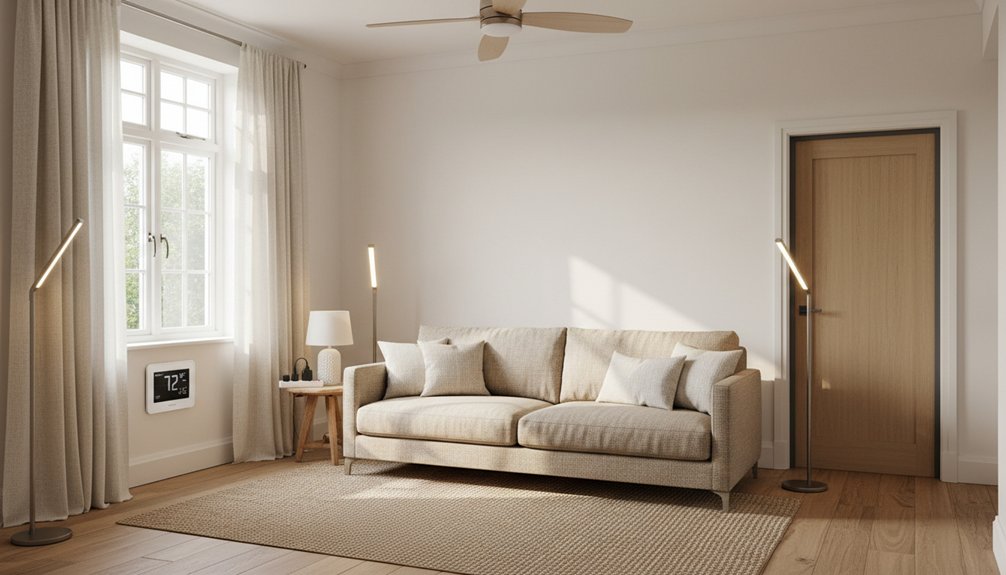
You can improve your home’s energy efficiency without remodeling or spending heavily. Start by sealing drafts around windows and doors, switching to LED bulbs, and unplugging devices that draw standby power. Adjusting your thermostat and running appliances only with full loads can also lower utility costs. Once you track your results, you’ll see which affordable upgrades—such as added insulation—deserve priority.
Key Takeaways
- Seal gaps around windows and doors with caulk, weatherstripping, and door sweeps to prevent drafts and energy loss.
- Replace frequently used bulbs with LEDs, and use timers or motion sensors to reduce unnecessary lighting.
- Adjust thermostat settings while sleeping or away, using a programmable or smart thermostat for automatic savings.
- Run full appliance loads, choose efficient cycles, air-dry when possible, and clean filters, coils, and vents regularly.
- Track utility use, prioritize insulation after air sealing, and investigate rebates before planning larger upgrades.
Seal Drafts Around Windows and Doors
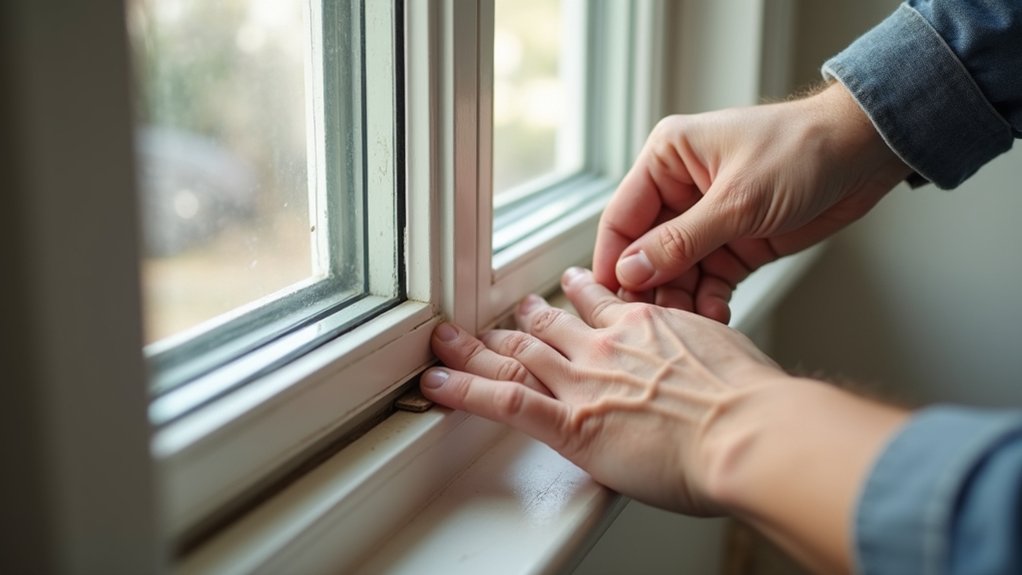
Start by sealing gaps around windows and doors, where small drafts can waste energy and make rooms uncomfortable. On a windy day, hold a tissue near frames to locate moving air.
Clean dry surfaces before caulking gaps along stationary window joints, trim, and door frames. Choose paintable acrylic latex caulk indoors; use exterior-grade caulk outside, and replace cracked material rather than covering it.
For moving parts, focus on weatherstripping doors. Install adhesive-backed foam for a quick, inexpensive fix, or use durable rubber or silicone strips for heavier use. Add a door sweep if daylight or air appears beneath the door.
Check that each door still closes easily after installation. Reinspect seals annually, especially after extreme weather, and repair small failures before they increase heating or cooling costs.
Upgrade Lighting and Unplug Devices
Upgrade frequently used fixtures to LED bulbs, which use less electricity, last longer, and produce less heat than incandescent bulbs. Choose energy efficient bulbs with brightness and color ratings that suit each room, and replace the highest-use lamps first for quicker savings.
Consider smart lighting timers or motion sensors so lights turn off automatically when you leave.
You can also lower electricity use by unplugging chargers, game consoles, small appliances, and office equipment when you’re finished. Many devices draw standby power even when they appear off.
Connect several electronics to an advanced power strip, then switch it off before bed or during extended absences.
Keep essential equipment, such as refrigerators and medical devices, plugged in.
These small changes cost little, require no construction, and can reduce monthly energy waste.
Set Your Thermostat to Save Energy
Adjust your thermostat by a few degrees when you’re asleep or away to reduce heating and cooling costs without sacrificing comfort. In winter, lower the setting; in summer, raise it. A change of 7 to 10 degrees for eight hours can reduce annual heating and cooling costs, according to the U.S. Department of Energy.
Use programmable settings to create a schedule that matches your routine, so you won’t need to remember daily adjustments. Smart thermostats can learn your habits, detect when you’re home, and let you make changes remotely through an app.
Place your thermostat away from direct sunlight, drafts, and heat-producing appliances for accurate readings.
Keep filters clean and seal obvious leaks around doors and windows, helping your system maintain the selected temperature with less effort and lower energy use.
Run Appliances Efficiently and Cut Waste
Your thermostat isn’t the only way to reduce energy use; how you run appliances matters, too. Wait until you have a full load before running your dishwasher or washing machine, and use cold water when cleaning allows. Choose shorter, energy-saving cycles, then air-dry dishes and clothes whenever practical.
Clean refrigerator coils, dryer vents, and appliance filters regularly; buildup makes equipment work harder and can raise operating costs. When replacing worn-out equipment, compare energy efficient appliances using their annual energy estimates, not just purchase prices.
Unplug chargers, game consoles, and small kitchen devices when you don’t use them, or group them on smart power strips that cut standby power automatically. Avoid running ovens for small tasks; use a toaster oven or microwave instead, and match cookware to burner size.
Measure Savings and Plan Affordable Upgrades
Track your utility bills and energy use before and after each change so you’ll know which improvements deliver real savings. Compare similar months, adjust for weather, and note changes in occupancy or appliance use. A plug-in energy monitor can identify costly devices, while your utility’s audit may reveal air leaks or inefficient equipment at no charge.
Prioritize upgrades by payback, comfort, and urgency. Seal gaps around doors, windows, ducts, and plumbing penetrations before adding insulation. Then consider insulation improvements in the attic, walls, or basement, where modest projects can reduce heating and cooling costs.
Request several quotes, check rebates, and avoid financing that erases expected savings. Review solar energy options only after reducing demand; compare estimates, warranties, roof conditions, and projected production. Reassess annually and reinvest savings strategically.
Frequently Asked Questions
How Does Improving Insulation Affect My Home’s Energy Efficiency?
Improving insulation reduces heat transfer, so you’ll use less energy for heating and cooling. Compare insulation types and R value ratings, then target attics, walls, and floors first for affordable, measurable savings year-round.
Should I Install Solar Panels to Reduce My Electricity Bills?
Solar panels can trim your electricity bills, but check your roof, sunlight, financing, and payback first. Explore solar incentives, compare quotes, and budget for occasional panel maintenance. They’re worthwhile when savings outweigh upfront costs and upkeep.
Which Energy-Efficient Windows Provide the Best Long-Term Value?
You’ll usually get the best long-term value from double glazing with low e coatings, warm-edge spacers, and insulated frames. Choose reputable installers, compare warranties, and prioritize south-facing or poorly insulated windows before replacing every unit.
Can Landscaping Help Reduce Heating and Cooling Costs?
Yes, thoughtful landscaping design can lower heating and cooling costs. Use strategic shade trees, windbreaks, and plant selection near windows and walls. Choose low-maintenance, climate-appropriate species to maximize savings without expensive installation or upkeep.
Are Home Energy Audits Worth the Expense?
Yes, an audit’s often worth it: professionals can identify your biggest losses before you spend. You’ll prioritize insulation, appliance upgrades, or smart thermostats, making targeted improvements and potentially saving hundreds annually on energy bills.
About the Author


