
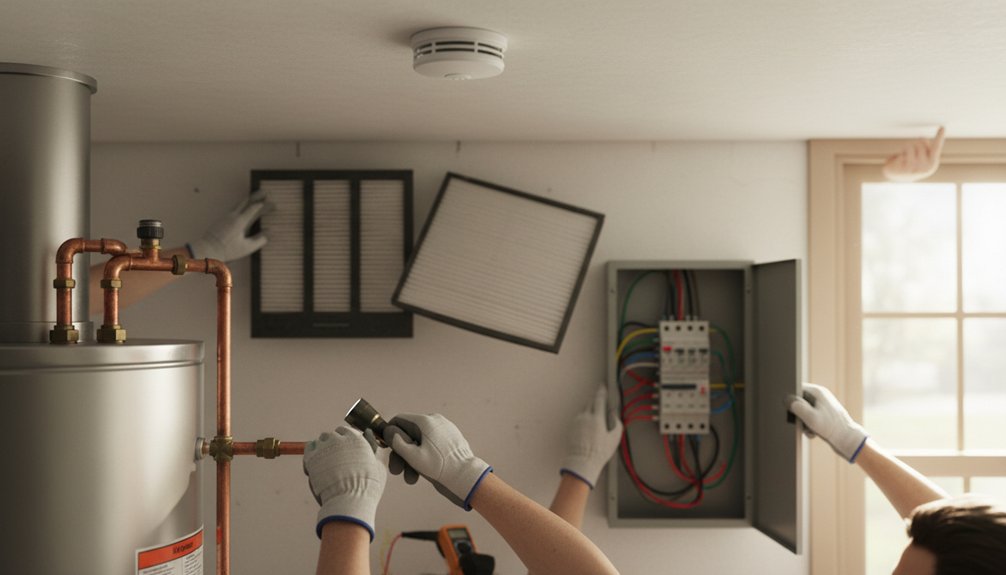
An annual home inspection helps you catch small problems before they become costly repairs. Check your roof, gutters, siding, and foundation for damage, then look indoors for plumbing leaks, water stains, mold, and HVAC issues. Test smoke and carbon monoxide alarms, inspect electrical hazards, seal drafty windows, and review outdoor lighting and security equipment. A simple checklist can protect your home, but some warning signs require closer attention than others.
Key Takeaways
- Inspect the roof, siding, gutters, downspouts, foundation, and exterior for damage, blockages, cracks, or unsafe conditions.
- Check plumbing fixtures, exposed pipes, water heaters, basements, and ceilings for leaks, moisture, corrosion, mold, or water damage.
- Test smoke and carbon monoxide alarms, review escape plans, and verify security systems, cameras, lighting, and emergency contacts.
- Schedule HVAC servicing, replace filters, clean accessible vents, and confirm proper ventilation and indoor humidity levels.
- Test GFCI outlets, inspect visible wiring, seal drafts, avoid overloaded outlets, and update your annual maintenance schedule.
Inspect Your Roof, Gutters, and Exterior
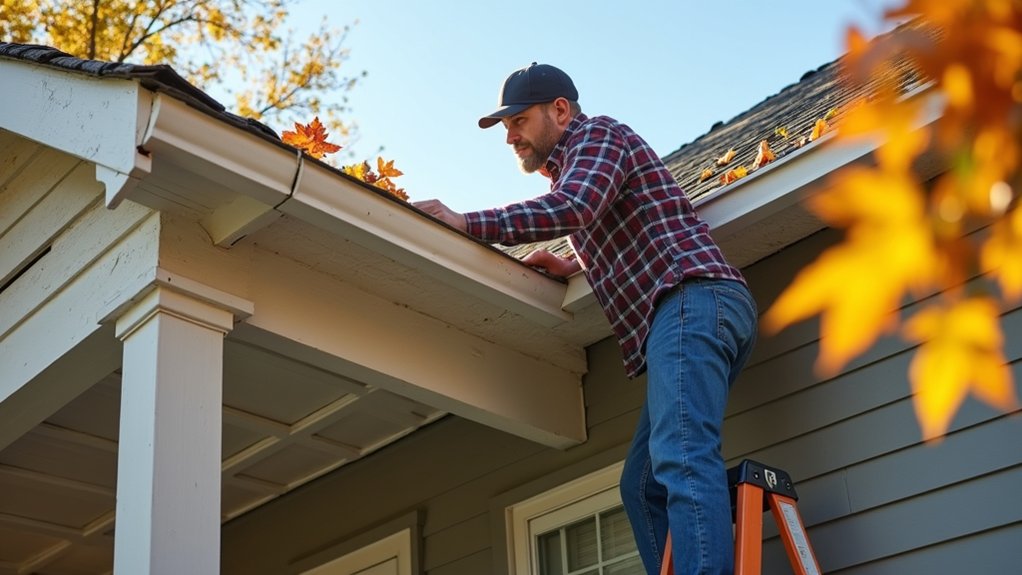
Inspect your roof, gutters, siding, windows, doors, and foundation at least once a year, preferably in early spring or fall. Look for cracked, curled, missing, or loose roof shingles, and check flashing around vents, chimneys, and skylights.
Clear leaves, nests, and sediment during gutter cleaning, then confirm water flows through downspouts and exits away from your foundation.
Examine siding for rot, warping, cracks, or loose panels. Check window and door frames for damaged caulk, peeling paint, or gaps that could admit drafts.
Walk around the foundation and note cracks, settling, or damaged mortar, but don’t address moisture problems here.
Trim branches touching the roof or exterior, and secure loose shutters, railings, and trim.
Photograph defects, prioritize urgent repairs, and schedule qualified professionals when you find unsafe conditions.
Look for Plumbing Leaks and Water Damage
Inspect exposed pipes, faucets, toilets, and water heaters for drips, corrosion, or moisture.
Check cabinets, ceilings, floors, and walls for stains, swelling, peeling paint, mold, or musty odors that may indicate hidden leaks.
Repair minor problems promptly, and call a plumber if you can’t locate or stop the source.
Inspect Pipes and Fixtures
Check exposed pipes, supply lines, faucets, toilets, and under-sink connections for drips, corrosion, mineral buildup, dampness, or musty odors. Tighten loose fittings carefully, replace worn washers, and repair dripping faucets before they waste water or worsen.
Flush each toilet and watch the base, tank, handle, and supply connection for active leaks. Run every faucet, shower, and appliance connection, checking that water flows smoothly and drains properly.
Inspect shutoff valves to guarantee they turn easily, and label them if you can’t identify their fixtures quickly.
Review pipe insulation around cold-water lines, especially in unheated areas, and replace damaged sections to reduce condensation and freezing risks.
Include fixture maintenance in your annual routine by cleaning aerators, testing showerheads, and replacing cracked hoses.
Hire a licensed plumber for concealed, persistent, or pressurized-line problems.
Check for Water Damage
Look for water damage in ceilings, walls, floors, cabinets, and around plumbing fixtures, even if no leak is currently visible. Watch for stains, bubbling paint, warped flooring, musty odors, mold, or soft drywall.
Check beneath sinks, behind toilets, around tubs, and near water heaters for dampness or corrosion. Inspect supply lines, drainpipes, shutoff valves, and caulking; tighten loose connections and replace deteriorated parts promptly.
Examine appliance leaks from dishwashers, washing machines, refrigerators, and water softeners, including the surrounding flooring and wall.
In the basement, check moisture along foundation walls, floors, windows, and sump-pump areas. Use a flashlight and moisture meter when available.
If you find active water, shut off the source, document the damage, and contact a qualified plumber or restoration professional before repairs begin.
Test Smoke and Carbon Monoxide Alarms
Test your smoke and carbon monoxide alarms annually to confirm they’ll alert you during an emergency. Press each test button and listen for a loud, distinct signal. If an alarm stays silent, replace its batteries immediately; if it still fails, replace the unit.
Check the manufacture date, and install new alarms according to the manufacturer’s service-life recommendation, commonly 10 years for smoke alarms and seven for carbon monoxide alarms.
Vacuum dust from vents gently, but don’t paint or cover the devices.
Confirm every alarm has a working battery, including sealed units’ expiration dates.
Review your Safety protocols with everyone at home, including escape routes, meeting points, and emergency contacts.
Keep alarms outside sleeping areas and on every level, and record completed Alarm maintenance for future reminders.
Maintain Your HVAC and Indoor Air Quality
Schedule annual HVAC service before peak heating or cooling season to keep equipment efficient, safe, and reliable. Ask a qualified technician to inspect refrigerant levels, ductwork, drain lines, electrical connections, and system performance.
Replace or clean filters according to the manufacturer’s schedule, or more often if you have pets, allergies, or home renovations. Effective air filtration captures dust, pollen, and other particles, helping protect your equipment and improve comfort.
Keep supply and return vents unobstructed, and vacuum accessible registers to prevent buildup. Check that your thermostat reads accurately and replace its batteries if needed.
Improve indoor air quality by controlling humidity, using kitchen and bathroom exhaust fans, and addressing musty odors or visible mold promptly.
Schedule professional duct cleaning only when contamination or excessive debris warrants it. A well-maintained system can lower energy use and extend equipment life.
Spot Electrical Hazards and Fire Risks
Your HVAC system isn’t the only part of your home that needs an annual safety check. Inspect visible Electrical wiring for frayed insulation, scorch marks, loose connections, or warm outlets. Don’t overload power strips, use damaged cords, or run extension cords beneath rugs.
Test every ground-fault circuit interrupter (GFCI) outlet in kitchens, bathrooms, garages, and outdoor areas; replace units that fail to reset.
Press each smoke alarm and carbon monoxide detector’s test button, replace batteries, and install new alarms according to the manufacturer’s service life.
Keep heaters, lamps, and appliances at least three feet from curtains and furniture.
Clean lint from your dryer and vent, and confirm that fire extinguishers remain accessible, charged, and appropriate for household use.
These steps strengthen Fire prevention and help you address hazards before they become emergencies.
Cut Energy Waste and Strengthen Home Security
Seal drafty windows with weatherstripping or caulk to reduce energy waste and maintain consistent indoor temperatures.
Test your alarm, camera, and access-control systems to confirm they work properly. Replace weak batteries, update settings, and repair any security gaps promptly.
Seal Drafty Windows
Cold air around a window frame signals gaps that can waste energy and weaken security. Inspect each window annually, feeling for drafts along the sash, corners, and trim. Check caulk for cracks, peeling, or shrinking, and replace failing sections after cleaning and drying the surface. Apply exterior-grade caulk outside and paintable caulk inside, following the manufacturer’s directions.
Replace worn weatherstripping around movable sashes so they close firmly without forcing them. For temporary window insulation, use removable rope caulk or clear film, especially before winter. Don’t block drainage openings in the frame, and repair damaged glazing or loose panes promptly.
Confirm every window locks securely after sealing; a tight fit should support, not prevent, normal operation. These draft prevention steps improve comfort, reduce heating and cooling costs, and help preserve your home’s envelope.
Test Security Systems
Test your security system annually to confirm sensors, alarms, cameras, locks, and monitoring connections work as intended. Notify your security company before testing to prevent unnecessary emergency dispatches.
Trigger each door, window, motion, smoke, and carbon monoxide sensor, then verify that alarms sound and alerts reach your phone or monitoring center.
Replace weak batteries, clean camera lenses, and check that backup power operates during an outage.
Review keypad codes and remove access for former residents, contractors, or unused accounts.
Confirm Remote monitoring settings, contact information, and response instructions remain accurate.
Inspect outdoor lighting and trim vegetation that could obstruct cameras or hide entry points.
Ask about system upgrades, including smart locks, encrypted cameras, and cellular backup.
Document test results and schedule repairs promptly to maintain reliable protection year-round.
Frequently Asked Questions
How Often Should I Inspect and Clean My Chimney?
Inspect your chimney at least annually, and clean it whenever buildup reaches one-eighth inch, before heavy use, or after a chimney fire. Prioritize chimney safety: arrange professional soot removal and check for damage yearly.
When Should I Schedule Professional Termite and Pest Inspections?
Schedule professional termite and pest inspections annually, preferably in spring, and after renovations, storms, or moisture problems. Don’t wait for termite signs; proactive Pest prevention helps you catch infestations before they cause costly structural damage.
How Frequently Should Septic Tanks Be Pumped?
You should pump your septic tank every three to five years, depending on household size, tank capacity, and wastewater use. Schedule septic maintenance sooner if needed, and arrange a tank inspection annually for warning signs.
What Documents Should I Review for Home Insurance Coverage?
Review your Home insurance declarations page, full policy, endorsements, exclusions, deductibles, inventory, receipts, appraisals, and mortgage requirements. During each Policy review, confirm replacement limits, liability coverage, valuables protection, and current contact information.
When Should I Test My Home’s Emergency Preparedness Supplies?
Test your supplies twice yearly—spring and fall—and after every emergency or major move. Like a pilot’s checklist, your Emergency kit and Fire extinguisher need inspection: replace expired items, batteries, medications, and damaged equipment immediately.
About the Author


