
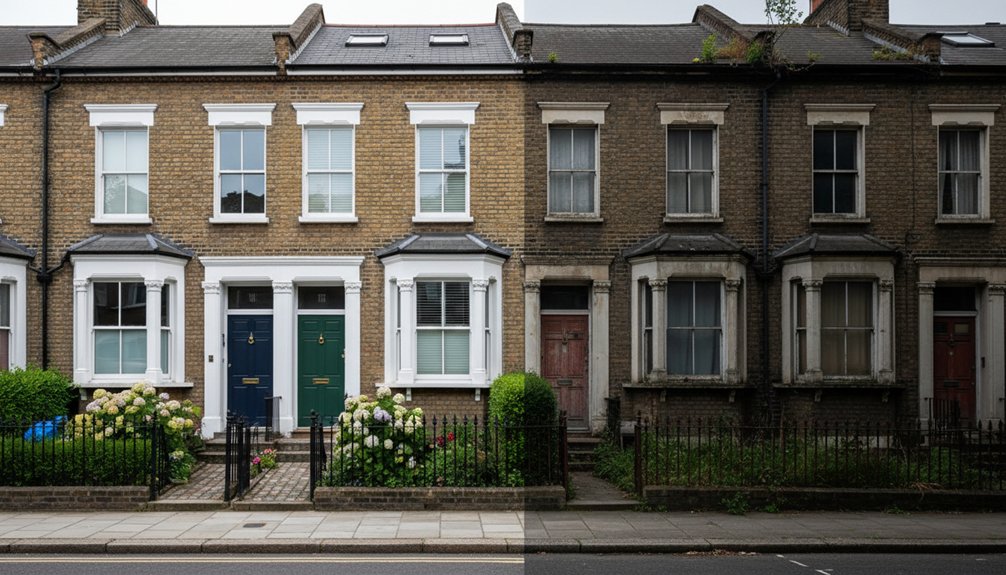
Yes, you’ll find that London estate agents value homes differently across the boroughs, because local comparables, transport links, planning rules, buyer demand, and property types vary sharply. A Kensington flat may command a premium for scarcity and international appeal, while a Croydon house may offer more space and regeneration potential at a lower price. Agents should support these differences with recent sales data—but the most important valuation factors may not be obvious at first.
Key Takeaways
- Yes, estate agents value homes differently across London boroughs because local demand, amenities, transport, and market conditions vary significantly.
- Valuations rely on recent, comparable achieved sales rather than broad postcode averages or advertised asking prices.
- Kensington typically commands higher prices due to prestige, centrality, limited land, heritage properties, and international buyer demand.
- Croydon often offers lower, more variable valuations, reflecting larger homes, affordability, diverse housing stock, and regeneration potential.
- Property-specific factors, including size, layout, condition, tenure, lease length, parking, gardens, and service charges, also influence each valuation.
How Do London Estate Agents Value Homes?
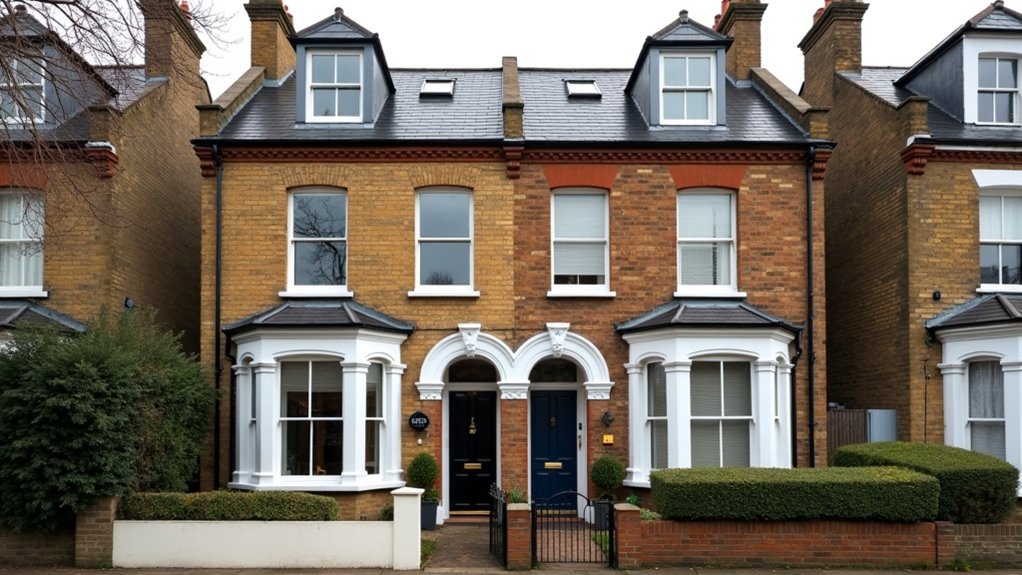
London estate agents typically value homes by combining recent comparable sales, current buyer demand, and the property’s condition, size, location, and tenure. You’ll see them analyse Land Registry evidence, local transaction databases, asking-price competition, and achieved sale prices rather than relying on headline listings.
They’ll adjust comparisons for floor area, room count, refurbishment quality, lease length, service charges, and outside space. Market trends also shape the assessment: agents track price movement, time on market, agreed-sale ratios, and buyer competition to judge momentum.
For valuation accuracy, you should provide complete details, including improvements, planning permissions, defects, and tenure documents. An experienced agent then tests the initial figure against active competition and likely purchaser budgets, producing a realistic range designed to support pricing, negotiations, and a credible marketing strategy.
Which Borough Factors Change Property Values?
Borough-level values change with more than postcode prestige: you’ll need to assess transport links, school performance, council-tax bands, crime patterns, housing stock, conservation controls, and planned regeneration.
Compare journey times to employment centres, station upgrades, and service frequency, then test those signals against achieved sale prices. Strong school results and low reported crime can support demand, while high council-tax liabilities may limit affordability.
Neighborhood amenities, including parks, healthcare, shops, and cultural venues, also influence buyer willingness to pay. You should examine local planning applications because new infrastructure can lift values, whereas construction disruption or oversupply can weaken them.
Conservation rules may protect character but restrict alterations, affecting purchaser interest. Finally, track Market trends by borough, not London-wide averages; quarterly transaction volumes, price-per-square-metre changes, and buyer profiles reveal where valuations are genuinely moving.
How Do Property Types Affect Valuations?
You’ll see valuations shift with a property’s size, layout and usable space, not just its advertised floor area.
Flats and houses attract different buyer demand across London boroughs, while period features can add value when the property’s condition supports them.
Estate agents compare these characteristics with recent local sales to assess a realistic price.
House Size And Layout
How much space a home offers—and how efficiently that space is arranged—can materially affect its valuation across London boroughs. As you assess a property, compare measured internal area with local achieved prices per square metre, not headline bedroom counts alone.
A compact plan with generous reception space, natural light, and practical storage can outperform a larger, awkwardly divided home. Ceiling height, circulation space, garden access, and the potential to reconfigure rooms also influence buyer demand and an agent’s evidence-based appraisal.
Kensington and Chelsea buyers may pay premiums for period proportions, while newer Greenwich developments often reward efficient layouts and amenities. Architectural styles shape expectations, but thoughtful interior design can improve presentation without changing floor area.
You’ll strengthen your valuation by checking comparable floorplans, recent transactions, and each borough’s preference for flexible living space.
Flats Versus Houses
Once size and layout are assessed, property type becomes another key valuation variable: flats and houses compete in different parts of London’s market.
When you value a flat, you’ll compare service charges, lease length, floor level, communal facilities, and proximity to transport. Luxury amenities, such as concierge services, gyms, and residents’ lounges, can lift prices in prime developments, particularly across Kensington and Chelsea, Westminster, and Wandsworth.
Houses usually command premiums for private entrances, gardens, parking, and greater control over the building, making them especially sought-after in Richmond, Barnet, and outer South London.
You’ll also find that historical significance can influence demand where converted mansion blocks or distinctive townhouses attract specialist buyers.
Local agents thus analyse comparable sales by tenure, building type, and borough rather than applying one flat-wide or house-wide rate.
Period Features And Condition
Period features and condition can shift valuations sharply, but their impact depends on the property type and buyer segment. If you’re selling a Victorian terrace in Hackney or a Georgian conversion in Islington, original fireplaces, ceiling roses, sash windows, and cornicing can command a premium.
Yet buyers discount poorly maintained fabric, outdated wiring, damp, or inefficient heating, often more heavily in houses than flats because repair bills are larger.
In a modern apartment, period detailing rarely drives value; lease length, service charges, lift access, and energy performance usually matter more.
Your property condition also interacts with location: buyers may tolerate renovation in prime Kensington, while turnkey homes attract stronger competition in outer boroughs.
Local agents compare achieved prices, not optimistic asking prices, then adjust comparable evidence for floor area, tenure, specification, and renovation risk.
A crisp survey and realistic maintenance budget can *thus* protect your valuation.
Why Do Kensington and Croydon Values Differ?
You’ll see Kensington command higher values through its global prestige, central location, and premium amenities.
In Croydon, demand typically reflects more accessible pricing, larger homes, and strong transport links, producing a different buyer profile.
Comparing recent sales, supply levels, and borough-specific market conditions explains the gap more accurately than headline averages.
Location And Prestige
While both sit within Greater London, Kensington and Croydon attract markedly different property values because buyers price location, prestige, transport, and local amenity differently.
When you assess Kensington, you’re valuing proximity to Hyde Park, museums, embassies, luxury retail, and central employment hubs. These advantages support a substantial prime-market premium, reinforced by internationally recognised addresses and limited opportunities for comparable development.
Croydon offers stronger space-per-pound, extensive town-centre services, and fast rail connections, yet its distance from central London reduces the prestige premium attached to individual homes.
Historical trends matter: Kensington’s established reputation has protected values through changing cycles, while Croydon’s performance reflects regeneration milestones more unevenly.
Cultural influences also shape pricing, as heritage architecture, global visibility, and neighbourhood identity affect your perception of status, not simply a property’s floor area or specification.
Property Demand Differences
Demand differs because Kensington and Croydon serve distinct buyer pools with different priorities and budgets.
In Kensington, you’ll typically compete for prime central London purchasers, international investors, and affluent professionals. They often prioritise period architecture, proximity to cultural institutions, premium schools, and Luxury amenities. Historical significance can strengthen emotional appeal, supporting higher offers for carefully preserved terraces or mansion flats.
In Croydon, your likely audience includes first-time buyers, growing families, and commuters seeking more space for their money. Demand thus concentrates on practical layouts, gardens, parking, and larger homes rather than prestige alone.
These preferences influence how agents assess buyer interest and pricing potential. Compare achieved prices by property type and buyer segment, not borough averages; otherwise, you may mistake a different demand profile for inconsistent valuation.
Local Market Conditions
Local market conditions widen the gap between Kensington and Croydon values because each borough operates within a different pricing and supply environment. In Kensington, limited land, conservation controls, and sustained international demand restrict available stock, supporting higher price-per-square-foot figures. Compare this to a house valuation Slough then you may find that you’ll get a lot more space at a much lower cost. You’ll also find that prime-period transaction data can amplify valuations when a small number of premium sales sets local benchmarks.
Croydon offers greater housing capacity, broader property types, and more variable demand, so comparable evidence usually produces lower, wider-ranging estimates. Historical trends matter: Kensington has maintained a substantial long-term premium, while Croydon’s growth follows regeneration, transport investment, and employment changes.
Market fluctuations affect both boroughs, but interest-rate shifts and buyer sentiment can move mainstream homes more sharply. Your agent should consequently compare recent, genuinely similar sales rather than apply one London-wide percentage.
What Drives East London Property Values?
East London property values reflect transport access, regeneration, housing type and buyer demand, with areas near the Elizabeth line, Overground stations and the Thames often commanding stronger prices. As you assess a home, compare journey times, station proximity and local sales evidence rather than relying on borough-wide averages.
Stratford benefits from major connectivity and employment growth, while Hackney’s creative economy and converted industrial spaces sustain premium demand.
You’ll also find Luxury apartments attracting buyers around Canary Wharf, Wapping and Royal Docks, where river views, amenities and new-build specifications influence pricing.
Historical significance supports values in established neighbourhoods such as Spitalfields and Greenwich, although conservation restrictions can limit alterations.
Schools, parks, flood risk, service charges and planned developments further affect what buyers will pay for each property.
How Do Agents Prove Their Valuations?
To support a valuation, agents compare your property with recent completed sales—not just asking prices—adjusting for location, floor area, condition, tenure, outdoor space and transport links. They’ll usually reference Land Registry records, local transaction databases and comparable listings to show how each adjustment affects the figure.
You should expect evidence that reflects your borough, because a period terrace in Hackney won’t command the same rate as a similar-sized home in Havering. Agents may also explain Market trends, including buyer demand, supply levels, mortgage conditions and seasonal movement.
Ask for a written valuation report with selected comparables, sale dates and price-per-square-metre calculations. Clear assumptions improve transparency, while accurate, current evidence strengthens valuation accuracy.
They should distinguish achievable marketing prices from optimistic asking prices and explain any uncertainty openly.
How Can You Compare Estate Agent Valuations?
Comparing estate agent valuations means testing each figure against the same evidence, not simply choosing the highest estimate. Ask every agent for recent, genuinely comparable sales, then check differences in floor area, condition, lease length, parking and outdoor space. A valuation based on properties within your London borough—and, where relevant, your street—usually carries more weight than a broad postcode average.
You should also examine the assumptions behind each report. Does the agent explain their pricing strategy, likely buyer demand and expected marketing period? Compare their evidence with Land Registry records and current listings, remembering that asking prices aren’t achieved prices.
Market trends can shift quickly between boroughs, so request an explanation for unusually optimistic figures. Finally, assess valuation accuracy through the agent’s achieved-sale history, not just their initial estimates. This approach helps you choose a realistic asking price.
Frequently Asked Questions
Can Homeowners Challenge an Estate Agent’s Valuation?
Yes, you can challenge an estate agent’s valuation. Request comparable sales, question methodology, and obtain an independent appraisal. Document valuation discrepancies carefully, since challenging valuations works best when supported by current, borough-specific market data.
How Long Does a Typical London Property Valuation Appointment Take?
You’ll typically spend 30–60 minutes with an agent, while 14 London boroughs recorded annual price declines recently. Market fluctuation affects valuation accuracy, so provide documents, discuss improvements, and expect longer appointments for unusual properties.
Are Online Property Valuations Reliable for London Homes?
Online valuations can offer useful London market accuracy, but you shouldn’t rely on them alone. Automated valuation methods may miss street-level differences, property condition, lease terms, renovations, and local buyer demand, so request an in-person appraisal.
What Documents Should Sellers Prepare Before Requesting a Valuation?
Prepare your title deeds, lease, service-charge statements, planning permissions, guarantees, and recent utility records. A Home inspection and Market analysis also help your agent assess condition, improvements, tenure, and comparable London sales accurately before valuing your property.
Do Estate Agents Charge Fees for Providing Property Valuations?
You’ll usually get a free valuation, though some agents charge for detailed reports. For example, a Kensington agent might waive fees to win instructions. Ask about market trends, valuation accuracy, and any commitment before proceeding with them.
About the Author