
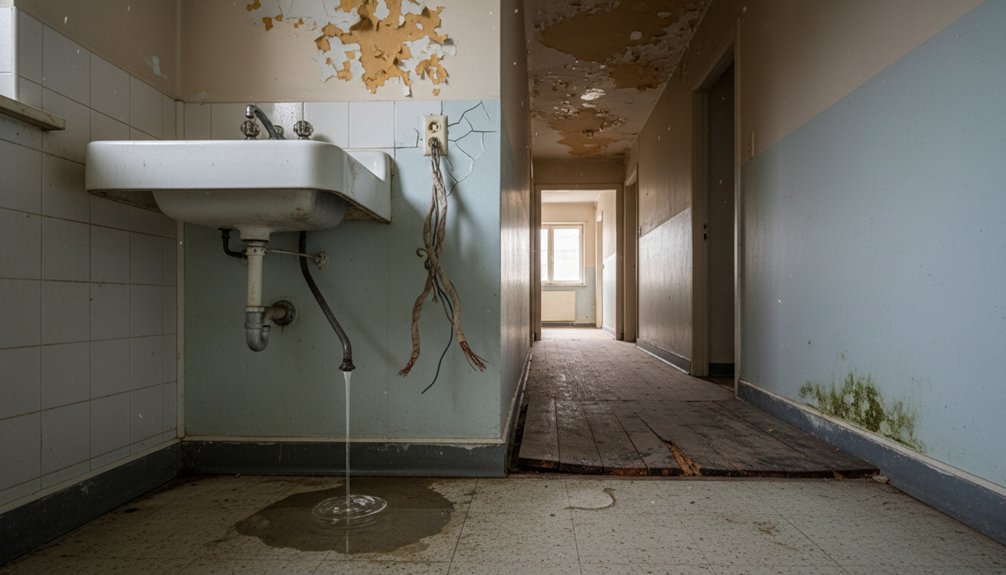
A small household leak can waste thousands of gallons of water before you notice visible damage. Don’t ignore dripping faucets, damp ceilings, flickering lights, roof problems, foundation cracks, or loose railings, because each can signal a larger safety risk. Address plumbing and electrical issues promptly, and watch for structural damage that can spread quickly. You can handle minor repairs safely, but some warning signs require a licensed professional before they become costly or dangerous.
Key Takeaways
- Fix plumbing leaks, slow drains, standing water, and musty odors promptly to prevent hidden water damage and mold.
- Address buzzing, sparking, scorched outlets, flickering lights, or burning smells by shutting off power and calling an electrician.
- Inspect roof and foundation damage, including ceiling stains, missing shingles, widening cracks, bowing walls, and uneven floors.
- Correct household safety hazards such as loose railings, frayed cords, wet floors, blocked walkways, and unsecured furniture immediately.
- Hire licensed professionals for gas, electrical, structural, major plumbing, and roofing repairs instead of attempting uncertain DIY work.
Recognize Plumbing Problems Before They Cause Damage

Even a small plumbing problem can cause serious damage if you ignore it. Watch for damp cabinets, stained ceilings, peeling paint, musty odors, dripping sounds, or unexplained water bills. These signs may indicate pipe leaks behind walls, beneath floors, or under fixtures.
Shut off the nearest valve, place a container beneath visible drips, and call a licensed plumber before moisture spreads or mold develops.
Treat slow sinks, gurgling toilets, and standing water as warnings of drain clogs. Don’t pour chemical cleaners into unknown blockages; they can damage pipes and burn your skin.
Use a plunger correctly, then stop if resistance continues.
Keep children away from leaking areas and wipe spills promptly to prevent slips. If water reaches electrical outlets or appliances, avoid contact and leave the area until a professional makes it safe.
Fix Electrical Problems That Could Start Fires
After addressing water hazards, inspect electrical problems that could start fires. Look for scorched outlets, buzzing switches, flickering lights, warm wall plates, damaged cords, and frequently tripped breakers.
Don’t ignore burning smells or sparks; shut off power at the breaker if you can do so safely, then call a licensed electrician.
Never overload outlets, use extension cords as permanent wiring, or place cords beneath rugs and furniture. Replace cracked plugs and frayed cables, and keep electrical devices away from sinks and other moisture.
Install and test smoke alarms, and consider arc-fault circuit interrupters for added fire prevention.
Electrical safety also means avoiding DIY work inside panels unless you’re qualified. If an appliance repeatedly trips a breaker, unplug it and arrange professional inspection rather than resetting the breaker repeatedly.
Catch Roof and Foundation Damage Early
How can you spot roof and foundation damage before it becomes a costly safety problem? Schedule a professional roof inspection at least annually and after severe weather. From the ground, check for missing or curled shingles, sagging lines, damaged flashing, and clogged gutters.
Inside, watch for ceiling stains, damp insulation, musty odors, or daylight through the attic.
Protect foundation stability by checking for widening cracks, bowing walls, uneven floors, sticking doors, and gaps around windows. Examine basement or crawl-space areas for moisture, mold, or standing water.
Don’t paint over cracks or dismiss sudden changes; document them and call a qualified contractor or structural engineer promptly. Keep gutters and downspouts directing water away from your home, but don’t climb onto a damaged roof or enter an unstable area yourself.
Fix Household Hazards Before Someone Gets Hurt
Fix household hazards as soon as you find them, because loose railings, frayed cords, slippery floors, blocked exits, and unsecured furniture can cause serious injuries. Start with safety precautions that reduce immediate danger. Tighten railings, replace damaged cords, dry wet surfaces, and keep walkways and emergency exits clear.
Anchor tall bookcases, televisions, and cabinets to prevent tip-overs, especially if children live in your home. Add nonslip mats in bathrooms and use bright lighting on stairs and hallways.
Store knives, chemicals, medications, and tools where children can’t reach them. Check smoke alarms, carbon monoxide detectors, and fire extinguishers regularly, replacing batteries when needed.
Include every household member in hazard prevention by teaching safe habits and reporting problems promptly. Don’t postpone small repairs; a minor defect can quickly become a serious injury.
Know When to DIY or Call a Professional
Before you begin a repair, assess whether you have the skills, tools, and time to complete it safely. Follow DIY safety practices: shut off electricity, gas, or water, wear protective equipment, and use the correct instructions and tools.
Simple tasks, such as replacing a faucet washer, tightening hardware, or patching a small hole, may suit you.
Call a licensed professional for electrical wiring, gas lines, structural damage, major plumbing leaks, roofing, or anything requiring permits.
Stop immediately if you encounter hidden damage, mold, sparking, unusual odors, or uncertainty.
A Professional inspection can identify hazards you might miss and prevent expensive failures.
Never work alone on high-risk repairs, and don’t rely on online videos for specialized guidance.
When safety, legality, or your confidence is in doubt, hire qualified help.
Frequently Asked Questions
How Often Should Household Smoke Detector Batteries Be Replaced?
Treat your smoke detector as a vigilant sentinel: replace its batteries at least annually, or sooner if chirping. Check battery lifespan recommendations, perform monthly alarm testing, and replace immediately after any warning signal sounds.
What Maintenance Does a Home Heating and Cooling System Require?
You’ll need HVAC filter maintenance every one to three months, Thermostat calibration annually, and professional inspections yearly. Keep outdoor units clear, clean vents, check refrigerant, and address unusual noises or odors immediately.
How Can I Prevent Mold Growth in Humid Rooms?
Prevent mold from throwing a house party: use humidity control, run exhaust fans, repair leaks promptly, dry wet surfaces, and improve airflow. Apply mold resistant paint, but never paint over existing mold; clean it safely first.
When Should Kitchen Appliances Be Replaced Instead of Repaired?
Replace appliances when repair costs exceed half the replacement price, breakdowns recur, or safety hazards appear. Check appliance lifespan, recalls, energy efficiency, and parts availability. Don’t risk fires, leaks, shocks, or contamination; choose certified installation.
What Are the Best Ways to Improve Household Energy Efficiency?
You’ll improve household energy efficiency by adding insulation upgrades, sealing windows, servicing HVAC equipment, replacing inefficient bulbs, and using programmable thermostats. Don’t block vents, overload circuits, or ignore damaged wiring; hire qualified professionals for electrical work.
About the Author


