
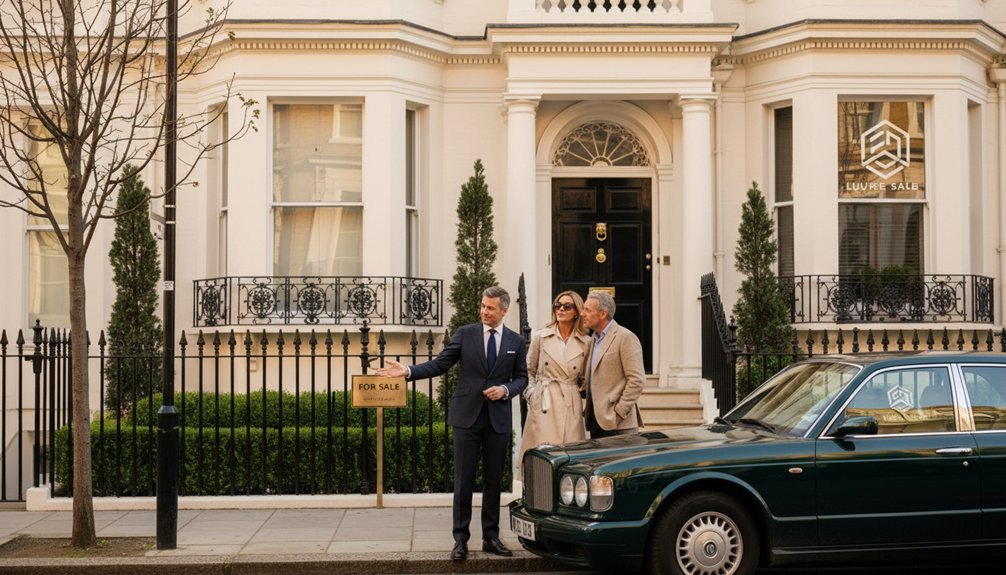
In Chelsea’s luxury market, every home must arrive with a story as polished as its stucco façade. You’ll need to position the property around its architecture, provenance, outdoor space, and proximity to the King’s Road, then support the asking price with local evidence. From discreet viewings to international portals and carefully targeted social campaigns, each detail should build confidence and urgency. Yet the decisive advantage often emerges before the first offer—where strategy meets buyer psychology.
Key Takeaways
- Build a compelling luxury narrative around the home’s architecture, provenance, craftsmanship, address, and Chelsea lifestyle.
- Use premium portals, international campaigns, targeted social media, professional photography, video, floor plans, and virtual tours.
- Position distinctive features, including period details, gardens, terraces, natural light, proportions, security, and bespoke finishes.
- Price accurately using completed local sales, adjusting for street, condition, scale, outlook, outdoor space, and tenure.
- Qualify buyers carefully, conduct discreet viewings, monitor feedback and enquiry quality, then refine marketing to secure credible offers.
How Chelsea Estate Agents Market Luxury Homes

How do Chelsea estate agents market luxury homes? They build a compelling narrative around architecture, provenance, finish, and address, then present it consistently across every touchpoint.
Luxury branding gives your property a distinct identity, from refined photography and cinematic video to elegant brochures, private-viewing materials, and carefully worded listings.
Local expertise shapes the message: a garden square in Belgravia, a riverside apartment near Chelsea Harbour, or a period townhouse off King’s Road each deserves precise context.
Digital advertising extends reach through premium property portals, targeted social campaigns, search visibility, and discreet international promotion.
Agents also coordinate launch timing, press exposure, and invitation-only events to create momentum without compromising privacy.
You’ll see a polished campaign that protects the home’s prestige while communicating its value with confidence to the market.
Identify Chelsea Buyers and Position the Home
You’ll profile Chelsea buyers—from international investors to local families—to understand what drives demand in this prime London enclave.
Highlight distinctive features such as garden squares, period detailing, and discreet security.
Then craft targeted positioning that presents the home as the right fit for its most valuable audience.
Profile Chelsea Buyers
Chelsea buyers typically fall into distinct luxury-market profiles: international purchasers seeking a refined London base, professionals prioritising prime access to the City and West End, and families drawn to garden squares, leading schools, and village-style amenities.
You’ll position your home more effectively when you understand which audience its setting and scale naturally serve.
International buyers often value discreet service, turnkey readiness, and proximity to cultural institutions, while London-based professionals may prioritise transport links, privacy, and entertaining space.
Families typically assess school catchments, parks, and everyday convenience before committing.
Frame the address around Chelsea’s enduring appeal, pairing Historic architecture with Luxury amenities and exceptional local access.
Use audience-specific messaging, evidence-led pricing, and polished presentation to create relevance.
Your marketing should feel personal, assured, and aligned with each buyer’s aspirations.
Highlight Unique Features
Once you’ve identified the most likely buyer, bring the home’s defining features to the forefront. Show how original cornicing, encaustic floors, sash windows, or a restored stucco façade express Chelsea’s Historical architecture, giving the property character that newer developments can’t replicate.
If the residence sits near King’s Road, highlight its discreet position, natural light, and easy access to boutiques, galleries, and celebrated restaurants without overstating convenience.
Present outdoor space as a genuine asset: thoughtful Garden design, mature planting, a south-facing terrace, or a private courtyard can transform urban living.
Draw attention to proportions, ceiling height, fireplaces, bespoke joinery, and carefully integrated technology.
Use polished photography and precise floor plans to make every detail tangible, helping you appreciate the home’s rarity before you consider its wider market appeal.
Craft Targeted Positioning
Whether you’re targeting an international buyer seeking a refined London base, a local family prioritising space and schools, or a professional drawn to King’s Road culture, define the home’s strongest appeal around that audience. Tailor every message to the lifestyle your property enables, from discreet entertaining near Sloane Square to calm, spacious living beside respected schools.
Use Chelsea’s micro-markets intelligently: emphasise garden access in Belgravia-adjacent streets, cultural proximity around the Royal Court, or riverside calm toward Chelsea Harbour. Your Luxury branding should feel polished rather than overstated, pairing editorial photography with precise, locally relevant storytelling.
Build Community engagement through neighbourhood guides, private viewings, and trusted introductions to nearby boutiques, galleries, and restaurants. When your positioning matches genuine buyer priorities, you’ll create desire, qualify interest, and protect the home’s premium value.
Set the Price Using Local Market Evidence
You’ll set the price with evidence from Chelsea’s most recent completed sales, not headline asking prices.
Compare your property with similar prime homes by street, condition, scale, and finish, then monitor current buyer demand for signals on positioning.
This approach protects value while keeping your launch compelling to discerning Chelsea buyers.
Analyse Recent Local Sales
A handful of carefully selected Chelsea comparables can anchor your asking price in current market reality. Ask your agent to examine completed sales, not optimistic listings, focusing on the last six to twelve months.
Adjust each result for floor level, outlook, natural light, refurbishment quality, outdoor space, parking, and tenure. A renovated garden square townhouse won’t command the same figure as a dated upper-floor flat, even on the same street.
Consider how Neighborhood amenities influence buyer appetite: proximity to the King’s Road, riverside walks, transport, boutiques, and respected schools can support a premium.
Local zoning also matters, particularly where planning constraints affect extensions, conversions, listed façades, or development potential.
Your agent should explain the evidence clearly, revealing whether current demand supports a confident launch price or a sharper strategy.
Compare Similar Prime Properties
How does your Chelsea property compare with the prime homes attracting serious buyers now? Benchmark it against genuinely comparable listings and recent transactions, not headline asking prices. Examine position, floor area, outdoor space, condition, parking, lateral layout and lease terms across streets such as Cheyne Walk, Tite Street and The Boltons.
Then weigh the premium created by Luxury amenities, including private terraces, lift access, concierge service, bespoke kitchens and discreet security.
You’ll also need to distinguish Architectural styles. A carefully restored Victorian townhouse appeals differently from a polished contemporary apartment or a period conversion with original detailing.
Adjust your valuation for light, privacy, views and renovation quality, while recognising each address’s micro-market reputation. This evidence gives you a defensible price: ambitious enough to reflect Chelsea’s prestige, yet credible enough to encourage serious viewings.
Monitor Current Buyer Demand
Because Chelsea demand can shift quickly between flats, family houses and trophy waterfront residences, you should set your asking price against current local evidence—not yesterday’s optimism.
Track newly agreed sales, viewing volumes, offer levels and time on market across streets such as Cheyne Walk, The Boltons and King’s Road. Your Chelsea estate agent should separate genuine competition from stale listings that merely inflate expectations.
Review which features attract decisive buyers: private gardens, lift access, parking, lateral space or proximity to the river and leading schools. This data reveals buyer psychology, including whether purchasers prioritise turnkey finishes or negotiate hard for refurbishment potential.
In a luxury neighborhood, an evidence-led launch protects your position while creating urgency. Reassess weekly, then adjust discreetly if engagement falls below comparable homes.
Let demand—not sentiment—guide your strategy.
Use Photography That Sells the Lifestyle
When buyers browse Chelsea listings, your photography should make them feel the neighborhood’s energy before they ever arrive. Use crisp, natural-light images to reveal how a home lives: morning coffee beside tall windows, effortless entertaining in an open kitchen, or quiet evenings on a landscaped terrace.
Show proportions, finishes, and sightlines accurately, while giving each frame a polished editorial quality. Your Luxury landscape should include more than interiors; capture nearby garden squares, elegant façades, and the refined rhythm of King’s Road without letting location overshadow the property.
Treat every image as Lifestyle branding, aligning colour, composition, and mood with the expectations of prime Central London buyers. Commission twilight shots sparingly, style rooms thoughtfully, and edit consistently.
Strong photography creates desire, qualifies interest, and helps your listing command attention.
Tell the Home’s Chelsea Story
Photography creates the first spark, but a compelling Chelsea story gives that interest meaning. Position your home within the character buyers already value: explain how its proportions, period details, or contemporary craftsmanship respond to Chelsea’s enduring appeal.
Highlight historical architecture, from elegant stucco façades to carefully preserved conversions, while showing how the residence offers modern comfort without losing its identity.
Then connect daily life to the address. Describe the ease of reaching the King’s Road, independent galleries, refined dining rooms, riverside walks, and discreet garden squares. These neighborhood amenities help buyers picture mornings, entertaining, and weekends rather than simply comparing specifications.
Let the narrative reflect the property’s true distinction, whether that’s a quiet mews setting, a dramatic garden, or entertaining space suited to Chelsea’s social rhythm. You’re selling belonging as much as square footage.
Choose the Right Marketing Channels
Choose channels that place your Chelsea property in front of serious, well-matched buyers rather than simply maximising exposure. Your agent should combine targeted digital campaigns with the credibility of established Chelsea relationships.
Use Social media selectively, presenting cinematic photography, concise copy, and discreet location cues across platforms that attract London, international, and relocation buyers. Instagram can build desire, while carefully targeted advertising reaches audiences interested in prime central London property.
Support this with polished print advertising in respected property publications and carefully chosen local titles, where affluent readers still value editorial authority. A premium brochure, delivered through your agent’s network, should reinforce the home’s architecture, provenance, and position near King’s Road, Sloane Square, or the Thames.
Track enquiries by source, then refine your spend towards channels generating qualified interest, not vanity metrics.
Run Viewings and Manage Offers Strategically
Once your marketing attracts qualified interest, disciplined viewings and offer handling can protect both your Chelsea home’s value and your negotiating position. Prepare each appointment carefully: present immaculate rooms, control access discreetly, and brief buyers on architectural details, lease terms, service charges, and local advantages, from King’s Road boutiques to riverside walks.
Offer private viewings for serious prospects, while Virtual tours help international buyers assess the property before travelling. Use Social media enquiries as a starting point, then qualify funding, timescales, and chain status before confirming attendance.
After each viewing, seek specific feedback without overexposing your seller’s position. When offers arrive, compare more than price: assess proof of funds, mortgage readiness, conditions, and completion flexibility.
Keep communication measured and transparent, creating competitive tension without compromising confidentiality or your Chelsea property’s premium appeal.
Track Results and Adjust the Campaign
Track every campaign signal—portal views, enquiry quality, viewing-to-offer ratios, and buyer feedback—to understand what’s driving serious interest in your Chelsea property.
Compare performance by channel, from prime property portals and targeted email to social media campaigns reaching buyers seeking discreet, design-led residences.
If qualified enquiries stall, refine the photography, sharpen the headline, or reposition the asking price against recent Chelsea evidence.
Your branding strategy should consistently communicate the home’s strongest advantages, whether that’s a garden square outlook, turnkey interiors, or proximity to King’s Road.
Review feedback after each viewing, identifying objections before they become lost momentum.
Adjust launch timing, audience targeting, and viewing arrangements accordingly.
A responsive campaign protects your property’s exclusivity while creating urgency, helping you secure credible offers without compromising its market position.
Frequently Asked Questions
What Legal Documents Are Required When Selling a High-End Chelsea Property?
You’ll need property disclosures, title verification, the official title register, energy performance certificate, property information forms, fixtures list, planning consents, building-regulation approvals, guarantees, and mortgage details; your solicitor coordinates contracts, searches, and completion.
How Long Does Conveyancing Typically Take for Chelsea Luxury Homes?
You’ll typically complete conveyancing for a Chelsea luxury home within eight to sixteen weeks, though complexity, Property valuation, title issues, financing, and Market trends can extend timelines. Your solicitor should coordinate every detail discreetly and efficiently.
What Taxes Might Apply When Selling a Chelsea Property?
Selling a £3 million Chelsea townhouse, you’ll consider Capital Gains Tax, though your main residence may qualify for relief. Buyers—not sellers—usually pay Stamp Duty, while your tax implications depend on residency, ownership, and allowable costs.
Can International Buyers Purchase Chelsea Homes Remotely?
Yes, you can purchase Chelsea homes remotely. Remote purchasing lets you view properties virtually, instruct solicitors, and sign electronically, while International financing supports funding. Your agent coordinates surveys, compliance, currency exchange, and completion with trusted local professionals.
How Are Fixtures, Furnishings, and Artwork Handled During the Sale?
You’ll often find fixtures, furnishings, and artwork negotiated alongside the Chelsea sale. Your agent clarifies inclusions, arranges Interior staging, obtains Artwork valuation, and documents exclusions, ensuring provenance, presentation, and pricing align before exchange and completion.
About the Author