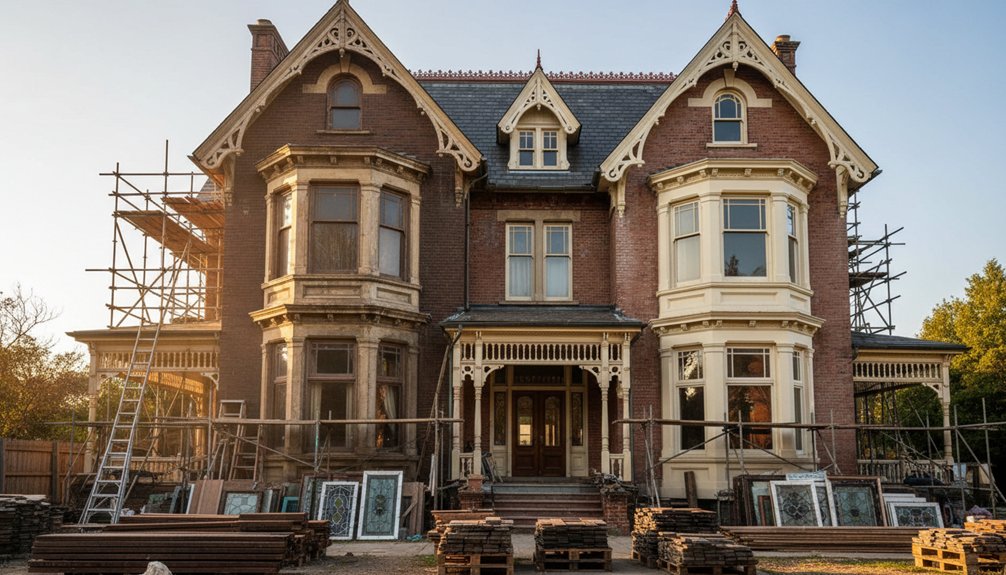
A Victorian terrace in London gained significant value after its owners restored the original sash windows, cornices, and staircase instead of replacing them with modern fittings. Your project can deliver similar rewards, but only if the building’s structure, location, and repair costs justify the investment. Before you commit, you’ll need to assess hidden defects, upgrade outdated wiring and plumbing, follow conservation rules, and decide which features deserve preservation—because one overlooked problem can change the entire financial picture.
Key Takeaways
- Restoration is often worthwhile when the home has sound structure, intact architectural features, and a desirable, walkable location.
- A detailed survey should identify urgent defects, including damp, roof damage, movement, outdated wiring, plumbing issues, and drainage problems.
- Budget for professional assessments, multiple quotes, and a 15–20% contingency for hidden repairs and unforeseen costs.
- Preserve defining features such as sash windows, fireplaces, staircases, stained glass, cornices, and original woodwork whenever practical.
- Compare restoration costs, future maintenance, energy upgrades, resale potential, and local property values against the predictability of a new build.
When Is Victorian Restoration Worth the Cost?
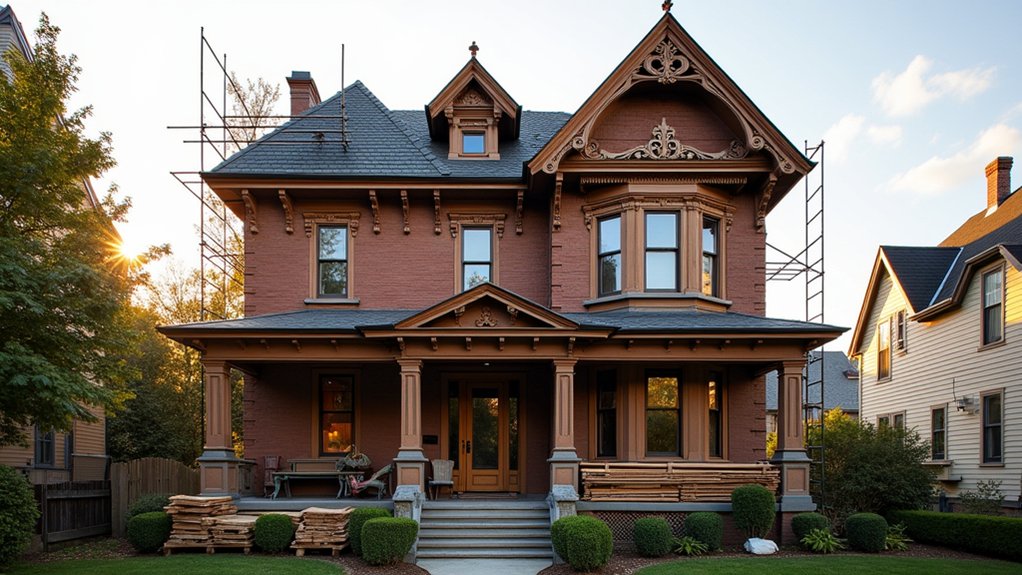
Restoring a Victorian home is worth the cost when its architectural character, structural condition, location, and long-term value justify the investment. You’ll benefit most when original features—such as ornate woodwork, stained glass, fireplaces, and high ceilings—remain intact or can be carefully repaired.
Examine the foundation, roof, framing, plumbing, electrical systems, and exterior before committing. A sound structure with repairable defects generally offers a stronger restoration opportunity than a severely compromised property.
Location matters, too: desirable neighborhoods, walkability, and historic appeal can support future resale value.
You should also consider whether the layout can accommodate Modern amenities without sacrificing defining details.
Sensible upgrades can improve Energy efficiency through insulation, efficient heating, restored windows, and discreet weatherproofing.
Restoration makes sense when preservation enhances daily comfort, not merely appearance.
Always verify local preservation requirements before altering protected elements.
Work Out Your Victorian Restoration Budget
Start by estimating costs for structural repairs, period-appropriate materials, labour, permits, and specialist trades.
Get several quotes, separate essential work from cosmetic upgrades, and add a contingency of at least 15–20% for hidden defects.
You’ll protect your budget by reserving extra funds for damp, outdated wiring, roof damage, and other surprises uncovered during restoration.
Estimate Restoration Costs
Before work begins, build your Victorian restoration budget from a detailed survey of the house rather than a rough cost-per-square-foot estimate.
Hire qualified specialists to inspect the roof, foundation, masonry, wiring, plumbing, windows, and decorative finishes.
Request itemized quotes for labor, permits, scaffolding, design services, and inspections, then separate essential repairs from upgrades.
Historical accuracy can affect pricing: matching millwork, plaster ornament, stained glass, and hardware often costs more than modern substitutes.
Research material sourcing early, because reclaimed or custom-made components may require specialist fabricators and longer lead times.
Price each room and exterior elevation independently, recording quantities and specifications.
Compare at least three written bids, verify contractors’ experience with heritage properties, and confirm whether quoted prices include removal, preparation, installation, finishing, and tax before approving your restoration budget.
Plan For Contingencies
Set aside a contingency of at least 15–20% of your Victorian restoration budget for concealed damage, code-required upgrades, and price changes that emerge after demolition. Older homes often hide rotted joists, outdated wiring, failing plumbing, or foundation movement behind finished surfaces.
Ask your contractor to identify likely risks during the initial inspection, then rank them by cost and urgency.
Build separate allowances for structural repairs, specialist restoration, permits, temporary weatherproofing, and material replacement. Obtain written estimates, but don’t treat them as guarantees; verify what each quote excludes.
Your Contingency planning should also account for delays that increase labor, storage, accommodation, or financing costs.
Keep Emergency funds in a readily accessible account, separate from your renovation payments. Review the reserve after each project phase, and approve changes only after confirming their necessity, price, and effect on your schedule.
Use a Survey to Find Hidden Defects
A thorough building survey can reveal defects that a Victorian home’s finishes conceal, from subsidence and damp to failing roof timbers, outdated wiring, and blocked flues. Hire a chartered surveyor with experience in period properties, and request a full inspection rather than a basic valuation report.
Ask the surveyor to examine the roof structure, chimneys, external walls, floors, windows, drainage, and signs of movement or moisture. These survey insights give you a clearer picture of the work ahead and strengthen your negotiating position before you exchange contracts.
Insist on photographs, severity ratings, and recommended next steps, then obtain specialist reports where necessary. Effective defect detection helps you distinguish urgent repairs from cosmetic improvements, refine your contingency allowance, and decide whether the restoration remains financially worthwhile.
Budget for Wiring, Plumbing, and Insulation
Survey findings should guide a realistic budget for the systems hidden behind a Victorian home’s walls and floors. Ask qualified tradespeople to price rewiring, new consumer units, testing, and making good after Electrical upgrades. Add contingency funds because opening walls can reveal unsafe junctions, overloaded circuits, or outdated materials.
For Plumbing repairs, budget for replacing corroded supply pipes, leaking waste lines, inadequate drainage, and damaged fixtures. Confirm whether the boiler, radiators, and water pressure require attention, and include access, disposal, and reinstatement costs.
Insulation deserves equal priority: price loft, floor, and compatible wall improvements, while allowing for ventilation and moisture control. Request itemised quotes, separate essential work from comfort upgrades, and keep 15–20% in reserve.
Sequence these systems before plastering, so you avoid paying twice for finished surfaces. Their condition will strongly influence your restoration’s final value.
Check Planning and Conservation Rules
Before you alter the building, check your local planning authority’s rules and confirm whether the house is listed, lies within a conservation area, or has permitted development restrictions.
Historic regulations may control structural changes, extensions, windows, roof work, external finishes, and even internal alterations to significant features. Contact the council’s conservation officer before commissioning drawings, and ask which applications, surveys, and specialist reports you’ll need.
A listed building normally requires listed building consent, while planning permission may also apply; carrying out unauthorised work can lead to enforcement action and criminal penalties.
Review local preservation guidelines, obtain written decisions, and keep copies of approvals, conditions, and approved plans.
Build consultation fees, application charges, delays, and compliant materials into your budget.
Don’t rely on a contractor’s assumptions; verify every requirement yourself before work begins.
Which Victorian Features Are Worth Saving?
Prioritise features that define the house’s age, craftsmanship, and layout, such as original staircases, doors, architraves, ceiling cornices, fireplaces, encaustic tiles, floorboards, sash windows, and cast-iron details. These elements express Victorian craftsmanship and usually add more character than modern replacements.
Inspect each feature’s condition before removing anything. You can repair loose joints, splice damaged timber, reglaze sash windows, repoint fireplaces, and clean tiles with gentle, reversible methods.
Preserve original paint layers where they reveal the home’s history, but test for lead before sanding or stripping. Salvage matching hardware, skirting boards, and internal doors during alterations, storing them safely until reuse.
Prioritise structural stability and safety, yet retain visible evidence of age. A careful, compatible repair protects Historic authenticity while improving performance and extending the life of irreplaceable details.
Document specialist work for future maintenance.
Compare Restoration With Buying a New Build
Restoring a Victorian home can cost more and take longer than buying a new build, but you’ll retain original character, established proportions, and a location that may be difficult to replicate. You’ll also need to budget for surveys, specialist trades, structural repairs, and upgrades hidden behind walls or floors.
A new build usually offers predictable pricing, stronger energy performance, warranties, and Modern amenities such as integrated heating controls, efficient insulation, and contemporary layouts. However, developers may limit customization, while new estates can lack mature gardens, transport links, and architectural detail.
During restoration, you can improve comfort without erasing history by specifying discreet systems, reclaimed finishes, and Sustainable materials. Compare each property’s condition, floor area, running costs, maintenance requirements, and renovation scope before choosing.
Obtain independent inspections and detailed quotations so both options receive an informed, like-for-like assessment.
Know When Victorian Restoration Pays Off
You’ll know restoration pays off when you compare realistic costs for structural repairs, systems, materials, and skilled labor.
Preserve defining features such as original woodwork, windows, and masonry while directing upgrades toward safety and efficiency.
Then weigh the home’s long-term value, including durability, neighborhood demand, and the lasting benefit of its historic character.
Assessing Restoration Costs
Before committing to Victorian restoration, determine whether the home’s structure, heritage features, and location justify the investment.
Hire a qualified inspector, structural engineer, and contractor to identify foundation movement, roof failure, dampness, outdated wiring, plumbing defects, and hidden timber damage.
Request itemized estimates, then add a 15–20 percent contingency for surprises behind walls and beneath floors.
Compare restoration costs with the property’s current value, projected resale value, insurance, taxes, and ongoing maintenance.
Research comparable renovated homes in your area rather than relying on optimistic assumptions.
Historical significance and distinctive Architectural details may support a premium, but they won’t offset severe structural repairs or an unsuitable location.
Obtain multiple bids, confirm licensing, and establish a realistic schedule.
If costs exceed likely value, reconsider the project scope before signing contracts.
Preserving Historic Character
Once the costs make financial sense, protect the features that give the Victorian home its value and identity. Begin with a documented survey of cornices, ceiling roses, stained glass, fretwork, staircases, fireplaces, and original joinery. Photograph each element, note damage, and consult a preservation specialist before removing anything.
Prioritize repair over replacement. A skilled craftsperson can consolidate timber, patch plaster, reglaze windows, and reproduce missing trim without erasing evidence of age. Preserve architectural detailing by matching profiles, proportions, finishes, and construction methods rather than installing generic modern substitutes.
Material authenticity matters, so choose lime plaster, hardwood, slate, and traditionally made hardware where appropriate. Don’t strip sound paint or alter room layouts unnecessarily. Obtain approvals for protected features, and keep a record of every intervention.
Your goal is a safe, functional home that still reads unmistakably Victorian.
Evaluating Long-Term Value
Restoration pays off when the home’s location, structure, and original features support the investment—not simply because the property is old.
Start by comparing recent sales of renovated Victorian homes nearby, then estimate purchase, design, permit, labor, and contingency costs.
Include ongoing expenses: specialized maintenance, insurance, taxes, and energy upgrades.
A structural inspection should identify foundation movement, moisture, outdated wiring, plumbing, and roof damage before you commit.
Preserve features that drive Historical significance and aesthetic appeal, such as millwork, stained glass, fireplaces, and original floors.
Don’t over-improve beyond neighborhood values or replace sound details with fashionable finishes.
Calculate your likely resale value, rental income, and holding period using conservative assumptions.
If projected returns remain modest, restoration may still make sense for livability—but you should recognize that emotional value won’t guarantee financial profit.
Frequently Asked Questions
How Long Does a Typical Victorian Home Restoration Take?
You’ll typically spend six months to two years restoring a Victorian home, depending on size, condition, permits, and craftsmanship. Prioritize Historical accuracy, while Budget considerations, material availability, and unexpected structural repairs can extend your timeline.
Can I Live in the House During Restoration Work?
You can live there during restoration, but assess safety first. Plan flexible living arrangements around dust, noise, utilities, and hazardous areas. For major structural work, temporary accommodations often protect your health and accelerate progress.
Which Professionals Should I Hire for a Victorian Home Restoration?
Hire an architect experienced in Victorian properties, a preservation consultant, structural engineer, and licensed tradespeople. They’ll guide Historical accuracy and Preservation techniques, ensuring your restoration stands strong, like a carefully rebuilt bridge, through every challenge.
How Can I Choose Historically Appropriate Paint Colours and Finishes?
Choose historically documented Color palettes by consulting period paint charts, regional evidence, and surviving layers. Select compatible paint finishes: flat ceilings, eggshell walls, and glossier trim. Test samples under varying light before committing.
Are Victorian Homes Energy-Efficient After Restoration?
You can make Victorian architecture hum efficiently after restoration, but Restoration challenges remain. Insulate roofs and floors, seal drafts, upgrade windows sympathetically, and install efficient heating; you’ll reduce energy use without sacrificing historic character.
About the Author