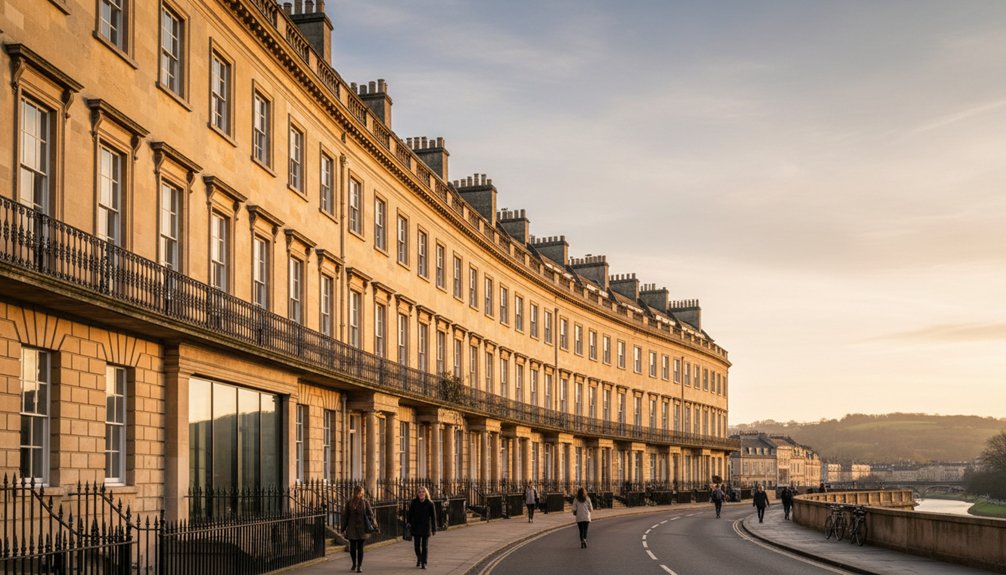
You may not know that many Bath Georgian townhouses sit within conservation areas where even minor alterations can require approval. That protection preserves fine proportions, sash windows, and original stonework, but it can also affect renovation budgets and resale plans. Elegant conversions offer a different balance, often pairing period details with easier maintenance and modern layouts. To choose wisely, you’ll need to weigh character, location, legal constraints, and long-term value—especially where the distinctions aren’t immediately obvious.
Key Takeaways
- Bath offers exceptional Georgian townhouses featuring honey-coloured stone, symmetrical façades, sash windows, high ceilings, and original fireplaces.
- Elegant conversions provide heritage character with modern conveniences, including contemporary kitchens, lift access, secure parking, and easier maintenance.
- Neighbourhoods range from walkable city-centre streets to greener, quieter areas such as Combe Down, Lansdown, Widcombe, and Bear Flat.
- Conservation controls and listed-building requirements can restrict alterations, so buyers should verify permissions, building regulations, and heritage obligations.
- Prices and maintenance costs vary considerably, making professional surveys, legal checks, and careful review of leases or restoration needs essential.
How Do Bath Georgian Townhouses Compare With Conversions?
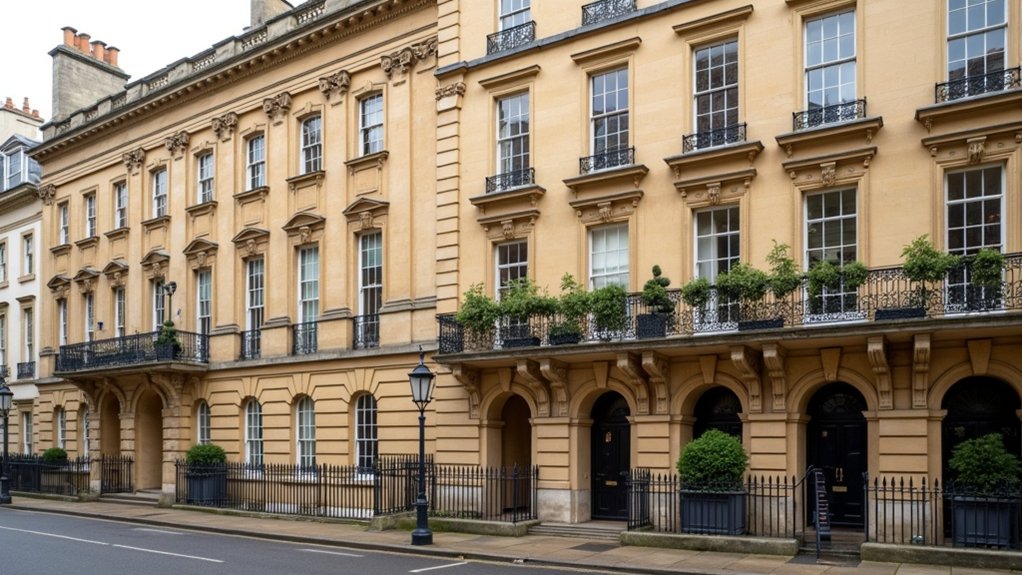
Bath’s Georgian townhouses offer grand proportions, honey-coloured stone and a strong sense of architectural continuity, while conversions often provide a more varied mix of layouts, contemporary finishes and, occasionally, easier maintenance.
When you compare them, consider how you want to live, not simply which looks more impressive. A townhouse may give you generous entertaining rooms, private gardens and stronger period character, but listed-building controls can shape alterations and increase costs.
A conversion might deliver lift access, secure parking or a ready-to-use kitchen, although shared entrances and service charges deserve careful scrutiny.
Historical preservation can protect a home’s long-term appeal, while sensitive interior renovation may improve comfort without erasing its character.
Your survey should examine damp, windows, roofs, insulation and communal responsibilities before you commit. Market demand varies by street, condition and rarity.
What Defines a Georgian Townhouse in Bath?
A Georgian townhouse in Bath is defined by more than its honey-coloured stone: you’ll usually find a formal, symmetrical façade, sash windows, tall floor-to-ceiling proportions and rooms arranged around a central staircase.
You’ll also notice carefully proportioned doorcases, fanlights, cornices and iron railings, all reflecting Bath’s eighteenth-century planning and classical ideals. Architectural details often carry local significance: terraces around The Circus, Royal Crescent and Pulteney Square demonstrate how individual homes contribute to a unified streetscape.
Inside, high ceilings, generous reception rooms and original fireplaces create the character buyers value, while later alterations may require sensitive interpretation. Your interior design choices should consequently respect scale, sightlines and period materials, rather than disguise them.
From a market perspective, authenticity, light and well-preserved features can strongly influence desirability, maintenance needs and long-term value.
What Makes Elegant Bath Conversions Different?
When you choose an elegant Bath conversion, you’ll need to respect the building’s Georgian character while meeting modern living standards.
Heritage-sensitive design protects features that local buyers value, from proportions to original joinery.
Bespoke adaptations then give you practical comfort without compromising the property’s market appeal.
Heritage Design Sensitivity
Working in Bath’s Georgian townhouses means balancing modern comfort with the proportions, materials and craftsmanship that give each property its identity. You’ll need to read the building before proposing change: map original staircases, cornices, shutters, fireplaces and floor plans, then understand how later alterations affect its character.
Heritage preservation isn’t simply about retaining attractive details; it protects the hierarchy and rhythm that make Bath’s terraces so distinctive. Check conservation-area guidance and listed-building requirements early, because seemingly minor work can require consent and influence your budget.
Architectural authenticity also matters to the local market. Buyers recognise honest period features, coherent detailing and carefully repaired materials, while insensitive removal can undermine value.
With experienced conservation advice, you can respect the townhouse’s story and create a conversion that belongs confidently in Bath.
Bespoke Modern Adaptations
Respecting Bath’s historic fabric doesn’t mean settling for outdated living. In an elegant conversion, you can enjoy a home tailored to contemporary routines while preserving the character buyers value.
Designers work with Georgian proportions, sash windows, stone façades, and original staircases, introducing discreet kitchens, underfloor heating, smart lighting, and efficient insulation. This careful balance distinguishes Bath from ordinary renovations: modern interventions respond to the building rather than overpowering it.
You’ll often find bespoke joinery concealing appliances, bathrooms fitted into previously awkward spaces, and glazing upgrades that protect period detailing. Such thoughtful planning honours historical architecture while delivering modern amenities.
It can also strengthen resale appeal, as buyers increasingly seek authenticity with comfort. Before committing, ask how proposed changes meet conservation requirements and support your long-term lifestyle.
Which Bath Areas Suit Different Lifestyles?
Which Bath area suits you best depends on how you want to live: choose the city centre for Georgian character and walkable culture, Bear Flat or Widcombe for a neighbourly feel with strong amenities, and Combe Down or Lansdown for more space, greenery, and a quieter pace.
In the centre, you’ll find landmark terraces, independent shops, theatres, and restaurants on your doorstep. However, parking and smaller rooms may affect daily convenience.
Bear Flat offers practical connections and a lively village atmosphere, while Widcombe combines canal-side walks with period homes and useful local services.
Combe Down gives you family-friendly space and excellent schools, and Lansdown appeals if you value views, gardens, and calm.
Across every area, check conservation restrictions before planning alterations. Historical preservation shapes what you can change, while thoughtful renovations can deliver Modern luxury without losing Bath’s distinctive architectural identity.
Which Period Features Add Value in Bath?
You’ll add lasting appeal with Bath’s original stonework, especially when it retains its local character and craftsmanship.
Period cornicing can strengthen a room’s Georgian proportions, giving buyers an immediate sense of heritage.
Together, these features often support both buyer interest and premium values.
Original Stonework
Original stonework can give a Bath townhouse a distinct advantage, especially when it preserves the warm, honey-coloured character of the local limestone.
As you view a property, look for crisp ashlar façades, carefully matched repairs and sound masonry around windows, doorways and garden walls. These details demonstrate Historic craftsmanship and strengthen Architectural authenticity, qualities that Bath buyers consistently recognise.
Well-maintained stone can also support kerb appeal, planning confidence and long-term value, particularly in sought-after central streets and conservation areas.
You should check for erosion, staining, inappropriate render and cement pointing, since these may conceal costly defects or breach local requirements. A specialist surveyor can assess movement, moisture and previous repairs before you commit.
When the stonework remains honest and well cared for, you’re buying a tangible connection to Bath’s Georgian identity, not merely an attractive exterior.
Period Cornicing
Period cornicing can add real appeal to a Bath townhouse, particularly when its profile, scale and plasterwork suit the building’s Georgian proportions. Well-preserved mouldings strengthen period character, create elegant transitions between walls and ceilings, and reassure buyers that original craftsmanship remains intact.
You’ll see the greatest value where cornicing survives alongside high ceilings, sash windows and restrained decorative details. Victorian architecture may call for deeper, more elaborate patterns, so avoid replacing it with a generic Georgian design.
If sections have been removed, a skilled plasterer can reproduce them from surviving fragments, but matching proportion matters more than excessive ornament.
Modern renovations should protect cornicing during rewiring, insulation and layout changes. Carefully integrated lighting can highlight its profile without making the room feel theatrical.
In Bath’s conservation-minded market, authentic, well-maintained detailing often supports buyer confidence and helps your home stand apart.
How Much Do Bath Period Homes Cost?
Buying a period home in Bath can cost anywhere from around £400,000 for a modest Georgian terrace or Victorian cottage to well over £1 million for a refined townhouse in sought-after central areas such as the Royal Crescent, Lansdown, or Camden.
You’ll pay a premium for intact Historical architecture, generous proportions, garden space, and views across the city’s honey-coloured terraces.
Location remains decisive: central Georgian homes command more than properties in neighbouring suburbs, while elegant conversions can offer a lower entry point, depending on size, finish, and lease terms.
As a Property investment, Bath attracts strong demand from professionals, families, and holiday-let buyers, although you should assess restrictions and local regulations carefully.
A detailed valuation and comparison of recent sales will help you judge whether the asking price reflects genuine heritage value.
What Maintenance Do Bath Period Homes Need?
Owning a Bath period home means budgeting for regular care of its historic fabric, from lime mortar and Bath stone to timber sash windows, slate roofs, and cast-iron rainwater goods. You’ll need periodic inspections, gentle cleaning, repointing with breathable lime mortar, and prompt roof and gutter repairs.
Salt staining, damp, and cracked stone deserve specialist attention, particularly in exposed elevations around Lansdown and the city centre. Historical restoration should respect original materials and Georgian details, while helping you avoid costly, inappropriate repairs.
Plan for skilled joinery work on sash windows, shutters, staircases, and floors. Modern insulation can improve comfort, but you’ll need a breathable approach to prevent trapped moisture and decay.
Set aside a maintenance reserve, and choose contractors experienced with Bath’s conservation-sensitive properties and locally listed architectural character.
What Legal Checks Should Buyers Make?
Before you commit to a Bath townhouse or conversion, have your solicitor check the title, listed-building status, conservation-area controls, and any restrictive covenants affecting alterations. These property title checks can reveal rights of way, shared access, boundary disputes, or obligations linked to communal areas.
For Georgian terraces around the Circus, Royal Crescent, or Great Pulteney Street, confirm which original features carry protection and whether previous works had proper consent. Ask for planning permissions, building-regulation certificates, and guarantees for structural repairs, roof work, damp treatment, or conversion projects.
Your legal due diligence should also examine lease length, service charges, reserve funds, and planned works if you’re buying a flat. Check flood-risk information, utilities, parking rights, and party-wall arrangements before exchange, so Bath’s historic character doesn’t conceal an expensive legal surprise.
Which Buyers Suit Each Bath Property Type?
Once the title, permissions, and future liabilities are clear, the right Bath property depends on how you’ll use it.
A Georgian townhouse suits you if you value space, period detail, and a long-term family home. Its Historic architecture, from sash windows to elaborate cornices, rewards careful ownership, though listed-building controls can complicate alterations.
Choose an elegant conversion if you want a more manageable footprint, lower maintenance, or a central lock-up-and-leave base. Flats often appeal to professionals, downsizers, and investors seeking Bath’s strong rental demand, but service charges and shared decisions deserve scrutiny.
If you’re restoring a neglected townhouse, allow generously for Renovation challenges, specialist trades, and disruption.
Buyers wanting immediate comfort should prioritise well-renovated homes, while heritage enthusiasts may welcome the chance to shape a distinctive residence.
Your budget, lifestyle, and tolerance for responsibility should guide the decision.
Frequently Asked Questions
How Competitive Is the Buying Market for Georgian Townhouses and Elegant Conversions in Bath?
Bath’s Georgian townhouses and elegant conversions attract strong competition, especially near central amenities. You’ll face heritage-conscious buyers, limited supply, and premium pricing; Historical preservation and Neighborhood amenities greatly influence demand, while decisive offers often secure standout properties.
What Financing Options Are Available for Purchasing a Period Property in Bath?
You can finance a Bath period property through a standard mortgage, specialist renovation loan, bridging finance, or cash. Lenders assess Historic preservation restrictions, renovation costs, and Neighborhood appeal, so secure surveys, valuations, and expert advice early.
How Energy-Efficient Are Georgian Townhouses and Elegant Conversions?
About 20% of Georgian homes may lose heat through single-glazed windows. You’ll find energy efficiency varies, but Historic restoration can add insulation discreetly, while Modern amenities improve comfort, bills, and Bath’s period-property market appeal.
Can Buyers Make Structural Alterations After Purchasing a Bath Period Property?
Yes, you can make structural alterations, but Historic preservation rules and Renovation regulations often require listed-building consent and planning permission. Check restrictions, consult Bath specialists, and secure approvals before changing walls, windows, roofs, or layouts.
What Should Sellers Do to Prepare These Properties for the Bath Market?
Like polishing a Georgian façade, you’ll prepare your Bath property by prioritising Historical preservation, completing tasteful Interior renovation, repairing period details, commissioning surveys, improving energy efficiency, and presenting authentic character with professional photography.
About the Author