If you’re considering York as a long-term home, you’ll find a strong mix of heritage, community, schools, healthcare, transport, and cultural amenities. Its compact centre and varied neighbourhoods can suit families, professionals, and retirees, while local employment supports several sectors. However, you’ll need to weigh above-average housing costs, competition for property, and tourist congestion. The right choice depends on your budget, commute, and preferred lifestyle—so which areas and costs deserve closer attention?
Key Takeaways
- York offers excellent heritage, cultural attractions, green spaces, community activities, and a highly walkable city centre.
- Reliable rail connections, local buses, cycling routes, and road links support commuting, although congestion and limited parking can frustrate drivers.
- Strong employment opportunities exist in education, healthcare, tourism, technology, professional services, retail, and public-sector organisations.
- Families, professionals, and retirees benefit from good schools, healthcare, amenities, and transport, but tourist congestion and older housing require consideration.
- York’s main disadvantage is affordability, with above-average property prices, competitive rents, seasonal demand, and potentially high household expenses.
Is York Good for Long-Term Living?

York can be an excellent city for long-term living, particularly if you value historic character, strong transport links, and access to green spaces. You’ll find a compact centre, reliable rail connections, and neighbourhoods with distinct housing options, from period terraces to modern apartments.
Its location between Leeds and major northern routes can support commuting, although peak-time fares and traffic may affect your budget. York offers good schools, healthcare, supermarkets, and extensive walking and cycling routes.
However, property prices and rents often exceed those in nearby towns. Cultural attractions, including museums, galleries, and heritage sites, provide year-round activities. Local festivals add variety, though visitor numbers can increase congestion during busy periods.
You should compare neighbourhood costs, transport times, flood risk, and local services before committing to a long-term move.
Why Do People Choose to Live in York?
You’ll find York’s rich historical heritage reflected in its Roman walls, medieval streets, and major visitor attractions, which also support the local economy.
You can benefit from a strong community spirit through neighbourhood groups, local events, and accessible civic activities.
These advantages may appeal to you, though you should weigh them against tourism pressures and living costs.
Rich Historical Heritage
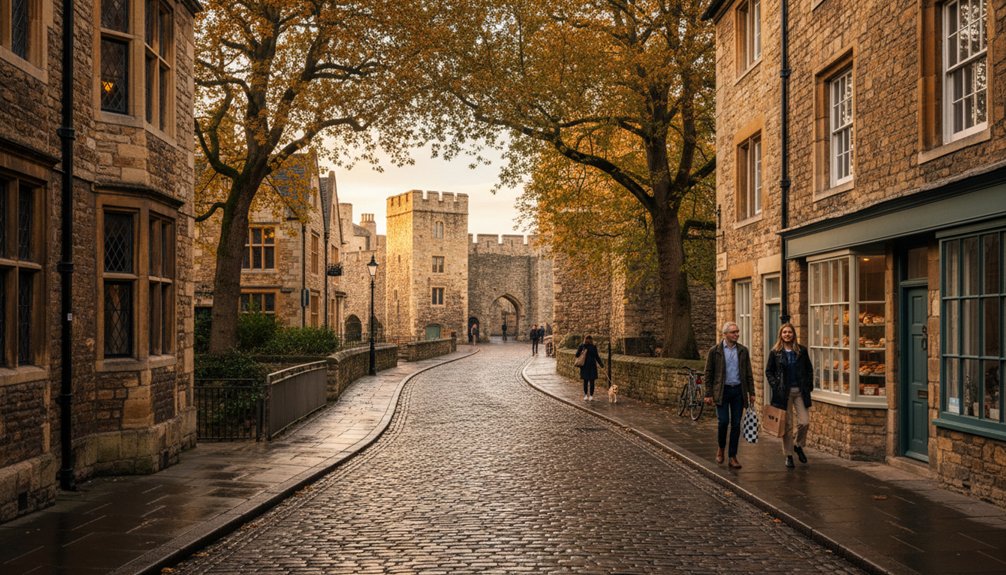
With Roman walls, a medieval cathedral, and centuries-old streets, York offers a tangible sense of history in everyday life. You can walk much of the city centre’s walls, explore the Minster, and see Medieval architecture alongside modern shops and homes.
This heritage gives your weekends plenty of low-cost options, including museums, guided walks, and public landmarks. Cultural festivals and historical events add seasonal variety, although popular dates can bring crowds, traffic, and higher accommodation prices.
You should also consider practical trade-offs: conservation rules can limit alterations to older properties, and central homes may command premiums because of their location and character.
York’s history won’t suit everyone, especially if you prefer newer developments, but it can provide a distinctive environment and strong year-round appeal for long-term residents seeking cultural depth.
Strong Community Spirit
A strong community spirit is one reason many people choose to settle in York, where neighbourhood groups, residents’ associations, and local charities create regular opportunities to meet others and support shared projects. You’ll find volunteer initiatives covering food support, environmental improvements, cultural events, and assistance for older residents.
These activities can strengthen Neighborhood cohesion, particularly when you’re new to the city or working remotely. York’s compact communities and active parish networks make participation relatively accessible, although involvement varies between areas.
Before moving, check local council listings, community noticeboards, and social media groups to compare opportunities near your prospective home. A strong network can improve practical support and belonging, but it won’t remove every challenge: some projects rely on limited funding, and busy schedules can restrict participation.
What Are York’s Biggest Drawbacks?
York’s biggest drawbacks are its high housing costs, limited transport links, and busy tourist centre. If you’re considering a long-term move, housing affordability may prove challenging, especially near the centre and popular neighbourhoods. Rents and purchase prices often exceed those in nearby towns, while local wages don’t always keep pace.
Urban congestion can also affect your routine. Narrow streets, tourism, and commuter traffic create delays, particularly during peak hours and summer weekends. You’ll find cycling and walking practical in central areas, but parking is restricted and buses can face slow journeys.
York’s rail connections are useful, yet cross-country routes aren’t always frequent or direct, and reaching some surrounding villages typically requires a car. Tourism supports local businesses, but crowds and seasonal noise may reduce your everyday comfort. Weigh these drawbacks against York’s amenities, community, and employment opportunities.
How Much Does Living in York Cost?
Those drawbacks make budgeting a key part of deciding whether York suits long-term living. Your biggest expense will usually be housing.
Recent listings suggest a typical one-bedroom rental costs roughly £800–£1,100 per month, while larger homes can exceed £1,400, depending on demand and condition.
Buying requires a substantial deposit, with average prices often above the national average, although local wages and property types create significant variation.
For a realistic monthly budget, add council tax, energy, water, broadband, transport, groceries, and insurance.
Utility bills can fluctuate sharply, so you’ll need a buffer rather than relying on averages.
A Cost comparison with nearby northern cities may show York is expensive, particularly for renters.
However, you can improve housing affordability by choosing a smaller property, sharing, or living farther from the centre.
Track actual quotes before committing.
Which Areas Are Best for Living in York?
Which area suits you best depends on your budget, commute, and preferred setting. The city centre suits you if you value walkable access to shops, restaurants, culture, and the station, though rents and traffic can be higher.
Clifton offers Victorian homes, riverside paths, and convenient bus routes, making it practical for professionals and families.
Fulford provides quieter streets, green space, and quick access to the university and city centre, but prices often reflect its popularity.
Bishopthorpe Road and South Bank combine independent businesses with strong cultural diversity and a lively community atmosphere.
For more space and potentially better value, consider Heworth, Acomb, or Haxby, checking transport times carefully.
Ongoing urban development may improve facilities while increasing construction disruption.
Compare recent rents, parking, noise, and flood-risk data before choosing.
Are York’s Schools and Healthcare Good?
For families, York offers a solid choice of schools, with several well-regarded primary and secondary options, but performance and admissions vary by catchment area. You should check recent Ofsted reports, GCSE results, sixth-form destinations, and each school’s admissions criteria before choosing a neighbourhood.
Selectively and faith schools may require testing, distance-based priority, or evidence of worship, so plan early. Educational excellence is achievable, but no single citywide pattern guarantees the best fit for your child.
Healthcare quality is generally strong, supported by York Hospital, local GP surgeries, pharmacies, dentists, and community services. However, you may face GP-registration limits, appointment delays, or shortages in some specialties.
Check nearby practices’ NHS ratings, opening hours, and registration policies before moving. For ongoing treatment, confirm referral pathways and waiting times. Private providers can widen choice, but add significant costs.
What Are York’s Transport Links Like?
York has strong transport links for long-term living, centred on its mainline railway station, where direct trains reach London King’s Cross in roughly two hours and Leeds in about 25–30 minutes. You’ll also find regular services to Manchester, Edinburgh, and other major cities, although peak fares can be expensive and delays occasionally affect reliability.
Public transit within York includes frequent buses connecting the station, city centre, suburbs, and surrounding villages. Journey times depend on traffic, while evening and Sunday services may be less frequent.
Cycling and walking work well in central areas, but narrow streets and tourist crowds can slow you down.
Road infrastructure provides access to the A64, A19, and A59, linking York with regional destinations. However, congestion around the ring road and limited city-centre parking can make driving less convenient.
You’ll benefit most by combining rail, buses, cycling, and occasional car travel.
What Jobs and Careers Are Available in York?
You’ll find major employment sectors in York, including education, healthcare, tourism, technology, retail, and professional services.
Career growth can be strong in specialist fields, though opportunities and salaries vary by sector and employer.
Reviewing local vacancies, average pay, and progression routes will help you assess York’s long-term fit.
Major Employment Sectors
York’s economy is led by education, healthcare, public services, tourism, retail, manufacturing, and financial and professional services, giving residents a reasonably varied job market.
You’ll find major employers across the University of York, York Hospital, City of York Council, and local schools, while tourism supports hotels, restaurants, attractions, and event work.
Retail remains important in the city centre and retail parks.
Manufacturing and engineering provide technical roles, particularly around industrial estates, while finance, law, consulting, and digital businesses offer office-based employment.
Urban development also creates work in construction, planning, property, and infrastructure.
Cultural festivals and heritage attractions strengthen visitor-related demand, although some roles are seasonal.
York’s labour market is diverse, but wages can lag larger northern cities, and commuting may broaden your options if you need specialist employment.
Career Growth Opportunities
Building a career in York is most realistic when you match the city’s strongest sectors with opportunities for progression. You’ll find established employers in education, healthcare, tourism, rail, professional services, manufacturing, and technology.
York’s universities, hospitals, and large public-sector organisations can provide structured training, apprenticeships, and clearer promotion routes. However, competition for senior roles is stronger than in larger cities, so you may need to commute to Leeds or work remotely to widen your options.
You can strengthen your prospects through York’s business networks, professional courses, and university partnerships. Smaller firms offer broader responsibilities, while entrepreneurial opportunities exist in digital services, hospitality, creative work, and independent retail.
Assess salaries against housing and transport costs, then compare each role’s advancement potential. Work life balance may appeal, but seasonal tourism can create uneven workloads.
Is York Good for Families, Retirees and Professionals?
York can suit families, retirees, and professionals, but its appeal depends on priorities such as budget, transport, healthcare, schools, and access to work.
Families benefit from reputable schools, parks, museums, and relatively manageable travel distances, although housing costs can exceed those in nearby towns.
Retirees may value York’s walkable centre, NHS access, rail connections, and active community life; however, older properties and busy tourist areas could affect comfort.
Professionals gain direct trains to Leeds and London, a skilled local economy, and flexible cultural options, though commuting costs and competition for specialist roles deserve attention.
Cultural attractions, including the National Railway Museum and York Minster, add year-round interest, while shopping districts provide practical variety.
Compare neighbourhood data, journey times, healthcare provision, and local prices before deciding.
Which Households Suit York Best?
If you’re choosing a long-term home, York suits households that value strong amenities, cultural life, and reliable transport over the lowest possible housing costs. Families benefit from reputable schools, parks, healthcare, and comparatively manageable journeys across the city, although larger properties can stretch budgets.
Professionals can access rail links to Leeds and London, plus a substantial local employment base, but should compare commuting costs with salaries.
Retirees may appreciate walkable neighbourhoods, museums, and healthcare access; however, older homes sometimes need costly maintenance.
Students and young renters fit York’s lively centre, though competition and seasonal demand can raise rents.
The Housing market rewards careful budgeting, especially for buyers.
York’s Cultural diversity continues to grow, yet you should compare neighbourhood services, noise, parking, and flood risk before committing long term.
Frequently Asked Questions
What Is York’s Climate Like Throughout the Year?
York has a temperate climate: you’ll experience cool, wet winters, mild springs, warm summers, and crisp autumns. Weather patterns vary, while Seasonal variations bring roughly 600–700 millimetres of annual rainfall and occasional snow.
How Safe Is York for Residents and Visitors?
You’ll find York generally safe—ironically, its biggest worry may be lost tourists, not danger. Crime rates vary by neighborhood; check police data. Use normal safety measures, especially after dark, and report concerns promptly.
What Cultural Events and Festivals Take Place in York?
You’ll find York’s cultural calendar includes York Festival of Ideas, York Food and Drink Festival, Christmas markets, and Viking celebrations. Explore historical landmarks while sampling local cuisine; events span spring through winter, with busiest periods in summer.
Is York a Pet-Friendly City?
You’ll find York fairly pet-friendly, with pet parks, dog-welcoming green spaces, and numerous Veterinary services. Check housing rules, transport policies, and local regulations first; availability varies by neighborhood, so plan around your animal’s needs.
How Easy Is It to Make Friends and Build Community Connections in York?
You’ll find making friends in York fairly easy through Community engagement, neighbourhood groups, volunteering, sports clubs, and social opportunities. Participation varies by area, but universities, workplaces, libraries, and events provide reliable routes to lasting connections.
About the Author