
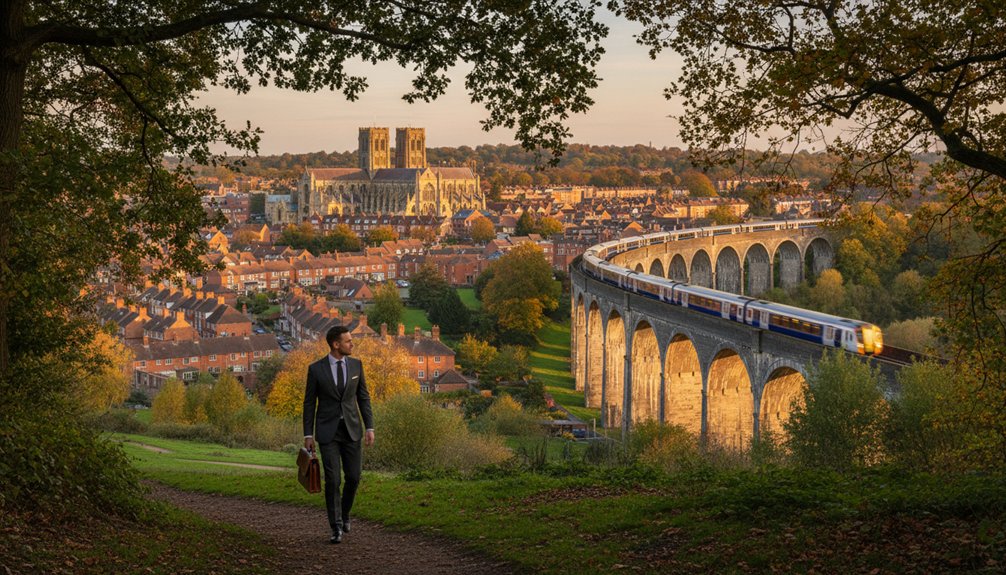
St Albans gives you a rare combination: a genuinely historic city feel with a fast, direct train into central London. You can reach St Pancras in roughly 20 minutes, enjoy strong local amenities, and still find parks, independent businesses, and a close community beyond the capital’s pace. However, higher property prices, peak-time fares, and congested roads could change the calculation. So, is its convenience worth the premium—and which neighbourhood suits your priorities?
Key Takeaways
- Fast, frequent trains reach London St Pancras in around 20 minutes, making St Albans highly attractive for daily commuters.
- Excellent onward connections via the Underground, buses, walking, and cycling provide convenient access across London.
- Historic character, green spaces, reputable schools, and a lively town centre offer an appealing quality of life.
- Families and professionals benefit from strong amenities, cultural attractions, independent shops, restaurants, and community activities.
- High property prices, living costs, crowded peak trains, parking challenges, and occasional disruptions may outweigh its advantages for some residents.
Is St Albans the Right Commuter City for You?

Could St Albans be the right commuter city for you? If you want a well-connected, characterful place with strong everyday services, it deserves serious consideration. You’ll find historic streets, attractive neighbourhoods, reputable schools, and a lively town centre, creating a balanced setting for professionals, couples, and families.
St Albans also offers a genuine commuter community, so you won’t feel disconnected from London or local life. Independent shops, cafés, restaurants, parks, cultural venues, and practical local amenities support a convenient, sociable lifestyle beyond work.
Housing costs can be higher than in some surrounding towns, and popular areas attract substantial demand, so you’ll need a realistic budget and clear priorities.
Choose St Albans if you value urban access, community character, and quality of life without living in the capital itself.
How Long Does the St Albans Commute Take?
St Albans to London commute times are typically around 20 minutes to St Pancras by fast train, with frequent services making the journey practical for daily commuters. You can also find slower services, so check stopping patterns before choosing a train.
During peak periods, allow extra time for crowded platforms, boarding, and possible delays. Your total door-to-door journey will depend on how close you live to the station and where you work after arriving in London.
Public transportation links make onward travel straightforward, with Underground, bus, walking, and cycling options available from St Pancras. If you work flexible hours, travelling outside the busiest periods can make your journey more comfortable and predictable.
This commuting flexibility helps you adapt your routine when engineering works, disruptions, or changing office schedules affect your usual route.
How Much Does Living in St Albans Cost?
You’ll find that St Albans property prices reflect its fast London connections and strong local amenities.
Daily living expenses, including groceries, transport, and dining, can also exceed those in many nearby towns.
Evaluating both housing and everyday costs will help you judge whether the city suits your budget.
Property Prices
Property prices in St Albans reflect its fast rail links to London, excellent schools, and strong local amenities, with buyers typically paying a premium compared with many neighbouring towns. As you search, you’ll find the highest prices in central areas, particularly around the cathedral, conservation streets, and main station.
Period cottages, Victorian terraces, and modern apartments each attract different buyers, while larger family homes command substantial premiums in sought-after neighbourhoods. You should compare sale prices, not just asking prices, and assess lease lengths, service charges, and transport access before making an offer.
Historical landmarks and attractive streets support long-term demand, while local cuisine and independent shops enhance the town’s appeal. However, affordability varies considerably, so you’ll need a realistic deposit, borrowing assessment, and clear priorities.
Daily Living Expenses
Beyond the purchase price, you’ll need to budget for the everyday cost of living in St Albans, which can be higher than in many nearby towns. Groceries, utilities, childcare, and transport can add up quickly, particularly if you commute to London several days a week.
Dining out also costs more in the city centre, although you’ll find excellent local cuisine, independent cafés, and supermarkets offering different price points.
Renting before buying may help you understand your likely monthly outgoings, including council tax and energy bills. You can manage expenses by shopping at local markets, comparing utility providers, and choosing services outside the busiest areas.
Community events provide affordable entertainment, while the city’s walkability can reduce reliance on cars. With careful planning, St Albans can offer a comfortable lifestyle without stretching your budget.
What Is Daily Life Like in St Albans?
Daily life in St Albans combines historic character with the convenience of a well-connected modern city. You can begin your morning with a walk through the city centre, where Roman remains, medieval streets, and the cathedral provide compelling Historical landmarks.
Independent shops, cafés, and regular markets create a lively, walkable atmosphere without the intensity of central London.
You’ll find local dining to suit varied tastes, from relaxed brunch spots and traditional pubs to restaurants serving international cuisine.
Parks and open spaces give you room to exercise, meet friends, or unwind after work.
Cultural events, theatres, and community activities keep evenings engaging.
St Albans feels active yet manageable, offering everyday convenience alongside a strong sense of identity. You won’t need to sacrifice amenities for character.
Which St Albans Areas Are Best for Commuters?
Choosing the right area depends on how quickly you need to reach the station and what kind of neighbourhood suits your lifestyle.
For the shortest walk, focus on central St Albans, particularly around the city centre, Victoria Street, and the station approach. You’ll find shops, cafés, and historic attractions nearby, while trains provide frequent services towards London.
If you prefer quieter streets, consider Fleetville or Marshalswick. Fleetville offers practical amenities and a lively local community, with manageable links to St Albans City station by bus, bicycle, or car.
Marshalswick provides more residential surroundings, although you’ll need to allow extra travel time.
Verulamium and the conservation areas suit you if character and green space matter most. These commuter friendly neighborhoods combine attractive homes with strong transportation connectivity, helping you balance convenience, community, and lifestyle.
What Are St Albans’ Main Drawbacks?
Although St Albans offers excellent rail links and attractive neighbourhoods, its popularity brings higher property prices, busy roads, and strong competition for homes. You’ll need a substantial budget to buy or rent, particularly near the station and sought-after schools.
Peak-time congestion can make driving frustrating, while parking remains expensive and scarce in central areas. Although trains reach London quickly, transport disruptions, cancellations, and overcrowding can undermine your daily commute.
You may also find that the city’s historic charm comes with ongoing maintenance costs, restricted parking, and limited modern housing stock.
For evenings out, limited nightlife means fewer late venues than you might expect, so you’ll often travel elsewhere for broader entertainment.
Families may value the calm atmosphere, but younger residents could find the local social scene comparatively quiet.
How Does St Albans Compare With Rival Towns?
Compared with rivals such as Watford, Hemel Hempstead, and Harpenden, St Albans offers a stronger blend of fast London access, historic character, and established amenities, but you’ll usually pay more for it.
Its direct Thameslink trains give you frequent connections to St Pancras, while Watford benefits from both mainline and Underground services.
Hemel Hempstead generally offers better value and practical road links, although its town centre feels less distinctive.
Harpenden matches St Albans for commuter convenience and presents an attractive village atmosphere, but property prices remain high and its amenities are more limited.
You’ll find St Albans particularly competitive for culture, independent shopping, restaurants, schools, and green spaces.
Who Benefits Most From Living in St Albans?
St Albans suits professionals and families who value a fast London commute without giving up character, green space, and a well-established local community. If you work in London, you can reach the capital quickly by train while enjoying more space and a calmer daily rhythm at home.
Families benefit from reputable schools, parks, sports clubs, and an active community calendar. You’ll also find independent shops, respected restaurants, and convenient services within an attractive, walkable centre.
Buyers seeking luxury amenities can choose refined apartments, period homes, or modern developments, although prices reflect strong demand.
Cultural attractions, including the cathedral, Roman remains, museums, and theatres, give you plenty to explore locally.
St Albans suits you best if you’ll use its connectivity and amenities regularly, rather than viewing it solely as a dormitory.
Frequently Asked Questions
What Historical Landmarks Can You Visit in St Albans?
You can explore St Albans Cathedral, the Roman Theatre, Verulamium Museum, and ancient ruins at Verulamium Park. Though Historical castles are limited, you’ll discover medieval architecture, city walls, and the impressive remains of Roman Britain.
Are There Good Schools and Nurseries in St Albans?
You’ll find outstanding School options and exceptional Nursery quality in St Albans, with respected state and independent institutions. Research admissions carefully, compare inspection reports, and visit settings to choose confidently for your child’s future.
How Reliable Is Mobile Phone Coverage Across St Albans?
You’ll find generally strong mobile coverage across St Albans, particularly with major networks. Mobile network reliability remains high in built-up areas, while coverage consistency can dip indoors, around rail routes, and in outlying villages.
What Community Events Take Place in St Albans Throughout the Year?
You’ll find local festival celebrations throughout the year, including Alban Weekend, the Christmas Market, and cultural events. You can join outdoor community activities, charity runs, farmers’ markets, parades, and neighbourhood gatherings across St Albans.
Are There Local Property Taxes or Council Charges to Consider?
You’ll face council tax, with Local tax rates varying by property band, plus possible parking, planning, and waste charges. Review Council fee structures carefully; these costs can feel astronomically significant alongside mortgage payments and utilities.
About the Author