
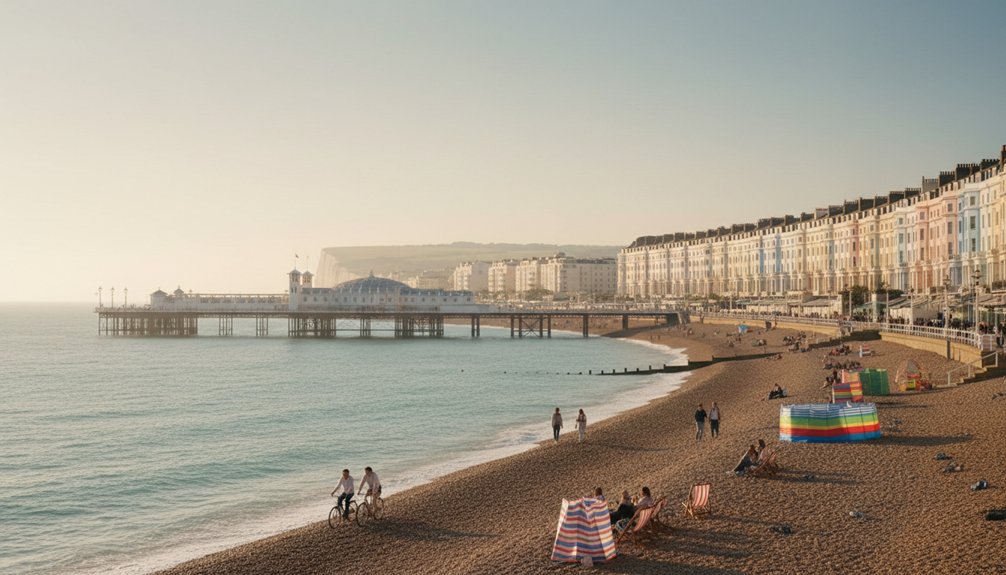
Imagine starting your morning with a swim at Hove Lagoon, then commuting to London before lunch. Brighton can give you that blend of seaside access, culture, and connectivity, but you’ll pay for it through higher rents, busy summer streets, and limited parking. Your choice of neighbourhood will shape the experience, from quieter Rottingdean to livelier Kemptown. Before you decide, it’s worth weighing how Brighton works beyond the postcard version.
Key Takeaways
- Brighton offers immediate seafront access, swimming, paddleboarding, beach walks, and varied outdoor activities.
- Its creative, inclusive culture includes festivals, live music, independent shops, galleries, theatres, and historic attractions.
- Walkable neighborhoods suit singles, couples, remote workers, and families, with Hove offering a quieter, more spacious atmosphere.
- Housing and everyday costs are relatively high, especially near the seafront, while northern areas offer better value with fewer amenities.
- Brighton is ideal for lively coastal living, but Shoreham or Lewes may better suit those seeking peace, space, and tranquility.
Is Coastal Living in Brighton Right for You?
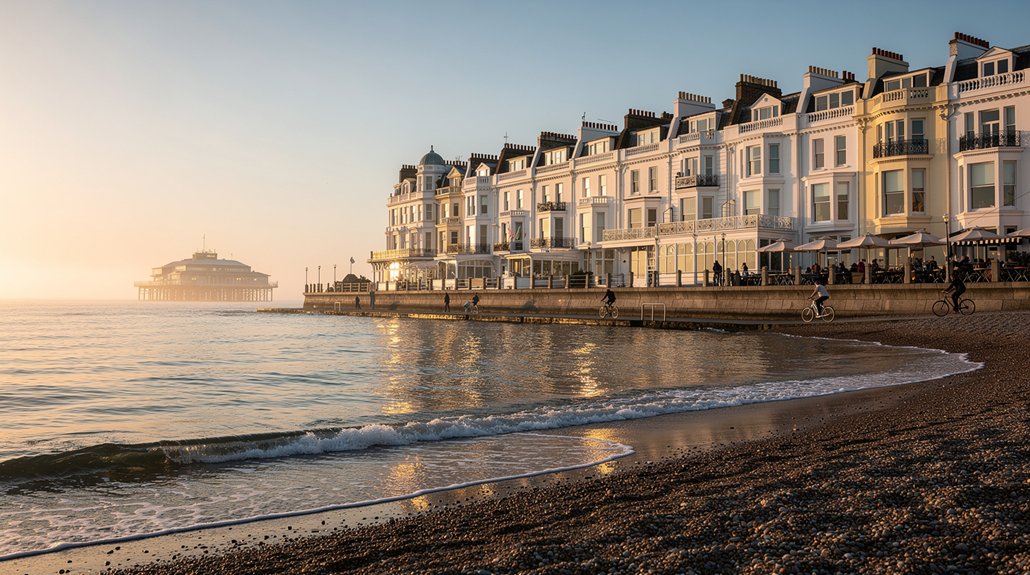
Coastal living in Brighton could suit you if you value a lively atmosphere, easy access to the seafront, and a strong sense of community. You’ll find plenty of Beach activities nearby, from paddleboarding and swimming in summer to brisk winter walks along the promenade.
However, check your priorities before committing. Central areas offer character, restaurants, and quick sea access, but they can bring higher prices, tourism, and limited parking. Hove often provides a calmer feel, while Kemptown appeals if you prefer period homes and independent businesses.
Coastal cuisine is a genuine advantage, with seafood restaurants, cafés, and markets offering varied choices year-round. Inspect properties carefully for damp, salt exposure, and maintenance costs.
You’ll enjoy Brighton most if you welcome energy, outdoor access, and a premium for location.
What Is Everyday Seaside Life Like in Brighton?
Everyday seaside life in Brighton means the beach and promenade become part of your routine, whether you’re walking to work, meeting friends for coffee, or fitting in a swim before the day begins. You’ll notice locals judge the weather by wind direction, not sunshine: west-facing beaches can feel sheltered, while sea breezes quickly change conditions.
Seaside traditions remain visible in early-morning swims, beach volleyball, paddleboarding, and the annual Burning of the Clocks procession. You can join casually, though winter sea swimming demands sensible preparation and awareness of tides.
Coastal cuisine ranges from takeaway fish and chips to independent cafés serving fresh seafood, vegetarian plates, and excellent coffee. Expect busy weekends, especially around the Palace Pier, so explore Hove Lagoon, Rottingdean, or quieter central lanes when you want breathing room.
How Much Does Living in Brighton Cost?
You’ll usually pay a premium for housing in central Brighton, Hove, and near the seafront, while nearby areas can offer better value.
Rent, council tax, utilities, and transport will shape your monthly budget, so compare the full cost—not just the advertised rent.
Daily expenses can also run higher than in surrounding towns, particularly for groceries, parking, and eating out.
Housing And Rent
Brighton’s housing market commands a premium, especially near the seafront, central lanes, and sought-after areas such as Hove and Seven Dials. You’ll generally pay more for sea views, period features, balconies, and proximity to the station.
Luxury apartments attract strong demand, while compact flats often command surprisingly high rents. If you’re renting, budget carefully for deposits, agency fees where applicable, and seasonal competition, particularly before university terms begin.
Historic neighborhoods such as Hanover, Kemptown, and Clifton Hill offer character, but older buildings can mean smaller rooms, steep stairs, and higher maintenance concerns.
You may find better value farther north in areas like Patcham or Hollingbury, though you’ll trade some walkability for space.
Compare total monthly housing costs, inspect damp thoroughly, and never skip viewing the property in person.
Daily Living Expenses
Beyond rent or mortgage payments, plan for higher day-to-day costs than in many parts of Sussex. Groceries, takeaway coffee, and meals out can quickly stretch your budget, particularly around the Lanes, seafront, and central stations. You’ll find better value by comparing supermarkets, using local markets late in the day, and planning budget shopping at larger stores in Hove or nearby suburbs.
Transport costs depend on your routine: buses cover most neighbourhoods, while cycling can save money if you’re comfortable with busy routes.
Council tax and energy bills vary by property size and efficiency, so check recent statements before committing.
Brighton’s coastline also helps balance expenses. Free outdoor activities, including beach walks, the Downs, and park visits, give you affordable ways to enjoy the city without spending every weekend in cafés or bars.
Which Brighton Areas Fit Different Lifestyles?
Different parts of Brighton suit different rhythms of daily life, so choosing the right area matters as much as choosing the city itself.
If you want energy and sea views, central Brighton and Kemptown put you near Beachfront cafes, restaurants, and lively evening venues, though prices and noise can be higher.
The Lanes offer character, independent shops, and Historic landmarks, appealing if you enjoy a compact, walkable setting.
Hove feels calmer and more spacious, with attractive terraces, green squares, and a stronger family atmosphere.
Seven Dials suits you if you value neighbourhood cafés and easy access to parks.
While Hanover attracts buyers seeking community spirit and colourful streets.
For more space, consider Preston or nearby Rottingdean, where larger homes and quieter surroundings may improve value, but local amenities feel less concentrated.
How Easy Is Commuting From Brighton to London?
How easy is it to commute from Brighton to London? For many residents, it’s surprisingly manageable, particularly if you live near Brighton station.
Direct trains reach London Victoria in about an hour, while services to London Bridge can take around 70 minutes. You’ll find frequent departures during peak periods, but delays, cancellations, and crowded carriages can affect your routine.
Season tickets are expensive, so calculate your likely office days before buying one; flexible tickets may suit hybrid workers better.
Public transport also includes buses connecting surrounding neighbourhoods to the station, although walking or cycling can be quicker locally.
Your commuting options expand if you work remotely part-time or choose offices near London Bridge.
Check first and last train times carefully, especially after evening events or early starts.
How Practical Is Brighton All Year Round?
Brighton is practical year-round if you’re prepared for seasonal changes rather than expecting the same experience in every month. You’ll find supermarkets, schools, healthcare, gyms, and independent shops operating normally through winter, while reliable rail and bus links support everyday routines.
Seasonal weather affects how you use the seafront: summer suits cycling and swimming, but autumn and winter call for waterproof layers and flexible plans. The tourist influx peaks during school holidays and sunny weekends, so book popular restaurants, parking, and cultural events ahead.
Outside those periods, you’ll generally enjoy a calmer city and easier access to local services. If you’re viewing property, visit during different seasons; check insulation, heating, damp, and natural light, not just the garden or sea view. That approach gives you a realistic picture of year-round living.
What Are Brighton’s Biggest Lifestyle Drawbacks?
What might make you hesitate? Brighton’s popularity brings real trade-offs. Tourist crowds can overwhelm the seafront, Lanes, and central cafés, particularly on sunny weekends and during festivals. You’ll need patience for packed buses, limited parking, and noisier streets if you live near major attractions.
Housing costs also remain high for a coastal city, while older properties may demand costly maintenance, damp treatment, or energy upgrades. Storms, coastal erosion, and rising insurance premiums deserve attention when you’re comparing homes near the water.
Environmental concerns are increasingly visible: beach litter, pressure on local services, and air pollution from traffic can affect daily enjoyment. Before committing, visit at peak times, check flood and planning information, and ask residents about seasonal disruption.
A quieter neighbourhood may reduce the drawbacks without losing Brighton’s character.
Who Is Brighton Best Suited To?
Despite those drawbacks, the city suits people who value culture, walkability, and easy access to the coast more than space and quiet. You’ll fit Brighton well if you enjoy spending weekends exploring independent shops, galleries, theatres, and historical attractions rather than maintaining a large garden.
Its compact neighbourhoods work particularly well for singles, couples, remote workers, and families who can manage higher housing costs in return for lively surroundings.
You’ll also benefit if you appreciate an inclusive, creative community. Local festivals, live music, and year-round events make it easier to build a social life, although summer crowds can test your patience.
Commuters should check rail reliability and door-to-door timings before buying, especially if you’ll travel to London regularly.
If you want peace, parking, and generous space, nearby Shoreham or Lewes may suit you better.
Frequently Asked Questions
What Are Brighton’s Main Cultural Attractions and Annual Events?
You’ll find local art at Brighton Museum and the vibrant Open Market, while historic landmarks include the Royal Pavilion and Brighton Palace Pier. Don’t miss Pride, the Fringe, and November’s Burning the Clocks celebration.
How Strong Are Brighton’s Healthcare and Emergency Services?
You’ll find strong Healthcare facilities, including Royal Sussex County Hospital, but local demand can mean waits. Emergency response is reliable, with ambulance, police, and fire coverage; check nearby GP availability before committing to an address.
What Environmental Initiatives and Sustainability Schemes Operate Across Brighton?
You’ll find Brighton’s sustainability effort broadening quietly: marine conservation protects seafront habitats, while renewable energy grows through council projects and community schemes. Check local recycling rules, energy grants, and flood-risk plans before choosing a neighbourhood or property.
Are There Local Property Regulations Affecting Renovations or Holiday Lets?
Yes, Brighton has local property regulations: you’ll need building permits for structural or listed-home alterations, while holiday let licensing requirements can vary. Check council guidance, conservation rules, and planning restrictions before committing to renovations or short-term letting.
How Does Brighton Compare With Other Popular UK Coastal Towns?
You’ll find Brighton livelier than most UK coastal towns, with stronger transport, year-round culture, and eye-watering property prices. Enjoy diverse Beach activities and Coastal dining; choose quieter Whitstable or Bournemouth if you prioritise space and value.
About the Author