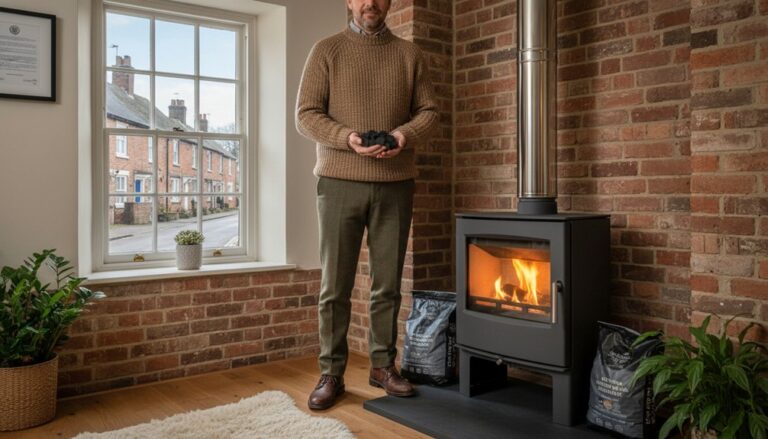
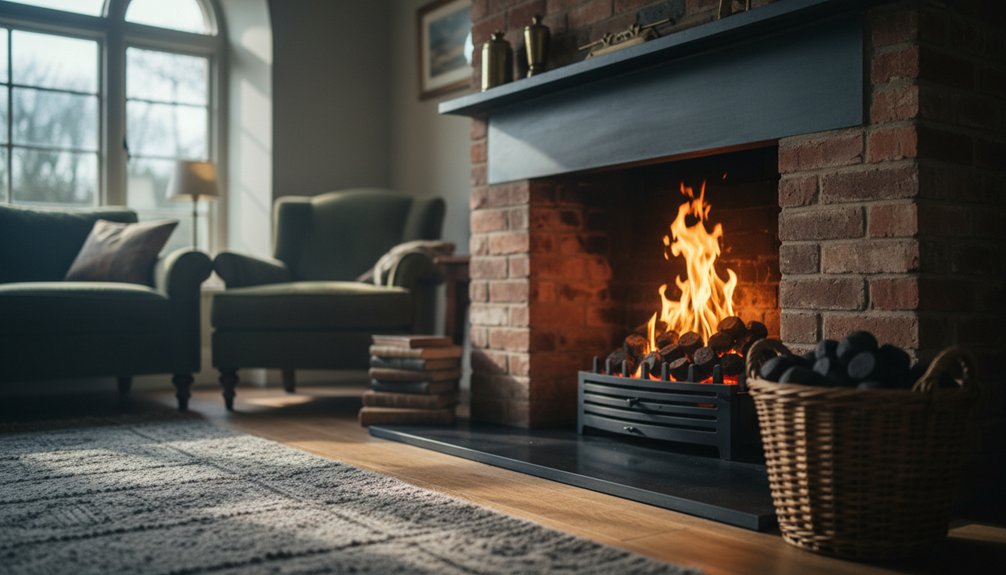
By coincidence, many UK homeowners discover smokeless fuel just when they’re checking whether their fireplace meets current regulations. You’ll find that smokeless coal, approved briquettes, and seasoned wood each offer different levels of heat, efficiency, and convenience. Before you burn any option, confirm that your appliance and chimney are suitable, especially in a smoke-control area. Getting that choice wrong can affect safety, costs, and compliance—so the key differences deserve careful attention.
Key Takeaways
- Smokeless fuel is manufactured from processed coal, anthracite, or minerals to burn with minimal visible smoke.
- It provides steady, long-lasting heat, while briquettes offer consistent sizes and predictable burning.
- Check your fireplace, stove, and chimney are approved for the chosen fuel before use.
- In UK Smoke Control Areas, burn only authorised smokeless fuels in approved appliances.
- Store fuel dry, maintain ventilation, sweep chimneys regularly, and use a tested carbon monoxide alarm.
What Is Smokeless Fuel for UK Fireplaces?
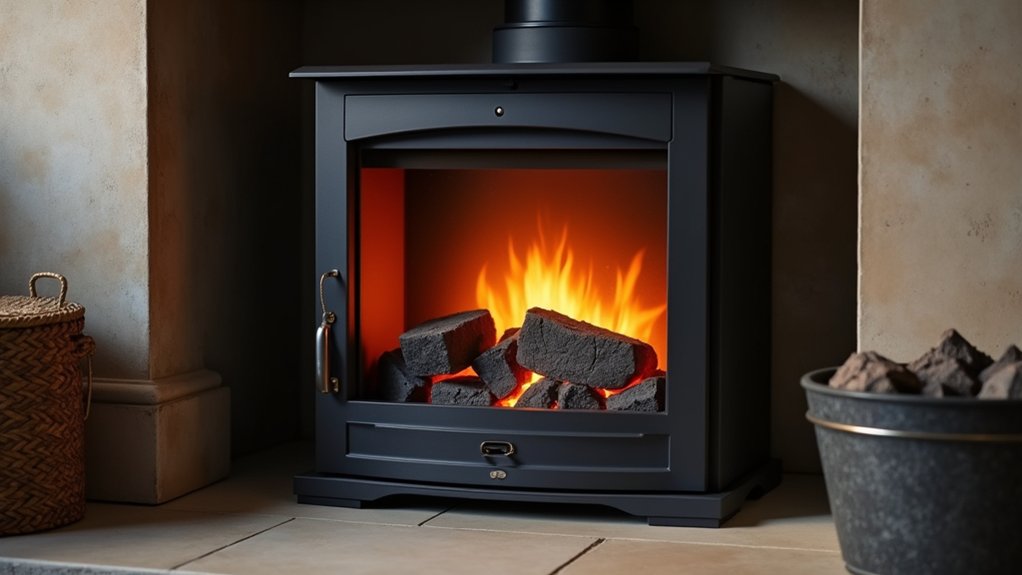
Smokeless fuel is a manufactured solid fuel designed to burn with little or no visible smoke, making it suitable for many UK fireplaces and multi-fuel stoves. You’ll typically find it made from processed coal, anthracite, or mineral-based materials formed into consistent pieces. Its controlled composition helps produce steady heat while meeting UK smoke-control requirements, although you must check whether your appliance and local area permit its use.
Historical usage grew as towns introduced restrictions to reduce dense coal smoke and improve urban air quality. Today, you should choose only fuels approved for your appliance, follow the manufacturer’s instructions, and have your chimney swept regularly.
Environmental impacts still matter: smokeless fuel can reduce visible pollution, but burning any solid fuel releases carbon dioxide and particulates. Good ventilation and responsible use remain essential.
Compare Smokeless Coal, Briquettes and Wood
Your choice of fuel affects heat output, burn time, maintenance and emissions. Smokeless coal generally delivers steady, intense heat and a long burn, so you’ll refuel less often. However, it can cost more and still produces carbon emissions.
Manufactured briquettes offer consistent shapes, predictable burning and easy storage. Their performance varies: some burn hotter, while others provide longer-lasting warmth, so check the product’s specifications.
Seasoned, dry wood creates a lively flame and can suit occasional use, but you’ll need frequent refuelling and adequate storage. Wet wood burns poorly, produces more smoke and increases chimney deposits.
Consider each fuel’s Environmental impact, including sourcing, manufacturing and transport. Comparing these options with alternative heating methods, such as heat pumps or electric heating, helps you balance comfort, running costs and sustainability.
Can Your Fireplace Burn Smokeless Fuel?
Before lighting a smokeless fuel, check that your fireplace and chimney are designed and approved for solid fuel. Inspect the appliance’s manufacturer instructions, as some open fires, stoves, and multi-fuel burners accept approved smokeless products, while others don’t. Never assume a wood-burning stove can safely burn mineral fuel; it may require a suitable grate, ventilation, and a correctly sized flue.
Arrange professional checks if you’re uncertain, particularly in an older home. Good chimney maintenance helps prevent blockages, soot accumulation, and dangerous carbon monoxide entering your room. Your installer or chimney professional can confirm compatibility and identify necessary upgrades.
Use only the fuel recommended for your appliance, and keep fuel storage dry, covered, and away from heat sources. Stop using the fireplace if you notice poor draught, excessive smoke, unusual smells, or damaged components.
Understand UK Smokeless Fuel Rules
What rules apply when you burn smokeless fuel in a UK home? You must check whether your property lies within a Smoke Control Area, where local authority rules restrict emissions from domestic fireplaces and stoves. In these areas, you can burn only authorised smokeless fuels in approved appliances.
You may face a fine of up to £1,000 for using unauthorised fuel, while larger penalties can apply to businesses or repeated offences. Outside designated areas, national restrictions still apply to nuisance smoke, chimney emissions, and regulated appliances.
Check your council’s online map and the government’s authorised-fuels list before purchasing. Historical usage of coal explains many current controls, but today’s rules focus on reducing Environmental impacts, including particulate pollution.
Don’t assume a fuel labelled “smokeless” is legal everywhere.
How Do You Burn It Safely?
Once you’ve confirmed that the fuel and appliance comply with local rules, burn it safely by following the stove manufacturer’s instructions. Use only the recommended smokeless fuel, and never burn household waste, treated timber, or unsuitable coal.
Check your chimney and flue regularly, arranging professional sweeping at least as often as guidance requires. Keep vents, grilles, and air controls clear; your ventilation requirements must always be met to support combustion and prevent carbon monoxide build-up.
Install a carbon monoxide alarm in the same room, testing it routinely. Your safety precautions should include keeping children, pets, and flammable items away from the stove, while using a secure fireguard where appropriate.
Add fuel gradually, avoid overloading, and don’t leave flames unattended. Let ash cool completely before removal and disposal.
Frequently Asked Questions
Can Smokeless Fuel Be Used in an Open Fireplace?
Yes, you can use smokeless fuel in an open fireplace, but check its Open fireplace compatibility first. Smokeless fuel restrictions may apply locally, and you’ll need suitable ventilation, an approved appliance, and proper maintenance.
How Should Smokeless Fuel Be Stored to Prevent Dampness?
Store smokeless fuel in a dry, covered, well-ventilated area, raised above ground on a pallet. For effective Fuel storage and Damp prevention, keep bags sealed, avoid walls, and check regularly for moisture or damage.
How Long Does Smokeless Fuel Typically Burn?
You’ll typically get six to eight hours of heat from smokeless fuel, depending on airflow, appliance, and fuel quality. Check manufacturer guidance, then weigh environmental impact and cost comparison before choosing your fuel.
Does Smokeless Fuel Produce Less Heat Than Traditional Coal?
Smokeless fuel doesn’t necessarily produce less heat than traditional coal; you’ll often get comparable, steadier warmth. Its combustion efficiency improves performance, while reduced smoke supports lower environmental impact, though exact heat varies by product and appliance.
Where Can Homeowners Buy Certified Smokeless Fuel in the UK?
You can buy certified smokeless fuel from approved coal merchants, builders’ merchants, garden centres, and specialist online retailers. Check Fuel certifications and Retail availability, and choose products authorised for your appliance and local smoke-control requirements.
About the Author