
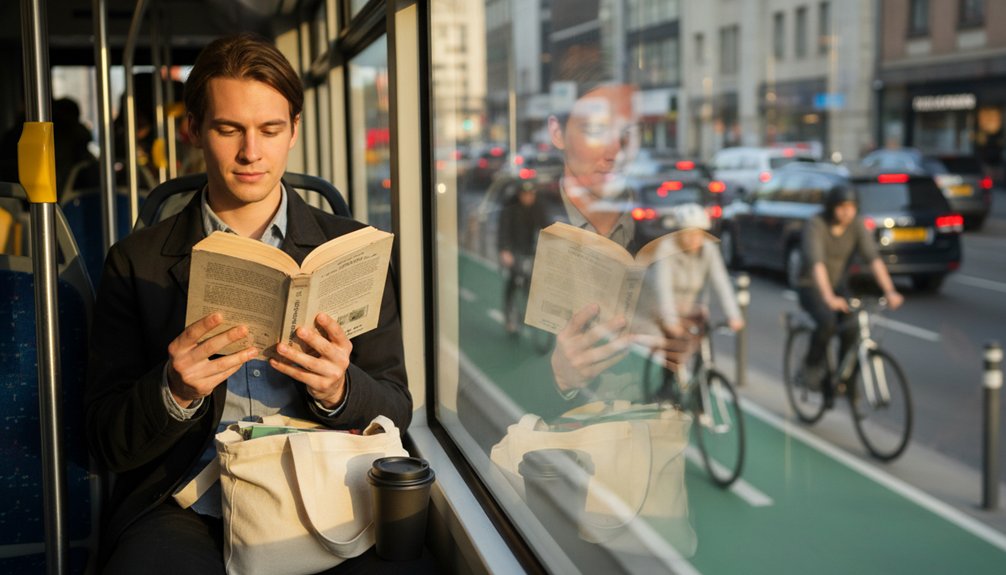
If you want to make commuting more affordable, you can turn travel time into a useful habit without adding much to your budget. Library e-books, audiobooks, and free digital resources can reduce costs while helping you learn or relax. Your best option depends on your route, travel mode, and attention level. Safety and practicality matter most, though, and one common mistake can undermine the benefits.
Key Takeaways
- Reading during commutes can make travel more productive, but never read while driving or when safety and awareness are compromised.
- Test your route for one week, considering noise, crowding, motion, available minutes, comprehension, and whether reading causes missed stops.
- Choose print, ebooks, or audiobooks based on portability, screen comfort, trip length, and commuting conditions.
- Use libraries, Libby, Hoopla, book swaps, and offline content to reduce reading costs and avoid unnecessary subscriptions.
- Set realistic goals, such as five to fifteen pages per trip, and stop if reading causes fatigue, headaches, or discomfort.
Is Reading While Commuting Right for You?

Reading during your commute can turn otherwise idle time into productive time without adding to your budget. First, assess whether your route and habits support focused reading. If you drive, don’t read; choose audio learning instead, since safety outweighs any productivity gain.
If you ride transit, evaluate commuting distractions such as noise, crowding, motion, and frequent stops. These factors may reduce comprehension and make reading frustrating.
Next, track your available minutes for three typical trips. Reading duration considerations matter: ten consistent minutes daily can deliver more value than one uncomfortable hour weekly. Set a realistic target, such as five to fifteen pages per trip, and stop when eye strain or fatigue begins.
Reading works best when it complements your routine rather than competing with sleep, work preparation, or situational awareness. Test it for one week, then keep the habit only if it saves money, improves focus, or makes travel more useful.
Choose Your Reading Format
You can choose print or digital books based on price, portability, and screen comfort.
Library books can reduce your reading costs to zero, while e-books often avoid carrying weight during your commute.
Compare library availability, borrowing periods, and device access before choosing.
Print or Digital
Which format fits your commuting budget and routine better: print or digital? Compare total costs, not just cover prices. A paperback may cost less upfront than an e-reader, especially if you already own a phone, but digital editions often weigh nothing and avoid carrying bulk.
Portable formats suit crowded buses, while a small print book works without battery power or screen glare. Consider Reading comfort: paper can reduce eye fatigue, whereas adjustable digital text helps if you need larger type.
Track your habits for a week. If you read during short trips, digital access can save space and let you switch titles instantly. If you read longer rides, print may feel more comfortable.
Choose the option you’ll use consistently, because unused purchases waste more money than modest format differences.
Library Book Options
Before paying for a new book, check whether your library offers a free print copy, e-book, or audiobook. A library card can reduce your commuting reading budget to zero, though popular titles may require holds.
Compare loan periods with your travel schedule: an e-book might expire after two weeks, while a print book could offer more flexibility.
Audiobook benefits include hands-free listening during driving, walking, or crowded train rides, but mobile data costs can matter if you stream instead of downloading. Download titles on Wi-Fi before leaving home.
If the library doesn’t have your choice, compare Bookstore discounts, used-book prices, and subscription fees. Track each option’s total cost per month, including delivery, replacement, and membership charges.
Choose the format that fits your commute, device, and borrowing limits best.
Match Content to Commute Conditions
Match your reading format to the commute’s conditions so you don’t waste paid content or mobile data. On a crowded bus, choose a downloaded audiobook or short articles; offline files prevent streaming charges and buffering. For a quiet train seat, an ebook or library book can support longer chapters and better concentration.
Track your travel time for a week, then select content that fits your shortest reliable segment. If delays interrupt reading, save progress with an app that syncs offline, but disable automatic downloads to limit data use.
Keep your reading posture comfortable, and follow commuting etiquette by keeping bags, elbows, and screens within your space. A compact phone works for standing trips, while an e-reader may offer longer battery life and fewer distractions.
Match subscriptions to actual usage, cancelling services you rarely open.
Stay Safe While Reading on Transit
Stay alert while reading on transit by keeping one ear free, lowering screen brightness, and pausing whenever the vehicle stops or crowds shift. Check your surroundings before boarding, exiting, or crossing near tracks.
Choose a seat that gives you a clear view of doors, exits, and nearby passengers, and keep your bag closed and secured.
For In vehicle safety, hold your device below eye level so you can notice sudden movement, announcements, and hazards.
Follow Public transportation etiquette: don’t block aisles, lean into neighboring seats, or use audio without headphones.
If the car becomes crowded, put your device away and stand with one hand on a rail.
Avoid reading while walking through stations or near platforms. A brief pause protects you from falls, missed stops, and costly damage.
Keep Your Commute Reading Costs Low
You can borrow books free through your library, often using apps like Libby or Hoopla.
Compare affordable reading apps by monthly price, catalog size, and offline access before subscribing.
Track your reading costs each month so you’ll know which option saves the most.
Borrow Books for Free
Why pay full price for commute reading when your public library can provide books at no cost? Borrowing print books, audiobooks, and large-print editions can reduce your reading budget by hundreds of dollars annually.
Check your library’s lending period, renewal rules, and reservation system before choosing a title, so you won’t face late fees or missed holds. Use a durable tote to protect books during crowded trips, and download legally borrowed audio before leaving home when your library supports offline listening.
You can also organize a Book swapping group with coworkers, exchanging finished titles without spending money. For hands-free commutes, explore audiobook podcasts offered through library programming or public platforms, while checking licensing and data requirements.
Track each borrowed item in your calendar, return it on time, and keep your monthly costs near zero.
Use Affordable Reading Apps
After free library loans, affordable reading apps can keep your commute supplied without adding much to your budget. Compare monthly plans, annual discounts, and free tiers before subscribing.
If you read one or two books monthly, a low-cost plan may beat individual purchases; if your pace varies, pay-per-title options could cost less. Track listening and reading credits so they don’t expire unused.
Choose apps offering offline downloads, adjustable playback speed, and cross-device syncing to avoid mobile-data charges and interruptions.
Explore multiple Audiobook genres through samples before spending credits, especially when narrators influence your enjoyment.
Set Reading challenges to maintain a steady routine, but don’t buy extra titles just to meet targets.
Cancel trials before renewal dates, and review your app spending monthly to keep commuting costs predictable.
Know When Reading Won’t Work
Reading can cut commuting costs, but it won’t solve every transportation problem. If you drive, cycle, or walk, you may need your attention for traffic, hazards, and navigation. Don’t read while operating a vehicle; a collision can erase months of fare savings.
Even on public transit, reading may fail when standing, transferring, or traveling through poorly lit areas. Measure your reading speed and comprehension skills before counting study time as productive. If you retain little after a crowded, noisy ride, choose audio lessons or review materials at home instead.
Track your weekly results: compare minutes read, information remembered, and money saved on entertainment or courses. When reading causes missed stops, headaches, or extra trips, stop treating it as a commuting benefit and use a safer, more reliable alternative.
Frequently Asked Questions
Can Commuting by Bike or Walking Replace Reading Time Entirely?
No, biking or walking can’t replace reading entirely. You’ll gain exercise and savings, but lose literacy time. For multitasking efficiency, use audiobooks safely; preserve reading habit development through short evening sessions and weekly progress tracking.
How Can I Track Books I’Ve Finished During My Commute?
Track finished books with Audiobook apps, because apparently your commute needs a bureaucratic audit. Log titles, dates, minutes, and ratings in a spreadsheet; use bookmark techniques to mark chapters, costs, and completion progress consistently.
Are Library Memberships Available for Commuters Who Travel Between Cities?
Yes, you can often join libraries outside your home city, though eligibility varies. Ask about Library access, reciprocal agreements, digital borrowing, and commuter discounts; compare annual fees, branch locations, and mobile-app convenience before enrolling.
Can Reading During Commutes Improve Vocabulary or Professional Skills?
Yes, reading during commutes improves Vocabulary enhancement and supports Professional development. You’ll encounter useful terms repeatedly, strengthen comprehension, and gain industry knowledge—often for free through libraries, making each trip a measurable, cost-conscious learning opportunity.
What Should I Do With Downloaded Books When My Subscription Ends?
Before your subscription ends, verify Digital copyright and Ownership rights. Export permitted notes, finish borrowed titles, and don’t assume downloads remain accessible. Cancel automatic renewal, then purchase favorites individually or use free, legal alternatives.
About the Author